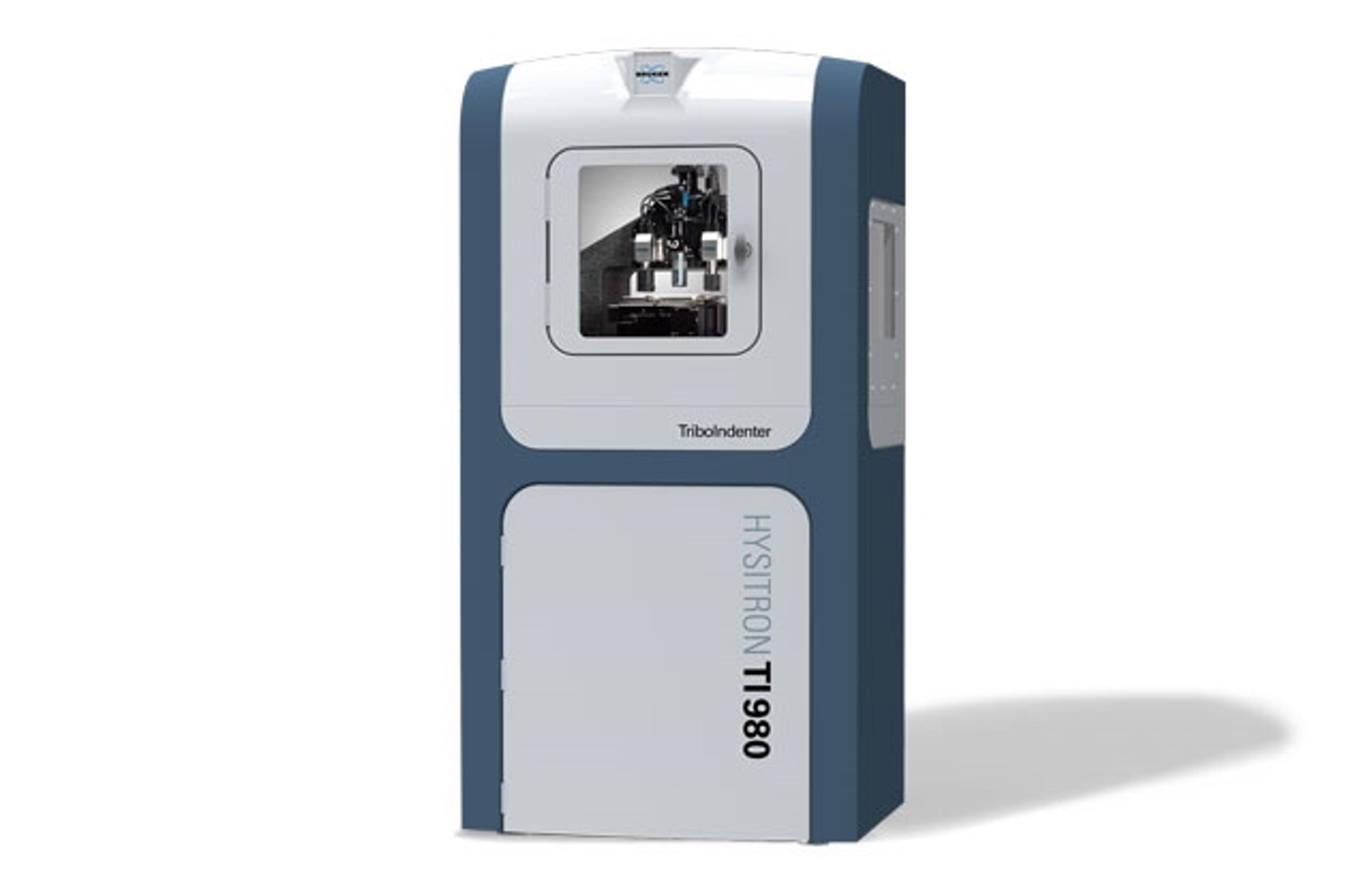
Hysitron TI 980
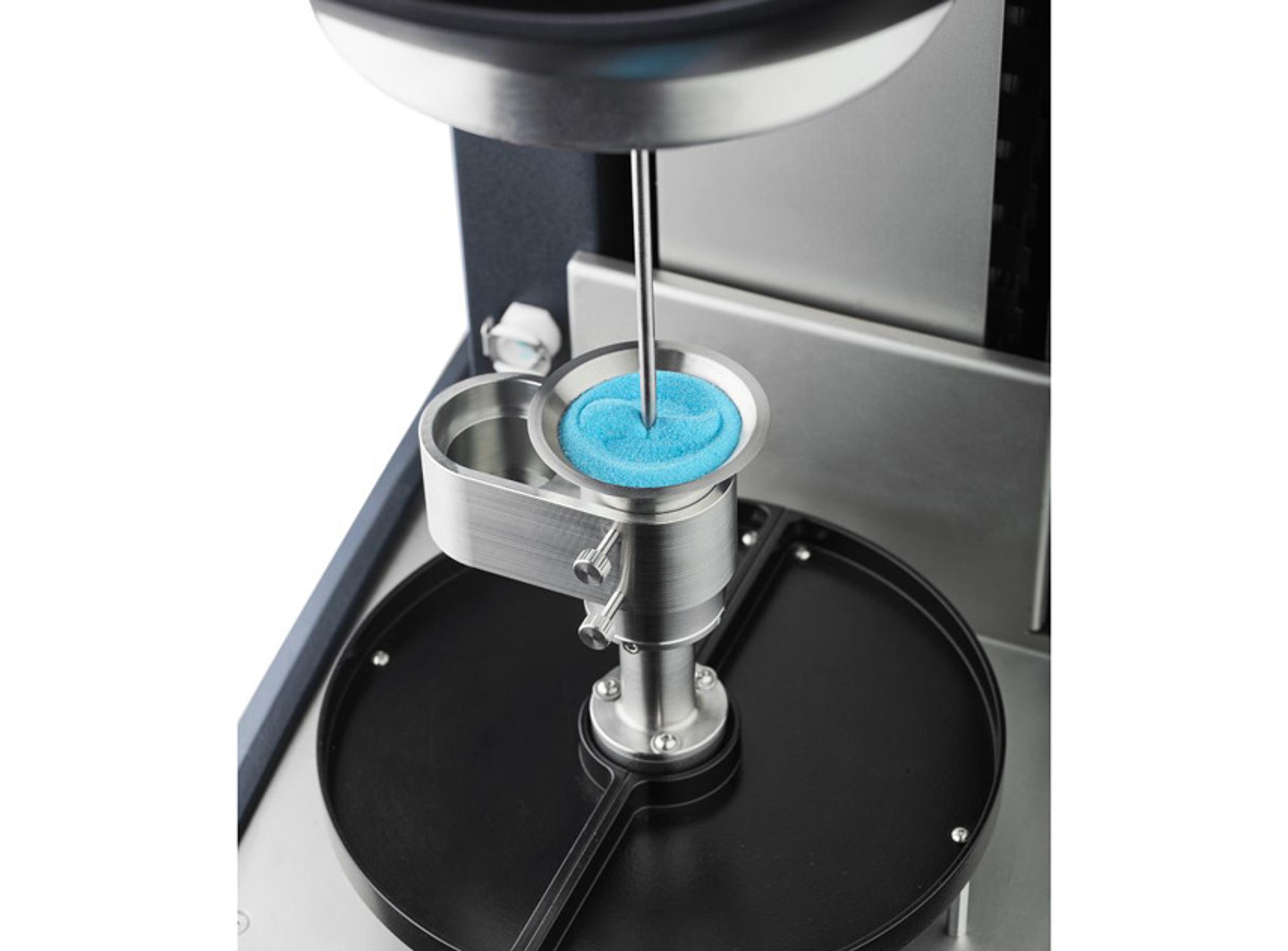
The Hysitron TI 980 nanoindenter achieves remarkable advances in control and throughput capabilities, testing flexibility, applicability, measurement reliability, and system modularity. This industry-leading system builds upon decades of Hysitron technological innovation to deliver new levels of extraordinary performance, enhanced capabilities, and ultimate versatility in nanomechanical characterization.
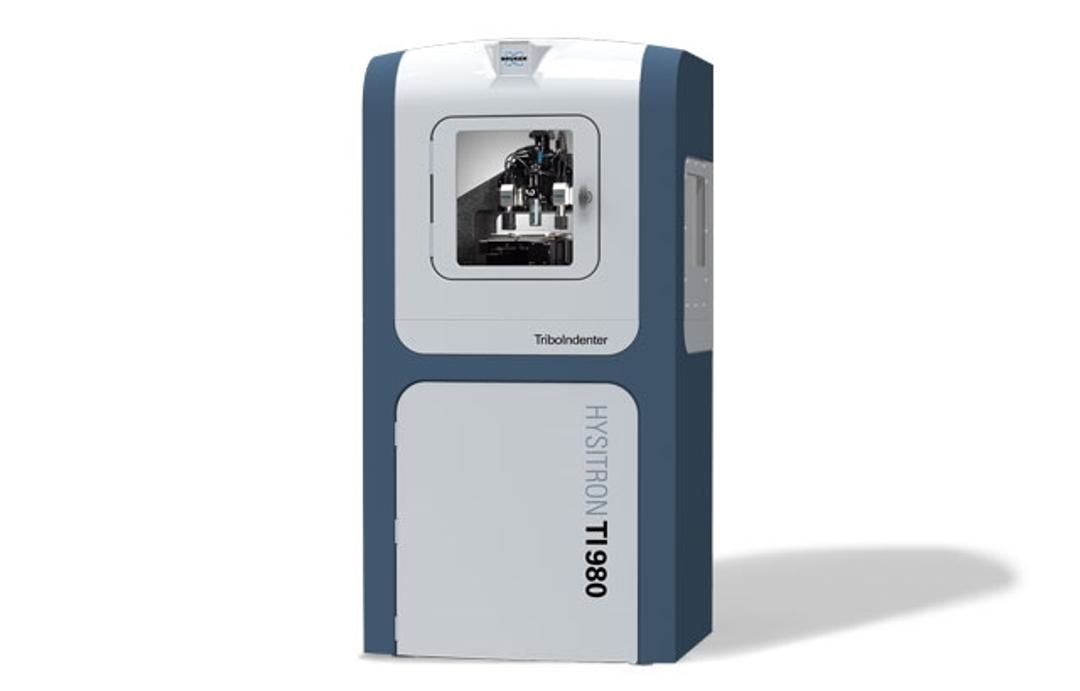
Hysitron TI 980 Triboindenter

The supplier does not provide quotations for this product through SelectScience. You can search for similar products in our Product Directory.
Powerful and versatile nanomechanical and nanotribological test system.
Bruker’s Hysitron TI 980 TriboIndenter operates at the intersection of maximum performance, flexibility, reliability, usability, and speed. It builds upon decades of Hysitron® technological innovation to deliver new levels of extraordinary performance, enhanced capabilities, and ultimate versatility in nanomechanical characterization. The Hysitron
TI 980 is everything a superior nanomechanical test instrument needs to be, achieving remarkable advances in control and throughput capabilities, testing flexibility, applicability, measurement reliability, and system modularity.
Powerful base system configuration:
- Nanoindentation — hardness, elastic modulus, creep, stress relaxation, fracture toughness, high-speed property mapping
- Nanotribology — thin-film adhesion, friction coefficients, scratch/mar resistance, reciprocating wear
- SPM Imaging — topography and gradient imaging, nanometer - precision test positioning, friction force imaging
- Dynamic Nanoindentation — continuous hardness and modulus depth profiling, storage modulus, loss modulus, tan-delta
Maximum flexibility and future-proof characterization potential:
- Multi-layered enclosure delivers superior environmental isolation with integrated access ports for future technique expansion
- Universal sample chuck provides mechanical, magnetic, and vacuum mounting capabilities to accommodate the widest range of samples

Hysitron TI 980 TriboIndenter
In this application note, Bruker Nano provides a detailed overview of the Hysitron® TI 980 TriboIndenter®. This nanomechanical test instrument builds upon decades of Hysitron technological innovation to deliver new levels of performance, enhanced capabilities, and improved versatility in nanomechanical characterization. The Hysitron TI 980 has been designed to achieve remarkable advances in control and throughput capabilities, testing flexibility, applicability, measurement reliability, and system modularity.
Nanomechanical testing of battery materials in controlled and inert environments
In this application note, Bruker Nano presents experimental data on nanomechanical testing of battery materials in controlled and inert environments using the Hysitron® TI 980 IO TriboIndenter®. Continued development of rechargeable batteries is focused on increasing energy density, the total number of charge-discharge cycles, and safety while decreasing cost and weight. This requires new materials and innovations, such as solid-state batteries, that must undergo rigorous testing before being released into the production cycle. Failures of coatings, mechanical (or ion) induced swelling and stiffening, stresses arising from fabrication, and mechanical stresses and damage from multiple charge-discharge cycles pose significant challenges for new device development and integration. Thus, for both safety and performance reasons, it is necessary to understand how these devices perform mechanically, including each component at the appropriate size scale.
Polymer thin film characterization at cold temperatures using nanoDMA III and xSol Cryo
Polymer thin films are widely used for a variety of applications, ranging from artificial skin to anti-reflective coatings. Understanding the viscoelastic properties at various temperatures is important for ensuring engineering performance. The measurement of viscoelastic properties of polymer thin films across a range of temperatures can prove difficult in comparison to a bulk sample. In this application note from Bruker Nano, the viscoelastic properties of polymer thin films are investigated from -125°C to 23°C using dynamic nanoindentation.
Material joining: Characterization of laser beam welding
Laser beam welding is a modern material joining technique that utilizes a high power density laser to heat and thereby, fuse, two materials together. Compared to traditional welding techniques, laser-based methods can achieve narrower welds, higher speeds and are easier to automate. Like traditional welding techniques, materials are melted in the weld zone, though with much more rapid heating and cooling cycles. These rapid thermal cycles are potentially concerning for formation cracks through thermal stresses and changes in the microstructure giving undesirable or inhomogeneous mechanical properties.
In this application note, Bruker Nano presents a combined nanoindentation mapping and electron backscatter diffraction (EBSD) study of 410 stainless steel laser cladding on a 4140 steel substrate to evaluate changes in microstructure and mechanical properties as a consequence of the joining process.
Investigating wear and nanomechanics of thin hard coatings on steel
Hard coatings are often used on the surfaces of steel components to increase their service life. These tribological coatings prevent wear between contacting parts, such as the surfaces of tools or the contacting surfaces of gear teeth. Since the mechanical properties of a coating can be greatly influenced by deposition parameters, coating reliability is often a concern. Significant substrate effect may occur for a hard coating on a soft substrate. In this application note, Bruker Nano utilizes the Hysitron® TI Series nanomechanical test instruments to precisely monitor the hardness, reduced modulus, and wear depth in thin hard coatings on steel.
Mechanical characterization of corrosion-resistant coatings
Corrosion-resistant coatings play a crucial role in the process of food preservation. Soft drinks, which are highly acidic, are a specific example of food products that require corrosion-resistant coatings. These films must retain their functional integrity when exposed to various physical and chemical stresses. Two important attributes are the mechanical strength and the film adhesion, which are functions of the curing process. In this application note Bruker Nano discusses how the Hysitron® TS 77 Select, automated benchtop nanomechanical and nanotribological test instrument can be used to characterize food and beverage can liner coatings.
Mechanical characterization of ultra-low-k dielectric films
To minimize the size of a microelectronic device and maximize its operating frequency, the device’s components must be separated by a material with a dielectric constant as low as possible. A class of materials known as ultra-low-k (ULK) dielectrics are employed for this purpose. In this application note, Bruker Nano discusses how mechanical reliability monitoring of ULK films is becoming increasingly important to rapidly identify process variation and sustain high device yields; and how nanoindentation and nanoscratch testing provide an ideal means to measure the hardness (strength), modulus (stiffness), and critical scratch force (adhesion) of these critical films.
Indentation-induced structural changes probed by Raman spectroscopy
In the pharmaceutical industry, the detection of different polymorphs of drug materials is critical, as any changes in the composition or structure may lead to a different clinical response. In this application note, Bruker Nano discusses mechanical anisotropy and stress-induced structural changes in single-crystal ß-form piroxicam (anti-inflammatory drug). The variation of mechanical properties in the (011) and (011) crystallographic planes and the associated chemical changes under indentation were studied in detail.
Correlative microscopy and XPM: Mechanical property distribution by nanoindentation mapping
Mechanical properties of materials are typically being assessed by a small number of experiments. The outcome of these experiments is relevant as the deformed volume integrates over all microstructural features to allow repeatable tests of the material's properties. Nanoindentation allows for the speeding up of the testing process, while scaling down the tested volume. In this application note, Bruker Nano discusses how the mapping of properties helps to correlate effects when combined with complementary high-resolution microscopy techniques.
Compression test of a living cell
Infection and disease frequently result in variations in the mechanical properties of living cells. Quantitative nanomechanical tests of cell membrane stiffness can help identify if and how a single cell was affected. In this application note, Bruker Nano utilizes a Hysitron® TI Series TriboIndenter® to perform compression tests on a single cell with a diamond fluid cell 100 μm flat end 90° conical probe.