ResourceMaterials

Material joining: Characterization of laser beam welding

23 Jul 2023

Laser beam welding is a modern material joining technique that utilizes a high power density laser to heat and thereby, fuse, two materials together. Compared to traditional welding techniques, laser-based methods can achieve narrower welds, higher speeds and are easier to automate. Like traditional welding techniques, materials are melted in the weld zone, though with much more rapid heating and cooling cycles. These rapid thermal cycles are potentially concerning for formation cracks through thermal stresses and changes in the microstructure giving undesirable or inhomogeneous mechanical properties.

In this application note, Bruker Nano presents a combined nanoindentation mapping and electron backscatter diffraction (EBSD) study of 410 stainless steel laser cladding on a 4140 steel substrate to evaluate changes in microstructure and mechanical properties as a consequence of the joining process.

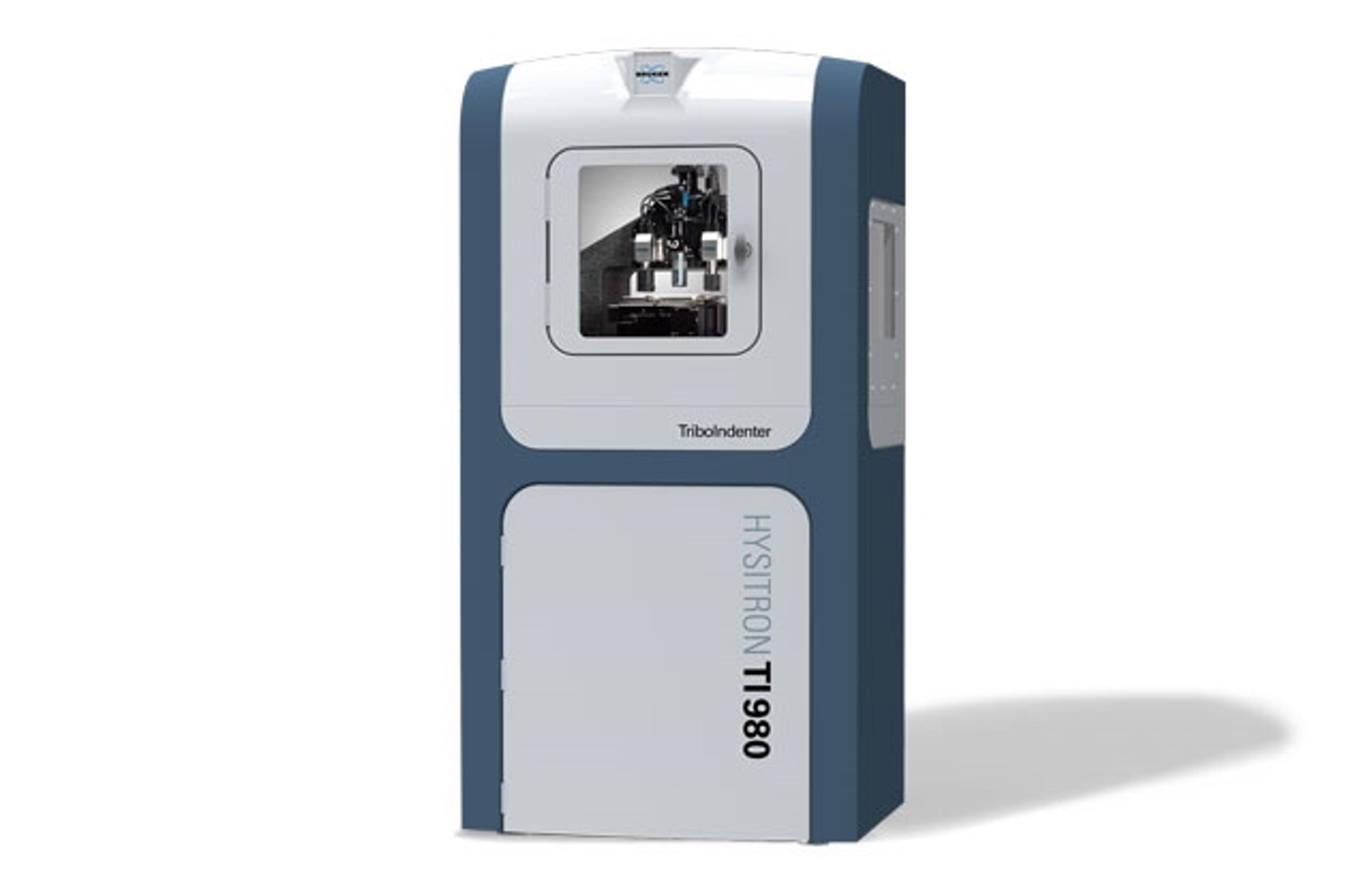
Hysitron TI 980

Bruker Nano Surfaces and Metrology

The Hysitron TI 980 nanoindenter achieves remarkable advances in control and throughput capabilities, testing flexibility, applicability, measurement reliability, and system modularity. This industry-leading system builds upon decades of Hysitron technological innovation to deliver new levels of extraordinary performance, enhanced capabilities, and ultimate versatility in nanomechanical characterization. 

(0)

Links

Tags

NanotechnologyNanotechnology, or nanotech, is an engineering technique using molecular scale functional systems. Applications of nanotechnology include medicine and medical devices, electronics, air and water purification, food science and energy production.Non-Destructive TechniquesNon-destructive techniques (NDT) describes a variety of analytical techniques used to evaluate the properties of a material. Common methods include ultrasonic, magnetic-particle, liquid penetrant, radiographic, remote visual inspection (RVI), and eddy-current testing. NDT is regularly used in forensic engineering, civil engineering, mechanical engineering, electrical engineering, systems engineering, aeronautical engineering, and medicine.Surface Area TestingPhysisorption studies fundamental parameters essential for the characterization of materials such as the specific surface area and pore size distribution. Properties such as porosity, strength, hardness, permeability, separation selectivity, corrosion, and thermal stress resistance can all be directly correlated to the porous structure of a material.ProfilometersProfilometers are instruments used to measure a surface's profile, in order to quantify etch depth, deposited film thickness, and surface roughness. They operate in either contact or non-contact modes and may use optical or stylus techniques to make the actual measurements.Atomic Force Microscopy / Scanning Tunneling MicroscopyAtomic force microscopes (AFM) and scanning tunneling microscopes (STM) are high-resolution forms of scanning probe microscope (SPM) used to generate topological information of a sample down to the atomic scale. Instruments can generate an image of the surface topology, manipulate objects and reveal information on localized properties such as Young’s modulus, conductivity, and magnetism. High-quality STM and AFM probes optimized for your application are available, as well as other SPM-based instruments such as scanning ion conductance microscopes (SICM) & near-field scanning optical microscopes (NSOM). Find the best AFM and STM equipment in our peer-reviewed product directory: compare products, check customer reviews and receive pricing direct from manufacturers.Quality TestingQuality testing ensures that products meet required specifications and safety standards in various industries, including pharmaceuticals, food, and materials. It is essential for maintaining product quality and consumer safety. Explore quality testing tools in our peer-reviewed product directory; compare products, check reviews, and get pricing directly from manufacturers.Alloy SteelMetalsMetal analysis is critical in various industries, including environmental monitoring, food safety, and pharmaceuticals. Techniques such as ICP-MS and atomic absorption spectrometry are commonly used to detect trace metals. Explore metal analysis tools in our peer-reviewed product directory; compare products, check reviews, and get pricing directly from manufacturers.Nanoindentation