ResourceMaterials
Investigating wear and nanomechanics of thin hard coatings on steel
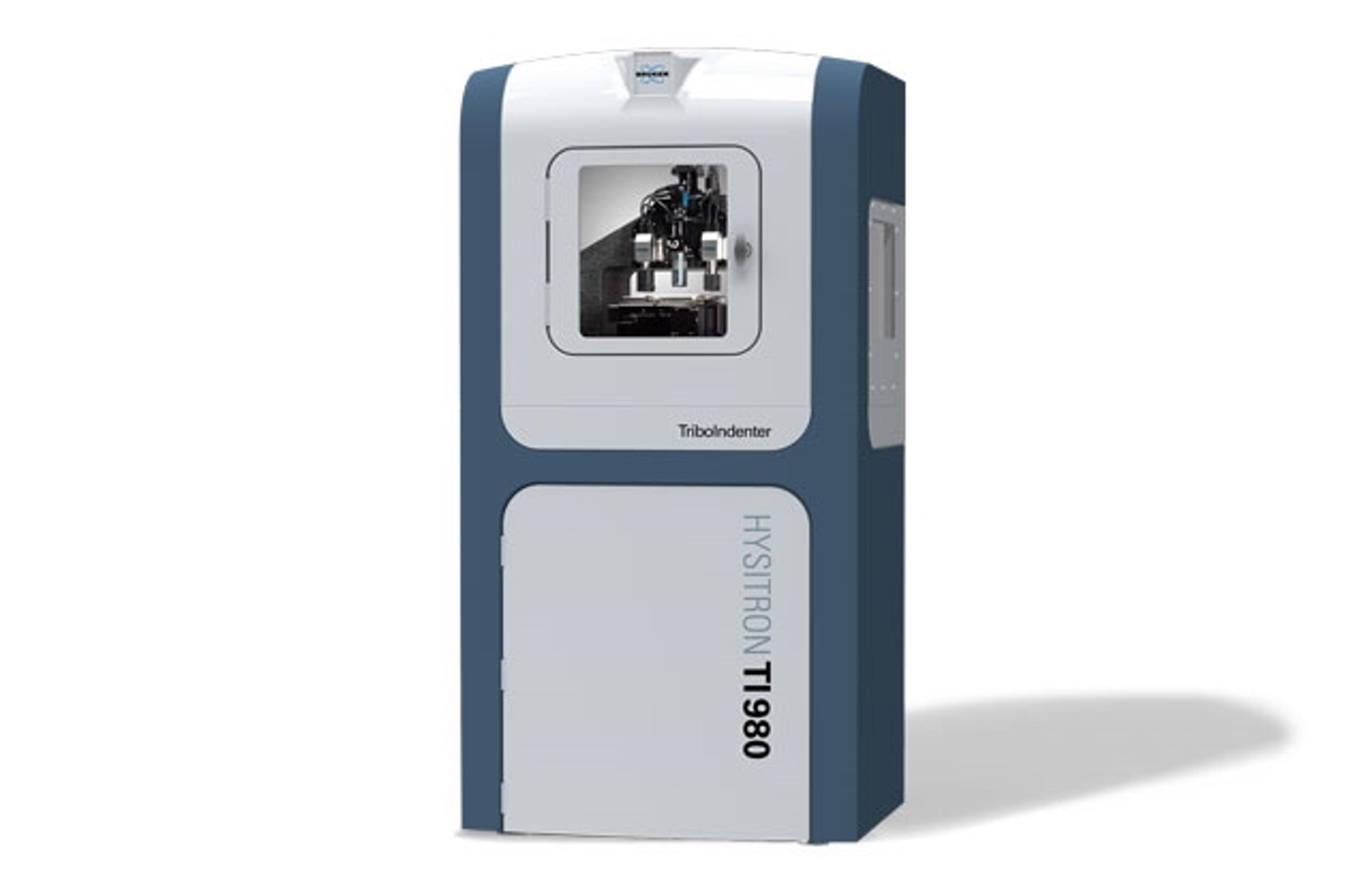
23 Jul 2023Hard coatings are often used on the surfaces of steel components to increase their service life. These tribological coatings prevent wear between contacting parts, such as the surfaces of tools or the contacting surfaces of gear teeth. Since the mechanical properties of a coating can be greatly influenced by deposition parameters, coating reliability is often a concern. Significant substrate effect may occur for a hard coating on a soft substrate. In this application note, Bruker Nano utilizes the Hysitron® TI Series nanomechanical test instruments to precisely monitor the hardness, reduced modulus, and wear depth in thin hard coatings on steel.
Links
Tags
RheometryRheometers are used to measure the rheology of fluids, which is the flow of fluids in response to an applied force. The most common types of rheometer include shear rheometers (capillary, cone and plate and rotational cylinder) and extensional rheometers. Viscometers are similar to rheometers however viscometers only measure the viscosity of a fluid.Mechanical TestingMechanical testing explores the elastic and inelastic nature of a material when force is applied. A mechanical test shows whether a material is suitable for its intended application by measuring hardness, tensile strength, elongation, elasticity, and fatigue limit.Non-Destructive TechniquesNon-destructive techniques (NDT) describes a variety of analytical techniques used to evaluate the properties of a material. Common methods include ultrasonic, magnetic-particle, liquid penetrant, radiographic, remote visual inspection (RVI), and eddy-current testing. NDT is regularly used in forensic engineering, civil engineering, mechanical engineering, electrical engineering, systems engineering, aeronautical engineering, and medicine.ProfilometersProfilometers are instruments used to measure a surface's profile, in order to quantify etch depth, deposited film thickness, and surface roughness. They operate in either contact or non-contact modes and may use optical or stylus techniques to make the actual measurements.Light MicroscopyLight microscopes or optical microscopes are used to visualize microscale objects under magnification, including cells, clinical specimens and materials. Lab equipment for light microscopy includes confocal microscopes, fluorescence microscopes, zoom and stereo microscopes. Microscope slides and imaging reagents are available for visualizing samples, as well as various microscope stages and incubators for large or temperature-sensitive samples. Find the best light microscopes in our peer-reviewed product directory: compare products, check customer reviews and receive pricing direct from manufacturers.Atomic Force Microscopy / Scanning Tunneling MicroscopyAtomic force microscopes (AFM) and scanning tunneling microscopes (STM) are high-resolution forms of scanning probe microscope (SPM) used to generate topological information of a sample down to the atomic scale. Instruments can generate an image of the surface topology, manipulate objects and reveal information on localized properties such as Young’s modulus, conductivity, and magnetism. High-quality STM and AFM probes optimized for your application are available, as well as other SPM-based instruments such as scanning ion conductance microscopes (SICM) & near-field scanning optical microscopes (NSOM). Find the best AFM and STM equipment in our peer-reviewed product directory: compare products, check customer reviews and receive pricing direct from manufacturers.Quality TestingQuality testing ensures that products meet required specifications and safety standards in various industries, including pharmaceuticals, food, and materials. It is essential for maintaining product quality and consumer safety. Explore quality testing tools in our peer-reviewed product directory; compare products, check reviews, and get pricing directly from manufacturers.Alloy Steel