ResourceMaterials

Mechanical characterization of ultra-low-k dielectric films

23 Jul 2023

To minimize the size of a microelectronic device and maximize its operating frequency, the device’s components must be separated by a material with a dielectric constant as low as possible. A class of materials known as ultra-low-k (ULK) dielectrics are employed for this purpose. In this application note, Bruker Nano discusses how mechanical reliability monitoring of ULK films is becoming increasingly important to rapidly identify process variation and sustain high device yields; and how nanoindentation and nanoscratch testing provide an ideal means to measure the hardness (strength), modulus (stiffness), and critical scratch force (adhesion) of these critical films.

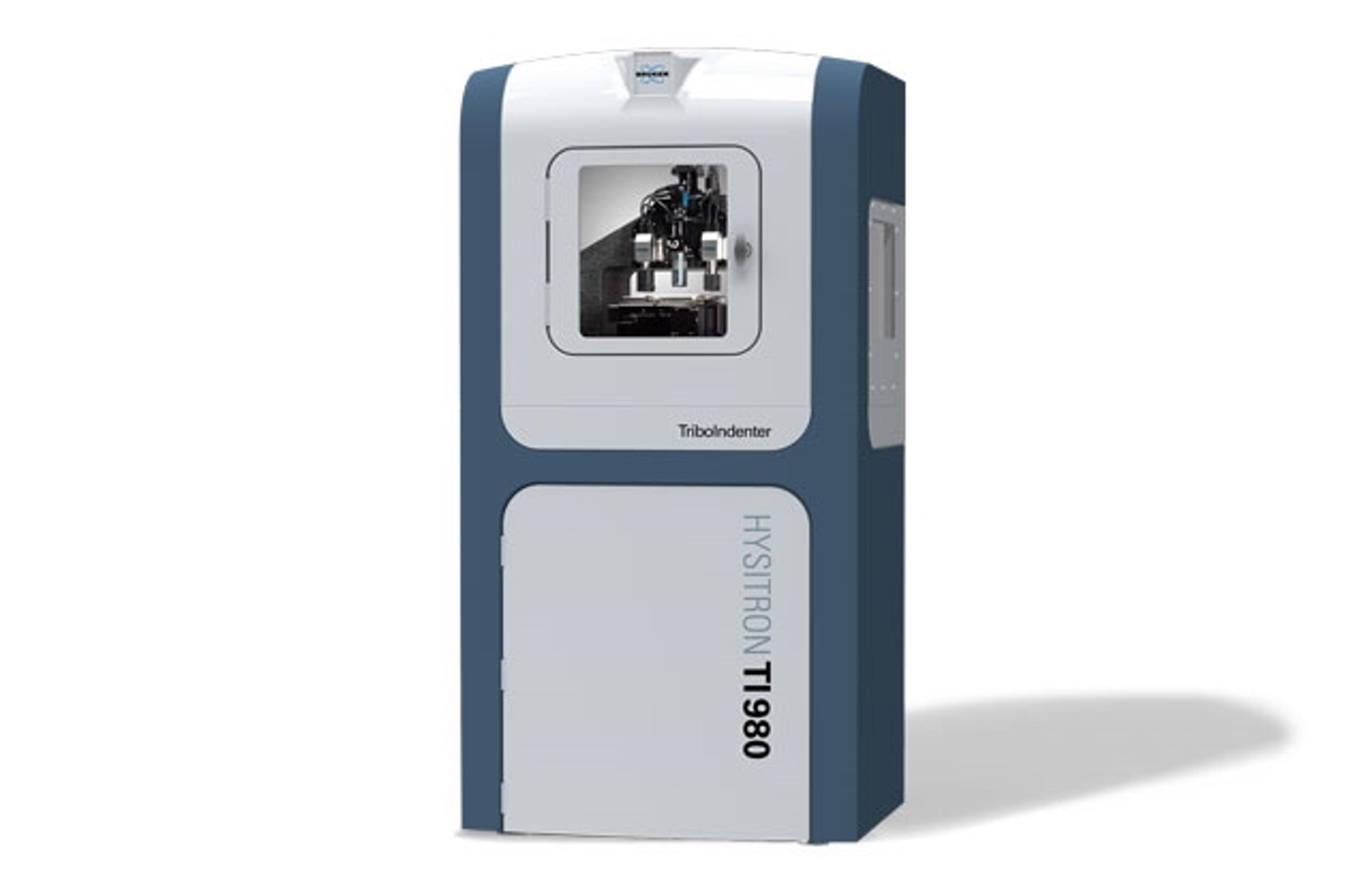
Hysitron TI 980

Bruker Nano Surfaces and Metrology

The Hysitron TI 980 nanoindenter achieves remarkable advances in control and throughput capabilities, testing flexibility, applicability, measurement reliability, and system modularity. This industry-leading system builds upon decades of Hysitron technological innovation to deliver new levels of extraordinary performance, enhanced capabilities, and ultimate versatility in nanomechanical characterization. 

(0)

Links

Tags

Particle CharacterizationParticle characterization instruments are used to determine particle size distribution, shape, surface area, zeta potential, density and porosity of particles and materials. Multiple tecchniques are available for determining particle size, shape and count including dynamic light scattering (DLS), laser diffraction, electrozone (Coulter technique), imaging particle analysis and single particle optical sensing. Determine the density of your material with a gas pycnometer or examine its surface area and porosity with gas adsorption analyzers and mercury porosimeters. Find the best particle characterization instruments in our peer-reviewed product directory: compare products, check customer reviews and receive pricing direct from manufacturers.Non-Destructive TechniquesNon-destructive techniques (NDT) describes a variety of analytical techniques used to evaluate the properties of a material. Common methods include ultrasonic, magnetic-particle, liquid penetrant, radiographic, remote visual inspection (RVI), and eddy-current testing. NDT is regularly used in forensic engineering, civil engineering, mechanical engineering, electrical engineering, systems engineering, aeronautical engineering, and medicine.ProfilometersProfilometers are instruments used to measure a surface's profile, in order to quantify etch depth, deposited film thickness, and surface roughness. They operate in either contact or non-contact modes and may use optical or stylus techniques to make the actual measurements.Light MicroscopyLight microscopes or optical microscopes are used to visualize microscale objects under magnification, including cells, clinical specimens and materials. Lab equipment for light microscopy includes confocal microscopes, fluorescence microscopes, zoom and stereo microscopes. Microscope slides and imaging reagents are available for visualizing samples, as well as various microscope stages and incubators for large or temperature-sensitive samples. Find the best light microscopes in our peer-reviewed product directory: compare products, check customer reviews and receive pricing direct from manufacturers.Electron MicroscopyElectron microscopes (EM) are used to create high-resolution images of samples at the nanoscale by means of an accelerated beam of electrons as a source of illumination. Types of electron microscope include scanning electron microscopes (SEM), transmission electron microscopes (TEM), scanning transmission electron microscopes (STEM) and cryo-electron microscopes. Focused ion beam (FIB) microscopes are useful for modifying or milling a sample surface with nanometer precision, as well as imaging. Find the best electron microscopes in our peer-reviewed product directory: compare products, check customer reviews and receive pricing direct from manufacturers.Quality TestingQuality testing ensures that products meet required specifications and safety standards in various industries, including pharmaceuticals, food, and materials. It is essential for maintaining product quality and consumer safety. Explore quality testing tools in our peer-reviewed product directory; compare products, check reviews, and get pricing directly from manufacturers.Semiconductors
Mechanical characterization of ultra-low-k dielectric films