ResourceMaterials

Understanding the Production of Chocolate Through Particle Size Analysis

Understanding the Production of Chocolate Through Particle Size Analysis

17 Feb 2016

Chocolate occupies a special place in the Western palate and one of its attractions is known to be due to its unique mouthfeel. The mouthfeel depends on the composition of the fat phase in the chocolate and also on the size of the cocoa, milk and sugar particles suspended in the fat. Extensive consumer research by chocolate manufacturers has determined that once a significant number of particles are above 30μm, the mouthfeel begins to deteriorate with consumers rating the chocolate as being of a lower quality. In this application note, the particle size distributions of dark, milk and white chocolates is measured. In a second experiment, the particle size distributions of crumb and powder milk chocolates is compared.

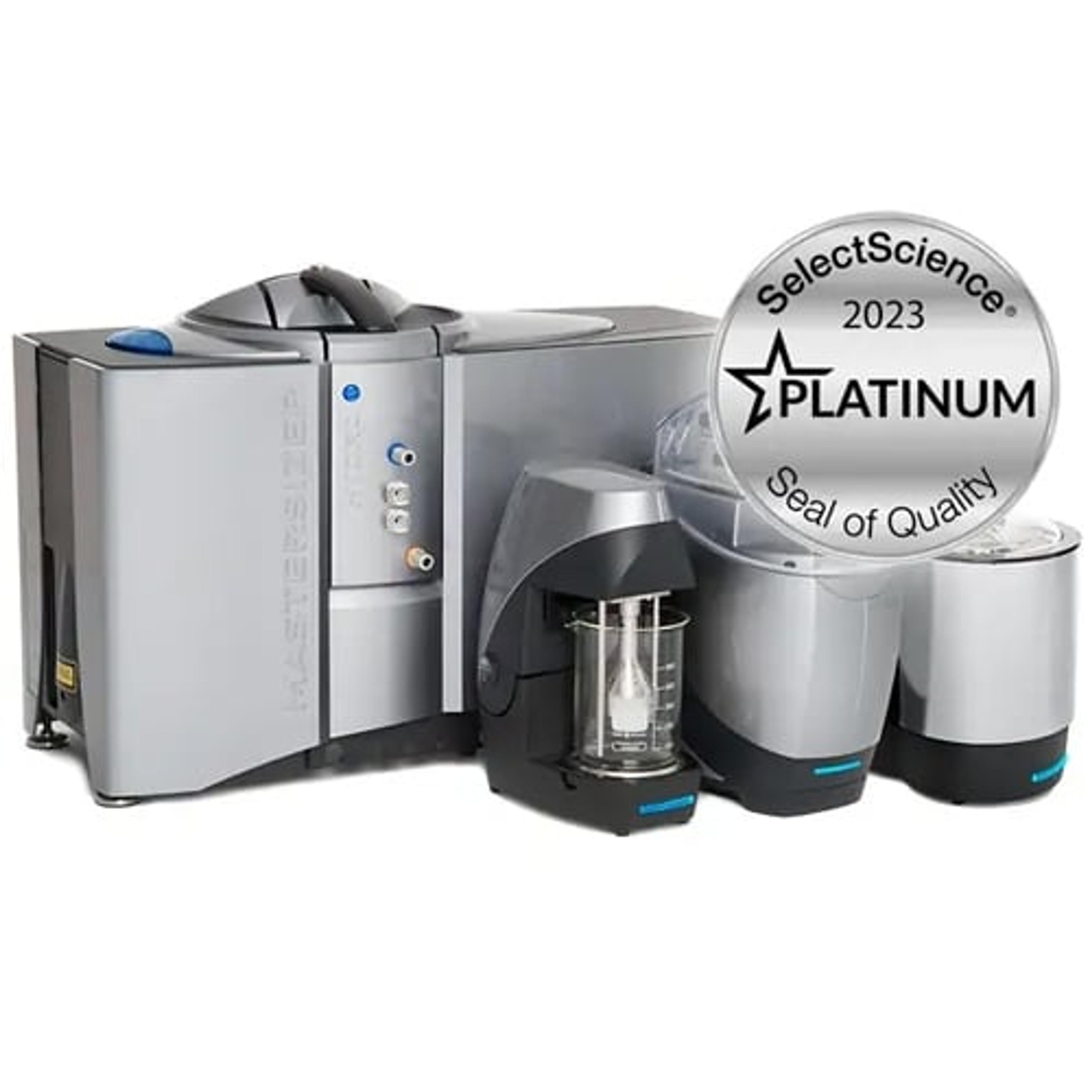
Mastersizer 3000

Malvern Panalytical

World’s most widely used particle size analyzers, the smartest way to measure particle size. There is a newer version of this product avilable, the Mastersizer 3000+ Ultra. 

(245)

Links

Tags

Food and Beverage AnalyzersFood and Beverage Analyzers are commonly used to provide information about the chemical composition, structure and physical properties of food materials.Food and Beverage ProcessingFood and Beverage Processing involves the preparation of food products for further analysis. Typical instrumentation includes blanchers, color sorters, cookers, grinders, and refrigeration. These are used to replicate the processes commonly used in the commercial preparation of food and beverages.Particle CharacterizationParticle characterization instruments are used to determine particle size distribution, shape, surface area, zeta potential, density and porosity of particles and materials. Multiple tecchniques are available for determining particle size, shape and count including dynamic light scattering (DLS), laser diffraction, electrozone (Coulter technique), imaging particle analysis and single particle optical sensing. Determine the density of your material with a gas pycnometer or examine its surface area and porosity with gas adsorption analyzers and mercury porosimeters. Find the best particle characterization instruments in our peer-reviewed product directory: compare products, check customer reviews and receive pricing direct from manufacturers.Non-Destructive TechniquesNon-destructive techniques (NDT) describes a variety of analytical techniques used to evaluate the properties of a material. Common methods include ultrasonic, magnetic-particle, liquid penetrant, radiographic, remote visual inspection (RVI), and eddy-current testing. NDT is regularly used in forensic engineering, civil engineering, mechanical engineering, electrical engineering, systems engineering, aeronautical engineering, and medicine.Food TestingFood testing refers to a variety experiments including PCR, mass spectrometry, processing, QuEChERS, analyzing and Kjeldahl.Chocolate
Understanding the Production of Chocolate Through Particle Size Analysis