
Real Time Calcium Flux Measurements in iPSC
26 Aug 2014Achieving an approval for a new drug involves extensive pre-clinical testing to predict potential unwanted side effects that may be caused by taking the drug candidate. In this application note we will present a 3D cell culture model using cardiac myocytes derived from human induced pluripotent stem cells (iPSCs), to analyze compound induced changes in calcium handling, which can indicate potential side-effects of drug candidates.
Related products
Request Quote for All Products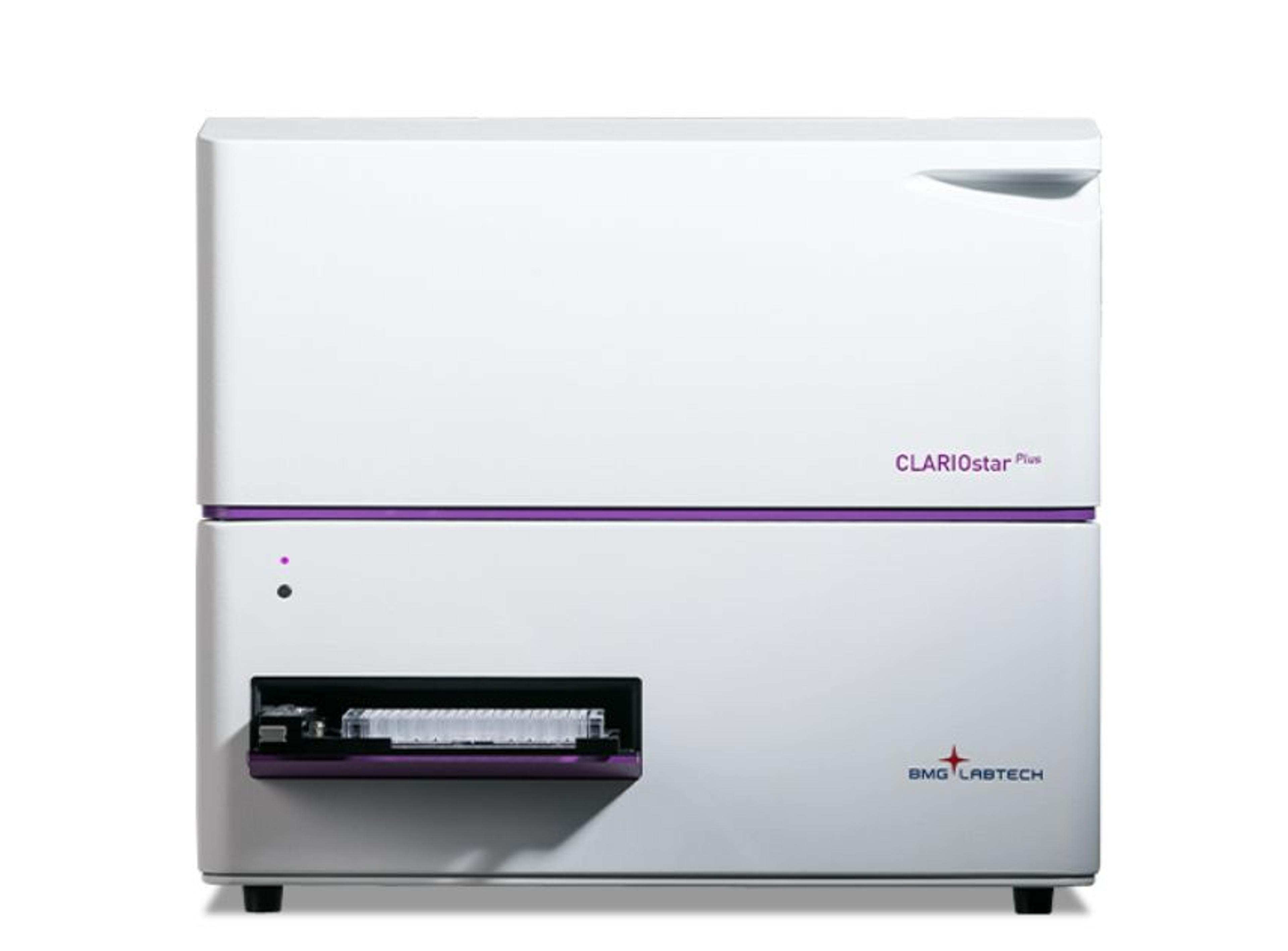
CLARIOstar® Plus Multi-mode Microplate Reader
BMG LABTECHMost flexible Multi-mode Microplate Reader for Assay Development
Links
Tags
Cell / Tissue CultureCell culture or tissue culture is used to study the biology of cells or tissues and to isolate cellular products in an environment which can be manipulated and well defined. Accurately control your culture environment with bioreactors or culture incubators, bind your cells to a surface or together with an extracellular matrix. Distinguish cell types with differential media or proliferate cells with certain characteristics using selective media. Enrich your media with supplements such as growth factors, sera and vitamins. Find the best cell and tissue culture products, kits and equipment in our peer-reviewed product directory: compare products, check customer reviews and receive pricing direct from manufacturers.High-Throughput ScreeningHigh-throughput screening (HTS) is an automated drug discovery technique for identification of active compounds against a compound library. Use HTS readers and integrated assay preparation / analysis workstations to screen your compounds. Identify active compounds against various HTS libraries, including membranes, proteins and peptides and HTS cell lines. Find the best high-throughput screening products in our peer-reviewed product directory: compare products, check customer reviews and receive pricing direct from manufacturers.Microplate Readers / DetectorsMicroplate readers are used to automate the detection and analysis of labeled or label-free components in microplates during assays or live-cell monitoring. Microplate readers are generally distinguished by their mode of detection. Types include absorbance, luminescence, fluorescence intensity, fluorescence polarization, TRF / FRET and multimode microplate readers. Microplate readers deliver a high throughput of samples by reading multiple wells simultaneously, with the 96-well format the most commonly used. As a result, microplate readers are often used in the drug discovery, bioassays, research and pharmaceutical industries for screening applications. Microplate loading can also be automated, with robotic microplate stackers to increase throughput. Find the best microplate readers in our peer-reviewed product directory: compare products, check customer reviews and receive pricing direct from manufacturers.ADME-ToxicologyADME-toxicology (ADME-Tox) studies are used in pharmacology and pharmacokinetics to assess the activity/toxicity of drugs <i>in vivo</i> or <i>in vitro</i>. Find bioassays for absorption, distribution, metabolism, and excretion of drug molecules including cytotoxicity, transporter/permeability, metabolism and activity assays as well as hepatocytes and cell lines for ADME. Find the best ADME-toxicology products in our peer-reviewed product directory: compare products, check customer reviews and receive pricing direct from manufacturers.Assay AssemblyAssay Assembly is technique used in drug discovery to develop assays to test the cytotoxicity, genotoxicity, or other activities of a compound on a cell. Assay assembly requires chip assembly, a delivery system and a detection and analysis method. Beneficial features of assay kits or automated systems include high-throughput, high speed and sensitivity and low signal to noise ratio.Cell-Based AssaysCell-based assays are used to monitor the presence, quantity and activities of a desired cellular analyte including drug molecules or biomarkers. This can reveal information on cell health (apoptosis, cytotoxicity, viability and proliferation assays), cell metabolism, cell migration and cell signaling mechanisms. Find the best cell-based assay products, kits and equipment with our peer reviewed product directory: compare products, check customer reviews and receiving pricing direct from manufacturers.Animal ModelsThe use of non-human animals in experiments or behavorial observations. The research is conducted inside universities, medical schools, pharmaceutical companies, farms, defence establishments, and commercial facilities that provide animal-testing services to industry. It includes pure research such as genetics, developmental biology, behavioral studies, as well as applied research such as pharmaceutical testing in pre-clinical, before human, studies. Fluorescence Based AssayFluorescence based assays are widely used in life science research and high-throughput screening to measure a broad range of cellular activities.3D Cell CultureCulturing cells in three dimensions allows more physiologically relevant observations to be made regarding cellular interactions and gene expression. 3D models provide a more accurate representation of cells in vivo and are more stable than 2D cultures, making them very useful for long-term studies.