ResourceSeparations

Quantifying Picogram Concentrations of Aflatoxin M1 in Liquid Milk using SPE Cleanup and LC/MS Analysis

Quantifying Picogram Concentrations of Aflatoxin M1 in Liquid Milk using SPE Cleanup and LC/MS Analysis

16 Nov 2015

Aflatoxins are produced by fungi and these species can infect important cereal grains, including maize, as well as ground (peanuts) and tree nuts. The focus of this study is the metabolite of AFB1, aflatoxin M1 (AFM1) that can be present in the milk of lactating dairy animals that have consumed aflatoxin contaminated feeds. A fast method for cleanup and analysis has been developed using Supel™ Tox AflaZea SPE, Ascentis® Express C18 HPLC column and LC/MS.

Ascentis® Express C18

Sigma-Aldrich Supelco

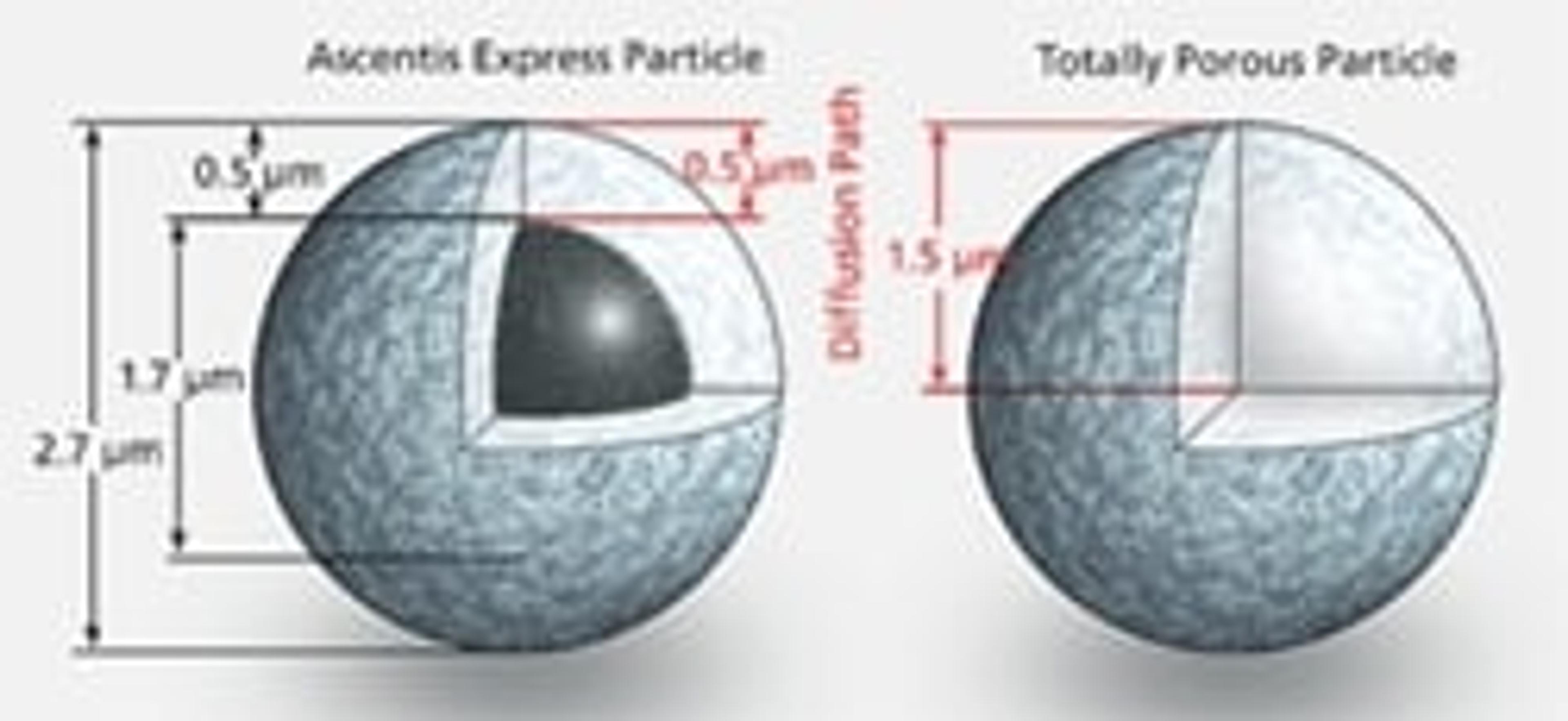
  C18 HPLC column for High Speed and High Resolution Applications. Ascentis® Express C18 is the first choice for starting a new method. Ascentis Express HPLC columns, through the use of Fused-Core® particle technology, can provide you with both the high speed and high efficiencies of sub-2 μm particles at lower system pressure. With identical conditions, the Ascentis Express C18 column performs more than 4X faster than a standard C18 column, for most applications. The combination of high efficiency and lower operating pressure benefits UHPLC (or other ultra high pressure system) users, as well as conventional HPLC users. The increased efficiency of Ascentis Express columns enables you to use shorter columns and reduce solvent usage/cost. The Ascentis® Express C18 is also featured in an application note about liquid GC columns which can be found on the SelectScience website here, and a study on HPLC separation of bile acid here. Column details: Mode: Reversed Phase USP Code: L1 Particle Size: 2.7, <2.0 μm Pore Size: 90 Å Length: 20, 30, 50, 75, 100, 150 mm ID: 1.0, 2.1, 3.0, 4.6, 10 mm
(3)

Supel™ Tox SPE Cartridges

Sigma-Aldrich Supelco

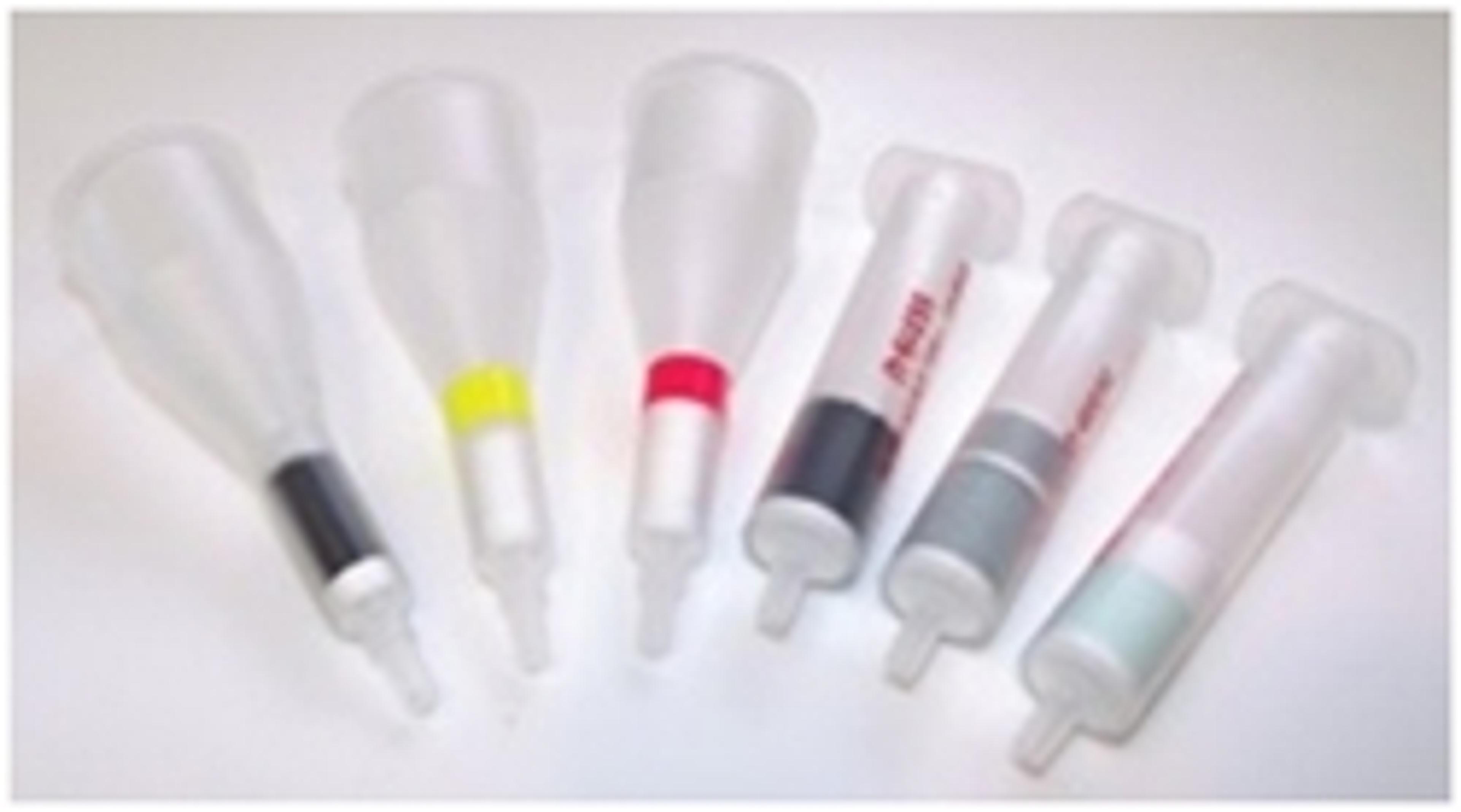
Fast and Simple Cleanup for Mycotoxin Analysis.The need for a quick, simplistic sample cleanup approach prior to chromatographic mycotoxin analysis has brought about SPE cartridges that significantly decrease sample prep time, increase reproducibility, and are more user friendly as compared to the industry standard immunoaffinity columns. In addition the Supel Tox SPE approach requires less equipment and fewer consumables.Unlike the multiple step "bind and elute" strategy implemented when using immunoaffinity columns, the Supel Tox AflaZea, DON, and Tricho SPE cartridges employ an "interference removal" strategy which saves time by eliminating wash steps prior to elution of aflatoxin, zearalenone, deoxynivalenol, and tricothecenes (type A and B), respectively. Cartridges removing interferences associated with analysis of the above and fumonisins (B1 and B2) as well as ochratoxin A are also available as a part of our Supel Tox product offering.Features and Benefits:• Better reproducibility than the current industry standard, immunoaffinity columns• Removes interferences associated with mycotoxin analysis• Basic and quick methodology, requires little additional method development• Sample preparation time is ten times faster than when using immunoaffinity columns• Improved shelf life over immunoaffinity columns due to thermally stable format• No refrigeration required for shipping and storage

(0)

Links

Tags

UHPLC and HPLCHigh performance liquid chromatography (HPLC) and ultra high performance liquid chromatography (UHPLC), also known as UPLC, are analytical techniques used to separate, identify and quantitate components of complex mixtures including biological samples such as proteins and lipids as well as chemical mixtures of pesticides, drugs and oils. Both techniques are liquid chromatographic methods but differ by operating pressures (HPLC < 6000 psi < UHPLC ). Components of HPLC and UHPLC systems include columns, detectors, pumps, autosamplers and column heaters. Explore a range of UHPLC and HPLC columns for your specific sample needs including reverse phase, normal phase, ion exchange, HILIC, ion exclusion and size exclusion columns. For more specialized HPLC, explore FPLC, countercurrent LC and simulated moving bed systems. Find the best UHPLC and HPLC equipment in our peer reviewed product directory: compare products, check customer reviews and receive pricing direct from manufacturers.Solid-Phase ExtractionSolid-phase extraction (SPE) is used for clean-up, extraction and concentration of semi-volatile or non-volatile analytes from complex mixtures including blood, urine and food samples. Multiple formats are available for conducting SPE, including prepacked SPE cartridges, disks and microplates, as well as SPE sorbent powders for manual packing. SPE systems can be used to automate the process and extract multiple samples at once. Solid-phase microextraction (SPME) and supported liquid extraction (SLE) products are also available in the same formats. Find the best SPE, SLE and SPME equipment in our peer-reviewed product directory: compare products, check customer reviews and receive pricing direct from manufacturers.Food and Beverage AnalyzersFood and Beverage Analyzers are commonly used to provide information about the chemical composition, structure and physical properties of food materials.Food and Beverage ProcessingFood and Beverage Processing involves the preparation of food products for further analysis. Typical instrumentation includes blanchers, color sorters, cookers, grinders, and refrigeration. These are used to replicate the processes commonly used in the commercial preparation of food and beverages.MetabolitesMetabolites are the intermediate and end products of metabolism. Analyzing metabolites offers insight into cellular processes and disease mechanisms and is critical in fields like pharmacology, toxicology, and diagnostics. Explore our peer-reviewed product directory to find the best tools for metabolite analysis, compare products, check reviews, and get pricing directly from manufacturers.Food SafetyFood safety describes the prevention of food-borne illnesses. Contamination with a variety of pathogens can be prevented with adequate temperature control, hygiene and labeling. Food samples can be tested using GC/MS, HPLC, SPE, and qPCR to ensure their adherence to regulations.Food TestingFood testing refers to a variety experiments including PCR, mass spectrometry, processing, QuEChERS, analyzing and Kjeldahl.Food ContaminationFood contamination refers to the presence of harmful substances or pathogens in food, posing risks to human health. Contaminants can be biological, chemical, or physical, and their detection is crucial for ensuring food safety. Advanced testing methods like PCR, chromatography, and spectroscopy are used to identify contaminants in food products. Browse our peer-reviewed product directory to find the best solutions for food contamination detection, compare products, check reviews, and get pricing directly from manufacturers.Trace Level ImpuritiesTrace level impurities refer to low concentrations of unwanted substances found in chemicals, pharmaceuticals, and other products. Detecting and removing these impurities is crucial for product safety and regulatory compliance. Explore trace impurity analysis tools in our peer-reviewed product directory; compare products, check reviews, and get pricing directly from manufacturers.AflatoxinLow Extractable Levels