ResourceGeneral Lab

Non-Alcoholic Beverage Solution Guide: A Collection of Essential Analyses

Non-Alcoholic Beverage Solution Guide: A Collection of Essential Analyses

20 Apr 2016

Consumers appreciate healthy and natural food and beverages. Products such as bottled water or fruit juices are predestined to match such preferences. Thorough and accurate testing is one of the steps to achieve and maintain consumer satisfaction. Strict hygienic specifications are prerequisite, thus requiring diligent execution of work tasks. Food safety trends and requirements further increase the demand for testing, error-free documentation and traceability. This guide covers routine tests and how automation can contribute to lab efficiency, results reliability and product quality.

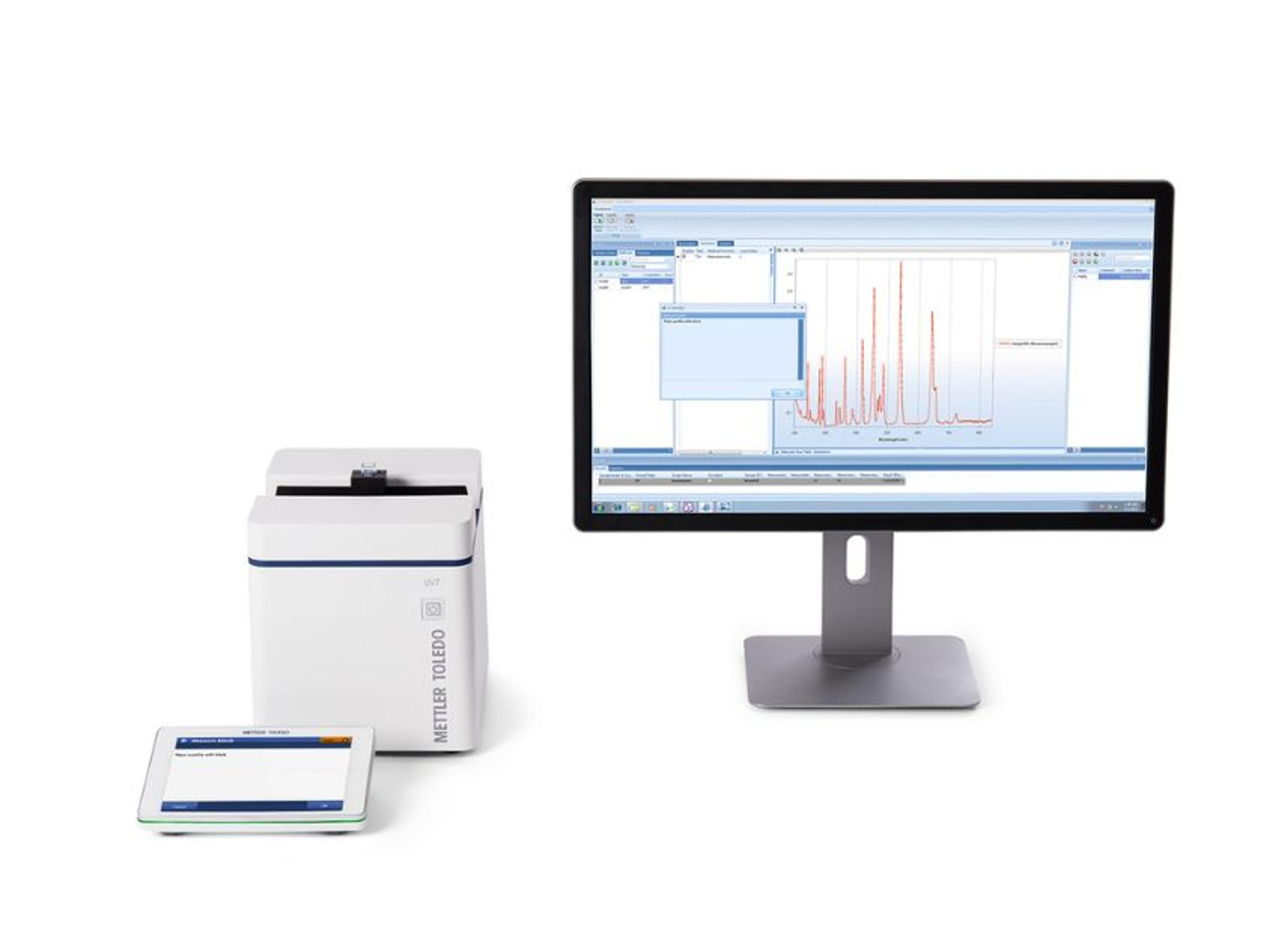
LabX UV/VIS

METTLER TOLEDO

UV/VIS LabX Software is fully adaptable to meet your needs. The many options in LabX allow you to simplify the way you work, ensuring that transcription errors and omissions are a thing of the past. LabX takes care of all of the hard work, enhancing productivity and decreasing manual interactions.

(1)

Links

Tags

Balances and Moisture AnalyzersBalances & Moisture Analyzers / weighing scales measure static or dynamic loads. Features to consider when choosing an analytical balance include accuracy, capacity and resolution. Additional features and specialized balances include enclosures for weighing powder, microbalances for measuring small quantities, portable balances, moisture analyzers, top loading balances and internal calibration for measurements over time or with varied temperature.Refrigerators Freezers and CryogenicsRefrigerators, Freezers & Cryogenics can be used for preservation or experimental purposes. Types of freezers include deep freeze, -80C°C, ultra-low temperature, explosion proof, cryogenic and controlled rate freezers. Freezing is also used in freeze-drying equipment for dehydration processes. Feature to consider in freezers include temperature control and recorders, failure alarms and self-closing mechanisms.pH Meters and ElectrodesIon and pH meters are electrochemical equipment used to measure the pH (acidity or alkalinity) or specific ion concentration of a solution. Other meters can also measure the conductivity or dissolved oxygen content of a solution. pH meters, specific ion meters, conductivity meters and dissolved oxygen meters can come as benchtop or portable equipment. A meter’s electrodes can be replaced with easy to clean electrodes or electrodes for difficult media. pH, ion and conductivity meters are typically used in life science research, pharmaceutical testing, food and beverage, environmental and water analysis. Find the best pH meters and electrodes in our peer-reviewed product directory: compare products, check customer reviews and receive pricing direct from manufacturers.Labware and Lab SuppliesLabware and lab supplies include various forms of glassware, plasticware, reagents and personal protective equipment (PPE) and are used across all scientific laboratories, enabling daily tasks to be performed. Explore a range of flasks and beakers, petri dishes, carboys and storage bottles. Labware such as condensers, desiccators and burettes are also available for more specific tasks. Find the best labware and lab supplies in our peer-reviewed product directory: compare products, check customer reviews and receive pricing direct from manufacturers.Food and Beverage AnalyzersFood and Beverage Analyzers are commonly used to provide information about the chemical composition, structure and physical properties of food materials.Food and Beverage ProcessingFood and Beverage Processing involves the preparation of food products for further analysis. Typical instrumentation includes blanchers, color sorters, cookers, grinders, and refrigeration. These are used to replicate the processes commonly used in the commercial preparation of food and beverages.Quality ControlQuality control is needed in all production processes. Quality control is a monitoring procedure or set of procedures that are put in place to ensure that a manufactured product adheres to a defined set of quality criteria. Routine QuantitationFood SafetyFood safety describes the prevention of food-borne illnesses. Contamination with a variety of pathogens can be prevented with adequate temperature control, hygiene and labeling. Food samples can be tested using GC/MS, HPLC, SPE, and qPCR to ensure their adherence to regulations.Quality TestingQuality testing ensures that products meet required specifications and safety standards in various industries, including pharmaceuticals, food, and materials. It is essential for maintaining product quality and consumer safety. Explore quality testing tools in our peer-reviewed product directory; compare products, check reviews, and get pricing directly from manufacturers.Food TestingFood testing refers to a variety experiments including PCR, mass spectrometry, processing, QuEChERS, analyzing and Kjeldahl.Food QualityFood quality refers to the attributes of food that influence its safety, nutrition, and taste. Monitoring and ensuring food quality are essential in production to meet health regulations and consumer expectations. Techniques like spectroscopy, chromatography, and microbial testing are used to assess food properties and detect contaminants. Browse our peer-reviewed product directory to find food quality testing solutions; compare products, check reviews, and get pricing directly from manufacturers.Beverage AnalysisBeverage analysis involves testing and evaluating the composition, quality, and safety of drinks, from alcoholic beverages to soft drinks. Techniques like chromatography and spectroscopy are commonly used to analyze flavors, nutrients, contaminants, and additives. Browse our peer-reviewed product directory to find the best beverage analysis tools, compare products, check reviews, and get pricing directly from manufacturers.