
Extraction and Quantitation of Bisphenol A (BPA) from Broth-Based Soup Matrices Using Molecularly Imprinted Polymer Solid Phase Extraction
Extraction and Quantitation of Bisphenol A (BPA) from Broth-Based Soup Matrices Using Molecularly Imprinted Polymer Solid Phase Extraction
3 Dec 2015This application illustrates the use of the SupelMIP® SPE-Bisphenol A for the extraction of BPA from beef and chicken broth matrices prior to chromatographic analysis. In addition to excellent analyte recovery and reproducibility, the MIP SPE extraction and cleanup method provided sufficient matrix interference removal, facilitating quantitation. In addition, this method allows for detection and quantification of BPA levels that were as low as 60 ng/g, which is lower than current specified EU regulations.
Related products
Request Quote for All Products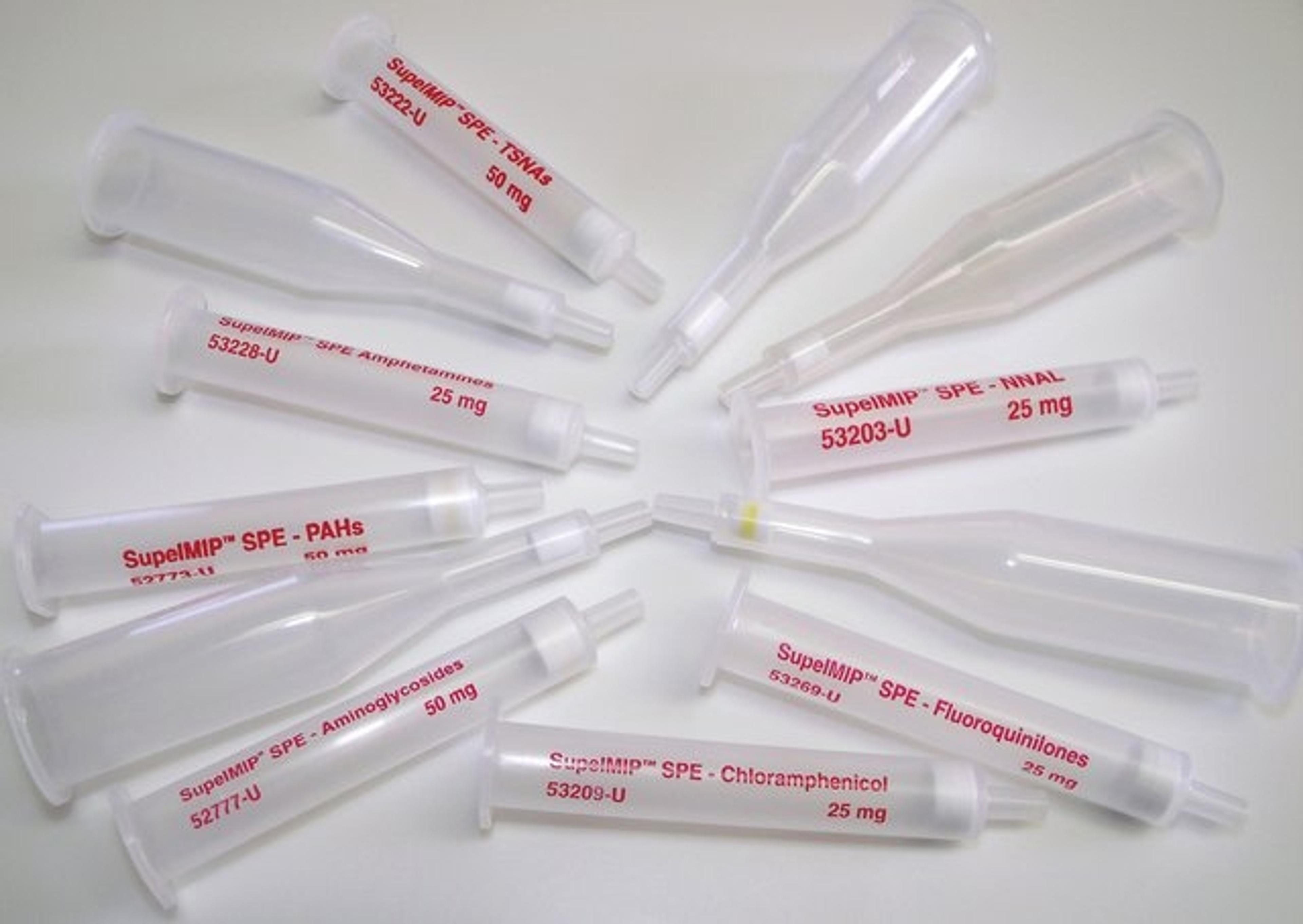
SupelMIP® SPE - Bisphenol A
Sigma-Aldrich SupelcoThe SupelMIP SPE line consist s of highly cross-linked polymers that are engineered to extract a single analyte of interest or a class of structurally related analytes with an extremely high degree of selectivity. This is possible because selectivity is introduced during MIP synthesis in which a template molecule, designed to mimic the analyte, guides the formation of specific cavities or imprints that are sterically and chemically complementary to the analyte(s) of interest. By careful design of the imprinting site, either by molecular modeling, experimental design, or screening methods, the binding cavities can be engineered to offer multiple interaction points with the analyte(s) of interest. This leads to a stronger interaction between the solid-phase and the analyte(s). As a consequence, harsher wash conditions can be tolerated during SPE methodology resulting in cleaner extracts. Because extraction selectivity is significantly improved, lower background is observed allowing analysts to achieve lower limits of detection. Features and Benefits: Highly selective SPE for trace analysis in complex matrices Achieve lower detection limits Significant time and cost savings Improved MS-compatibility
Ascentis® Express C18
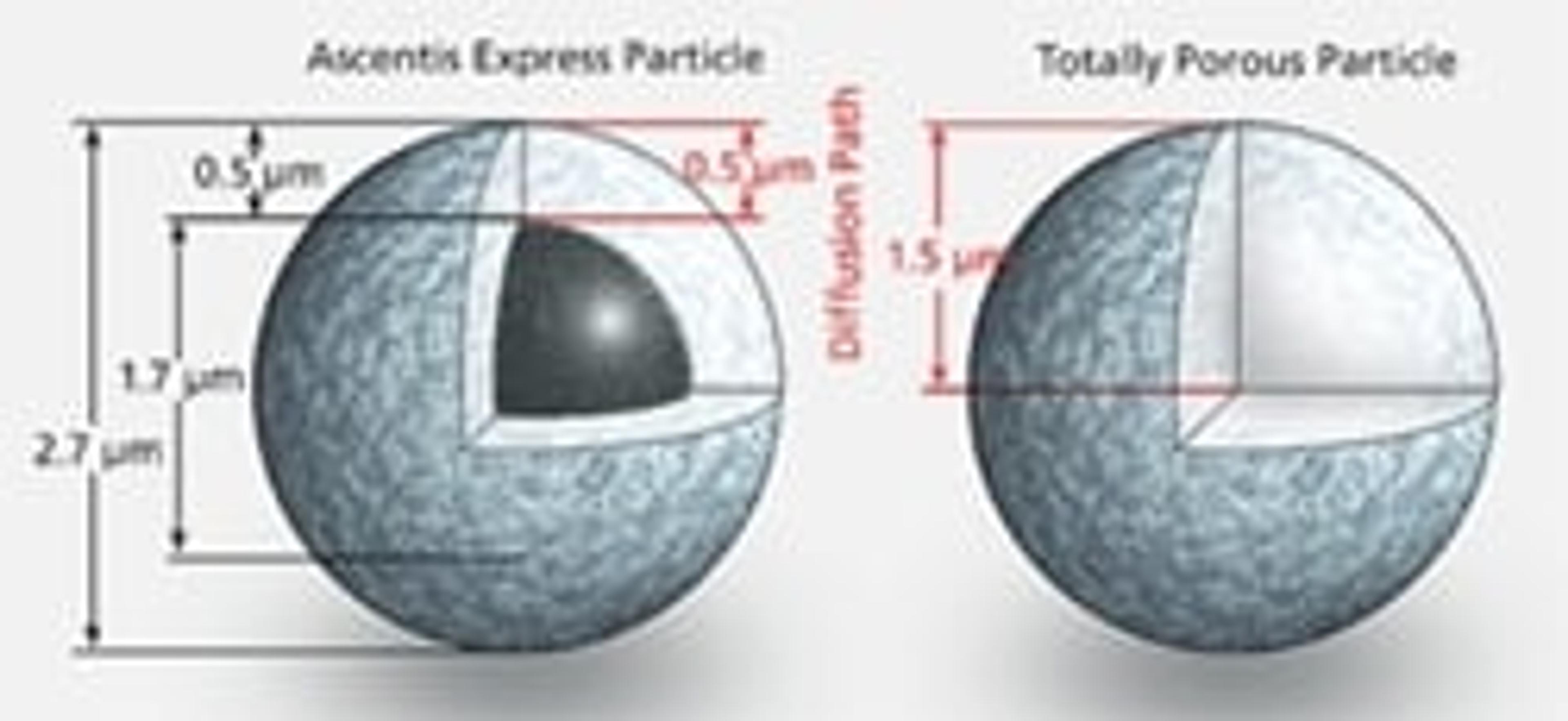
Sigma-Aldrich SupelcoC18 HPLC column for High Speed and High Resolution Applications. Ascentis® Express C18 is the first choice for starting a new method. Ascentis Express HPLC columns, through the use of Fused-Core® particle technology, can provide you with both the high speed and high efficiencies of sub-2 μm particles at lower system pressure. With identical conditions, the Ascentis Express C18 column performs more than 4X faster than a standard C18 column, for most applications. The combination of high efficiency and lower operating pressure benefits UHPLC (or other ultra high pressure system) users, as well as conventional HPLC users. The increased efficiency of Ascentis Express columns enables you to use shorter columns and reduce solvent usage/cost. The Ascentis® Express C18 is also featured in an application note about liquid GC columns which can be found on the SelectScience website here, and a study on HPLC separation of bile acid here. Column details: Mode: Reversed Phase USP Code: L1 Particle Size: 2.7, <2.0 μm Pore Size: 90 Å Length: 20, 30, 50, 75, 100, 150 mm ID: 1.0, 2.1, 3.0, 4.6, 10 mm