Top tools and new techniques to ensure food quality and fight fraud

Discover the latest advances in food quality testing and authenticity determination

30 Sept 2020

Carrie Haslam
Associate Editor

Editorial article

As part of our new special feature, we’ve compiled a list of top resources featuring some of the latest technologies and techniques as well as expert insights to help fight food fraud and ensure food quality. Read on to learn about new workflows to combat foodborne pathogens, compare the PCR methods for Salmonella species detection, and discover tools to optimize safety and quality across every stage of food production.

Targeting salmonella: The emerging technology transforming foodborne detection

Dr. Daniele Sohier discusses how to optimize pathogen detection with state-of-the-art workflows from Thermo Fisher Scientific, enabling rapid, efficient, and reliable Salmonella spp. testing with same-day results for fresh food products.

Read article

Sterile filtration technology: Perform quick and easy microbiological analysis

Save your lab time and minimize contamination with the ready-to-use sterile filtration unit from Sartorius, combining a funnel, lid, filter base, membrane filter, and cellulose pad in one simple unit.

Download method

Salmonella: Detection in poultry and pork, including PPS, in under 16 hours

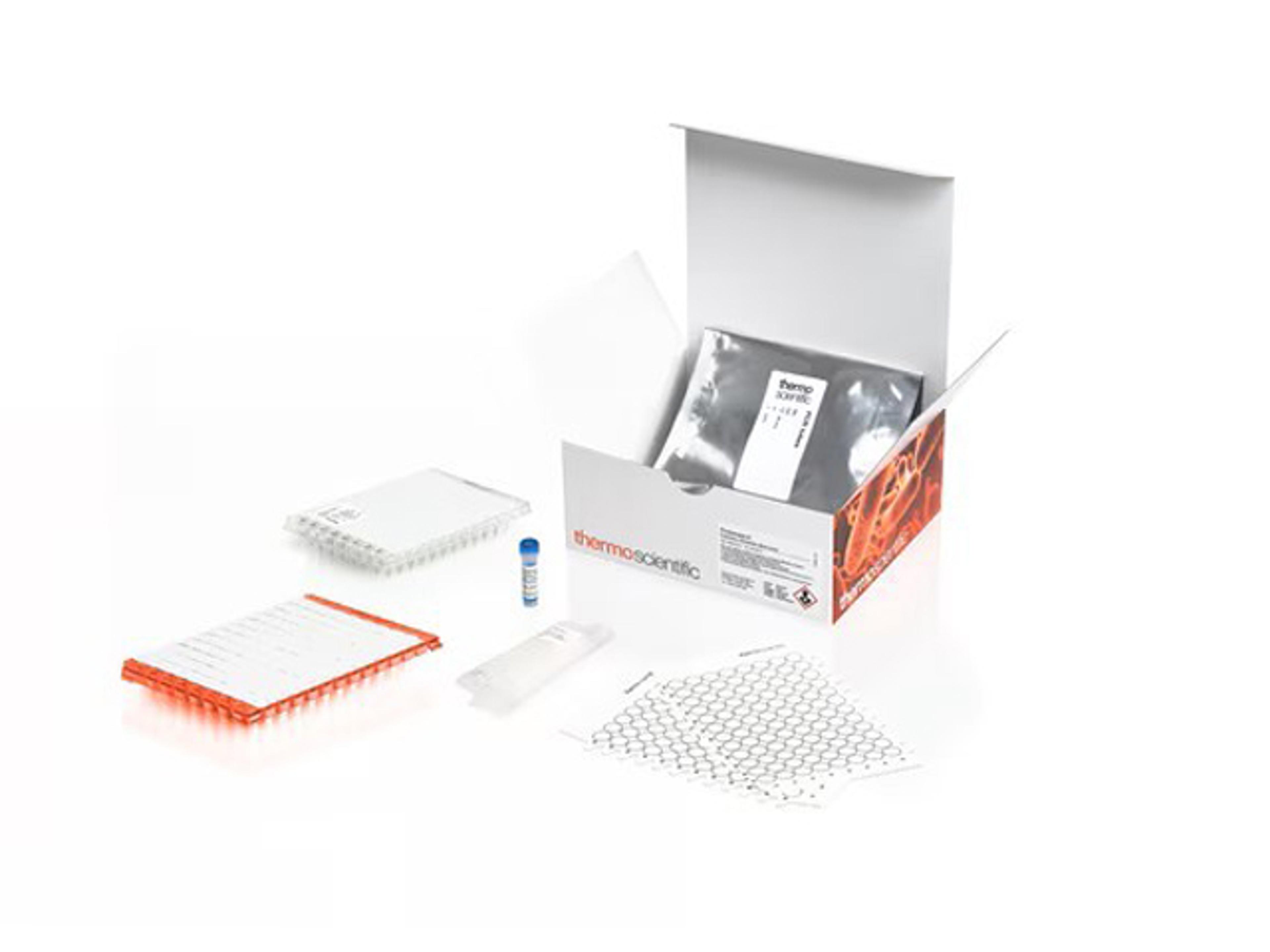
Early Salmonella detection and serovar identification helps to safeguard hygiene and reduce contamination risks. Discover how the Thermo Scientific™ RapidFinder™ Multiplex PCR Kit rapidly detects three key targets in as little as 16 hours, saving time and money.

Download method

Fraudulent oils: Certify authenticity of edible oils with GC analysis

Fight food fraud with Rxi-65TG columns from Restek, for accurate and reliable analysis of triglycerides without column bleed interference and observation of underivatized mono- and diglycerides.
Download method

NIR spectroscopy: Optimize food production, safety and quality

Discover how to improve food production, ensure safety and measure quality with Ocean Insight, by using NIR spectroscopy to streamline your correlations, scan smarter and perform deeper levels of statistical analysis.
Download method

Detecting food fraud: Tips for robust experimental results

Investigating the validity of product labeling, supply chain integrity or determining the composition of foods can be a huge challenge. Here, Agilent Technologies presents the latest workflows for identifying food authenticity markers.

Download Guide

Expert insights:

  • Dr. Amélia Camarinha-Silva, Hohenheim University, shares how her team is approaching the phylogenetic and functional characterization of the microbial community present in livestock gastrointestinal tracts, from DNA extraction to high-throughput sequencing, and how she came to choose the best DNA extraction technology for this work. Read article>>
  • Prof. Chris Elliott, Queen's University Belfast, outlines how his research team is developing fit-for-purpose, reliable, and highly accurate analytical tests to tackle food fraud. Watch interview>>
  • Erin Crowley, Q Laboratories, Inc., and Martin Weidmann, Cornell University, explore the impact of Salmonella on the global meat and poultry supply chain.Watch webinar>>
  • Dr. Natasha Spadafora, Research Fellow in Food Science, Calabria University, explains how to analyze VOCs to assess food and beverage quality throughout the supply chain.Read webinar highlights>>

Other resources:

  • Sartorius provides an overview of the key features of its Nutrient Pad Sets, an attractive alternative to agar plates for economical, time-saving microbiological quality control of water and brewery samples. Watch video>>
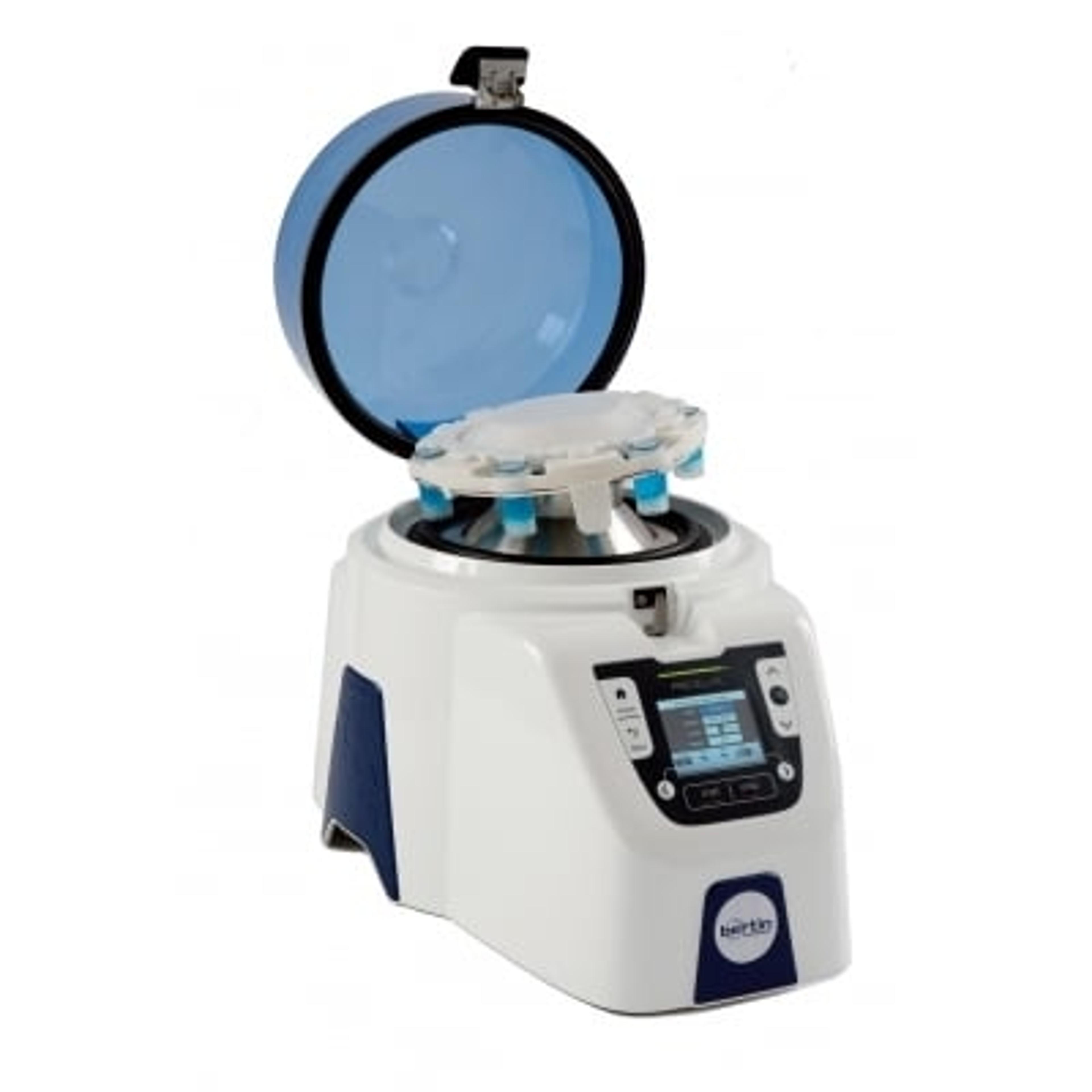
  • Hear how the Precellys® Evolution from Bertin Instruments is enabling CRO Genclis SAS to extract highly concentrated proteins, recognized by IgE antibodies in allergic patients, from difficult food samples. Watch video>>
  • Marcel Bruggeman, CEO of NofaGroup, explains how fast turnaround for dioxin analysis is attracting more customers to NofaLab Laboratories. Watch video>>
  • Achieve the separation and analysis of complex food and plant samples in under one minute - without the need for sample preparation. Download method>>
  • Discover a new, highly robust LC-IRMS technique for the detection of sugar adulteration in honey. Download method>>
  • Learn how morphologically-directed Raman spectroscopy (MDRS) can be used to characterize starch and protein particles of flour products. Download method>>

Top news stories in food quality testing

  • Metrohm announces Misa, a portable solution for detecting and identifying food contaminants in seconds. Learn more>>
  • Thermo Fisher Scientific launches SureTect PCR Assays for expanded foodborne pathogen analysis. Learn more>>
  • PerkinElmer launches gluten quality testing solution for grain and flour, based on the world-standard Perten gluten index method. Learn more>>

Your recommendations:

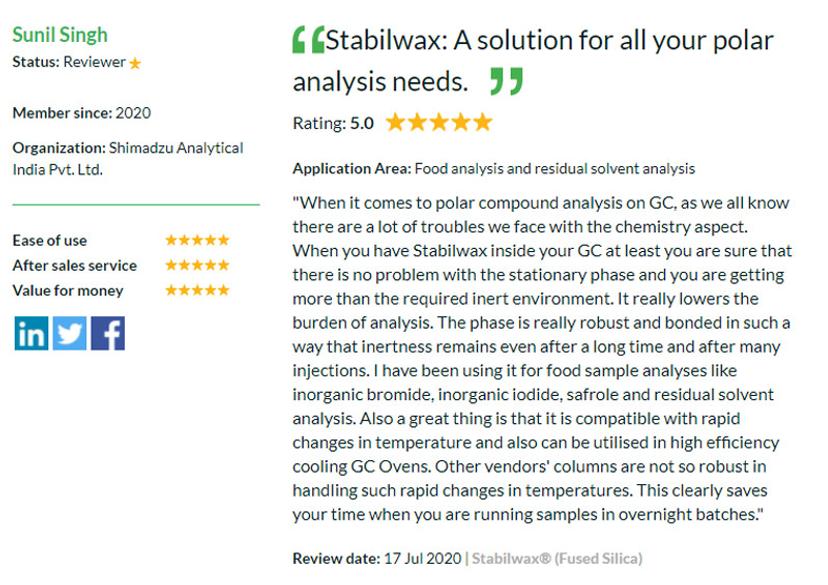
Take a look at what other researchers and scientists all over the world are saying about the latest equipment and technologies in food analysis. Sunil Singh, from Shimadzu Analytical India, shared his opinion on the Stabilwax® (Fused Silica) by Restek Corp:
Find more news and resources in our dedicated Food Quality Special Feature>>

Links

Tags

Infrared / IR SpectroscopyInfrared (IR) spectroscopy measures the interaction of infrared light with a sample, including transmission, reflectance & absorbance, facilitating the identification of analytes. Equipment used for quantitative analysis includes Fourier-transform infrared (FTIR) spectrometers, infrared cameras, FTIR gas analyzers, as well as attenuated total reflectance (ATR) accessories and pellet or film presses. Find the best IR spectroscopy products in our peer-reviewed product directory: compare products, check customer reviews and receive pricing direct from manufacturers.LC-MSLC-MS (liquid chromatography-mass spectrometry) systems and equipment are used for separation and quantitative analysis of complex mixtures, combining liquid chromatography and mass spectrometry. Quantify proteins, contaminants, pesticides or screen for drug metabolites with a high level of sensitivity. LC-MS systems and equipment include reverse phase, normal phase and specialized columns integrated with various MS detectors such as time-of-flight (TOF), quadrupole, orbitrap or ion trap mass analyzers. LC-MS/MS instruments equipped with a qTOF or triple quadrupole analyzer give greater sensitivity and resolving power to your analysis. Find the best LC-MS equipment in our peer-reviewed product directory: compare products, check customer reviews and receive pricing direct from manufacturers.Mass SpectrometryMass spectrometry (MS) is a powerful analytical technique used to identify and quantify molecules based on the mass-to-charge ratio of gas-phase ions. It provides detailed information about the structure, composition, and properties of compounds and is widely used across fields such as environmental monitoring, materials science, drug discovery and development, food and beverage testing, and wider chemical research. Key MS techniques include tandem mass spectrometry (MS/MS), liquid chromatography–mass spectrometry (LS-MS) and inductively coupled plasma (ICP-MS). Choosing from these wide range of techniques and technologies can be a daunting task, so keep up to date with scientific applications, performance expectations, and customer reviews here all in one place. Visit our product directory to receive quotes direct from the manufacturer. PCR and Thermal CyclingPolymerase chain reaction (PCR) kits and thermal cyclers are used for the in vitro amplification of DNA permitting subsequent analysis and experimental procedures. Explore a range of high-quality polymerase, primers and nucleotides or simplify your workflow with a PCR mastermix. Find reverse transcription PCR (RT-PCR) and cDNA synthesis kits for RNA products and libraries. Quantitatively measure the amplification of DNA with real-time PCR (qPCR) and droplet digital PCR (ddPCR) kits and systems, and discover automated PCR setup solutions to increase throughput. Alternative DNA amplification methods also include recombinase polymerase amplification (RPA) kits. Find the best PCR kits and thermal cyclers and purification equipment in our peer-reviewed product directory: compare products, check customer reviews and receive pricing direct from manufacturers.MicrobiologyMicrobiology is the study of microorganisms including protists, prokaryotes, fungi, and, often, viruses. Microorganisms are a useful research tool as genetic vectors and, in immunology, for antibiotic susceptibility testing, cellular biology and genetics. Microorganisms commonly grow readily in incubators with microbial culture media; this can contain chromogenic supplements to differentiate between cell lines. Estimate your culture’s density of microorganisms with colony counters, or screen and select colonies for desirable clones with automated colony pickers. Additionally, equipment is available to monitor environments for the presence of microbes and identify with microbial identification instruments. Find the best microbiology products in our peer-reviewed product directory: compare products, check customer reviews and receive pricing direct from manufacturers.Food and Beverage AnalyzersFood and Beverage Analyzers are commonly used to provide information about the chemical composition, structure and physical properties of food materials.Food and Beverage ProcessingFood and Beverage Processing involves the preparation of food products for further analysis. Typical instrumentation includes blanchers, color sorters, cookers, grinders, and refrigeration. These are used to replicate the processes commonly used in the commercial preparation of food and beverages.Particle CharacterizationParticle characterization instruments are used to determine particle size distribution, shape, surface area, zeta potential, density and porosity of particles and materials. Multiple tecchniques are available for determining particle size, shape and count including dynamic light scattering (DLS), laser diffraction, electrozone (Coulter technique), imaging particle analysis and single particle optical sensing. Determine the density of your material with a gas pycnometer or examine its surface area and porosity with gas adsorption analyzers and mercury porosimeters. Find the best particle characterization instruments in our peer-reviewed product directory: compare products, check customer reviews and receive pricing direct from manufacturers.Food SafetyFood safety describes the prevention of food-borne illnesses. Contamination with a variety of pathogens can be prevented with adequate temperature control, hygiene and labeling. Food samples can be tested using GC/MS, HPLC, SPE, and qPCR to ensure their adherence to regulations.Food AuthenticationFood authentication ensures that food products are accurately labeled and free from adulteration or misrepresentation. This is important for consumer safety, quality control, and regulatory compliance. Explore food authentication tools in our peer-reviewed product directory; compare products, check reviews, and get pricing directly from manufacturers.Food TestingFood testing refers to a variety experiments including PCR, mass spectrometry, processing, QuEChERS, analyzing and Kjeldahl.Food ContaminationFood contamination refers to the presence of harmful substances or pathogens in food, posing risks to human health. Contaminants can be biological, chemical, or physical, and their detection is crucial for ensuring food safety. Advanced testing methods like PCR, chromatography, and spectroscopy are used to identify contaminants in food products. Browse our peer-reviewed product directory to find the best solutions for food contamination detection, compare products, check reviews, and get pricing directly from manufacturers.Food QualityFood quality refers to the attributes of food that influence its safety, nutrition, and taste. Monitoring and ensuring food quality are essential in production to meet health regulations and consumer expectations. Techniques like spectroscopy, chromatography, and microbial testing are used to assess food properties and detect contaminants. Browse our peer-reviewed product directory to find food quality testing solutions; compare products, check reviews, and get pricing directly from manufacturers.Chemical Residues in FoodFood FraudFood adulteration refers to food when it has been has been altered unlawfully with the addition of another lower commodity food product to increase quantity. The 2013 European horsemeat scandal saw the adulteration of beef products with the addition of horse meat.