
Thermo Fisher Scientific launches new test workflow for SARS-CoV-2 from food packaging and environmental monitoring
The workflow is designed to minimize the potential for contamination of the food supply and risk to handlers and consumers
19 Jul 2020
Industry news

The outbreak of the current coronavirus pandemic has had a huge impact on the entire world and more specifically to the way people live and think. Thermo Fisher Scientific is at the heart of the global response, helping researchers and government agencies to navigate these unprecedented challenges, ensuring priority access to instruments, consumables and safety supplies – particularly for the analysis of the virus, diagnosis, and personal protection.
Data from the World Health Organisation (WHO) indicates that transmission of coronavirus is not likely to occur from handling or consuming food. Practically, the risk will be much lower from surfaces than from a direct respiratory droplet traveling through the air from an infected person. Recent research paints a new picture, in that the virus can survive on different surfaces for up to nine days under specific conditions such as temperature, humidity, and light. The risk, therefore, remains that SARS-CoV-2 transmission can occur when a healthy person touches contaminated food or food contact surfaces (including packaging materials), and then touches their mouth, nose, or eyes.
As in any potential outbreak situation, proper cleaning, surveillance, and the prevention of cross-contamination are critical in the control of foodborne illnesses. Industries such as food producers, retailers, public health authorities and other businesses have the primary responsibility to ensure that their food is safe, not just in relation to SARS-CoV-2, but any preventable food-related illness.
Thermo Fisher ispresenting a new workflow designed to detect SARS-COV-2 from food packaging and environmental monitoring. The implementation is geared towards decreasing the potential for contamination of the food supply and subsequent infection of handlers and consumers.

Ease of sample collection is the first crucial step in this workflow, and to ensure efficient surface sampling, Thermo Fisher Scientific recommends its MicroTest™ Flocked Swab Kits. For transportation to the testing laboratory, Phosphate Buffered Saline provides the buffering and stability needed to maintain the virus and helps to ensure accurate results are achieved.
For nucleic acid extraction, options are available to suit the laboratory application, from medium-high to low-medium-throughput automated preparation (Thermo Scientific™ KingFisher™ Flex Purification System), as well as manual preparation with the Invitrogen™ DynaMag™-2 Magnet. The Applied Biosystems™ PrepSEQ™ Nucleic Acid Extraction Kit for Food and Environmental Testing provides a universal set of nucleic acid extraction reagents that can be used across both automated and manual extraction methods.
Both the Applied Biosystems™ QuantStudio 5 and 7500 Food Safety Fast Real-Time PCR Systems are recommended for use not only for the detection of SARS-CoV-2 when testing samples from food packaging and environmental monitoring, but also for running tests for a broad range of other targets important to food safety and environmental testing. For example, foodborne pathogens can be detected with increased accuracy and precision using the Thermo Fisher ScientificSureTect Food Pathogen Detection System.
Related products
Request Quote for All Products
DynaMag™-2 Magnet
Thermo Fisher ScientificThe DynaMag™-2 magnet is optimized for efficient magnetic separation of all types of Dynabeads® (range 1–4.5 µm in diameter) in small (<2 mL) sample volumes. The DynaMag™-2 magnet combines a strong magnetic attraction for efficient separations in standard microcentrifuge tubes with a flexible and smart ergonomic design. • Optimal working volume: 10–2,000 µL • Holds up to 16 standard 1.5–2 mL microcentrifuge tubes in numbered spaces • Good control and visibility of your sample • Top rack can be quickly removed from the magnet in the base, ready for resuspension, vortexing, rotation, or manual sample shaking Flexible and ergonomic design The magnet can be used with all types of Dynabeads® for efficient isolation of proteins and nucleic acids. The sample rack can be easily removed from the base magnet for resuspension, vortexing, rotation, or manual sample shaking. A center pin in the rack ensures equal vortexing of all tubes. The rack can also be removed and used to store tubes. The 16 numbered sample spaces make this magnet ideal for parallel handling of multiple samples. With 8 tube positions on each side of the rack you can easily scale your protocols to accommodate 96-well plate reactions. Product notes • This magnet is not compatible with the MX4 Mixer • The removable sample rack is also available as a separate item. Purchasing an additional sample rack minimizes the need to move tubes between racks. The rack can be placed on the bench, in the refrigerator, or in the incubator.
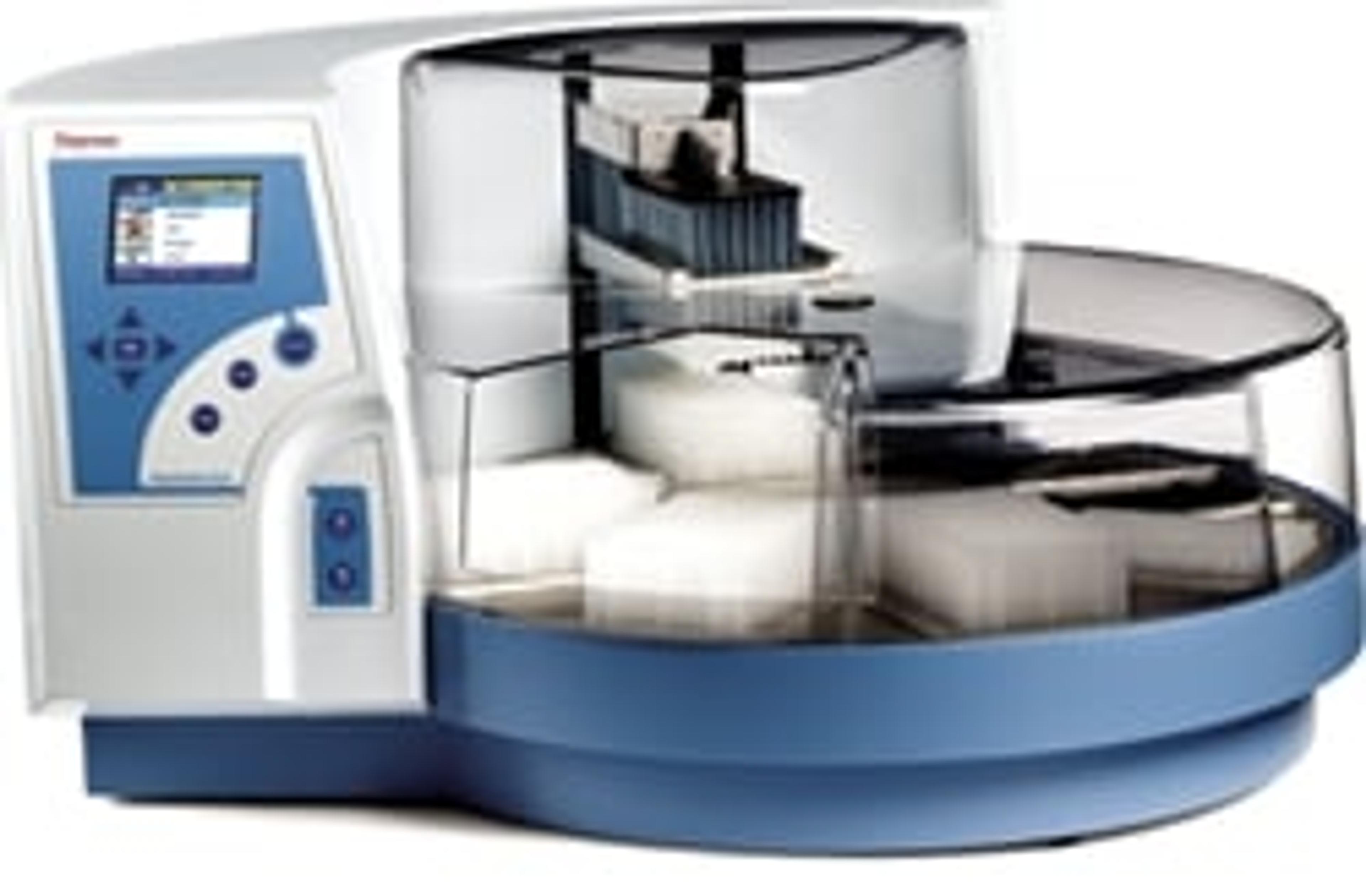
Thermo Scientific KingFisher Flex
Thermo Fisher ScientificThe Thermo Scientific KingFisher Flex magnetic particle processor offers great flexibility for high-throughput purification of DNA/RNA, proteins and cells from virtually any source.Using patented magnetic particle separation technology, the KingFisher Flex provides a fast and easy way to get high yields of purified samples with excellent reproducibility and quality.Key Features: High-throughput system processes up to 96 samples in 30 minutes Flexible, open system lets you customize your own purification process Patented magnetic particle processing technology lets you set your protocols and walk away Application Areas: Genetic testing Microbial identification Plant genetics Evolutionary studies / Phylogenetics Protein identification Immunology
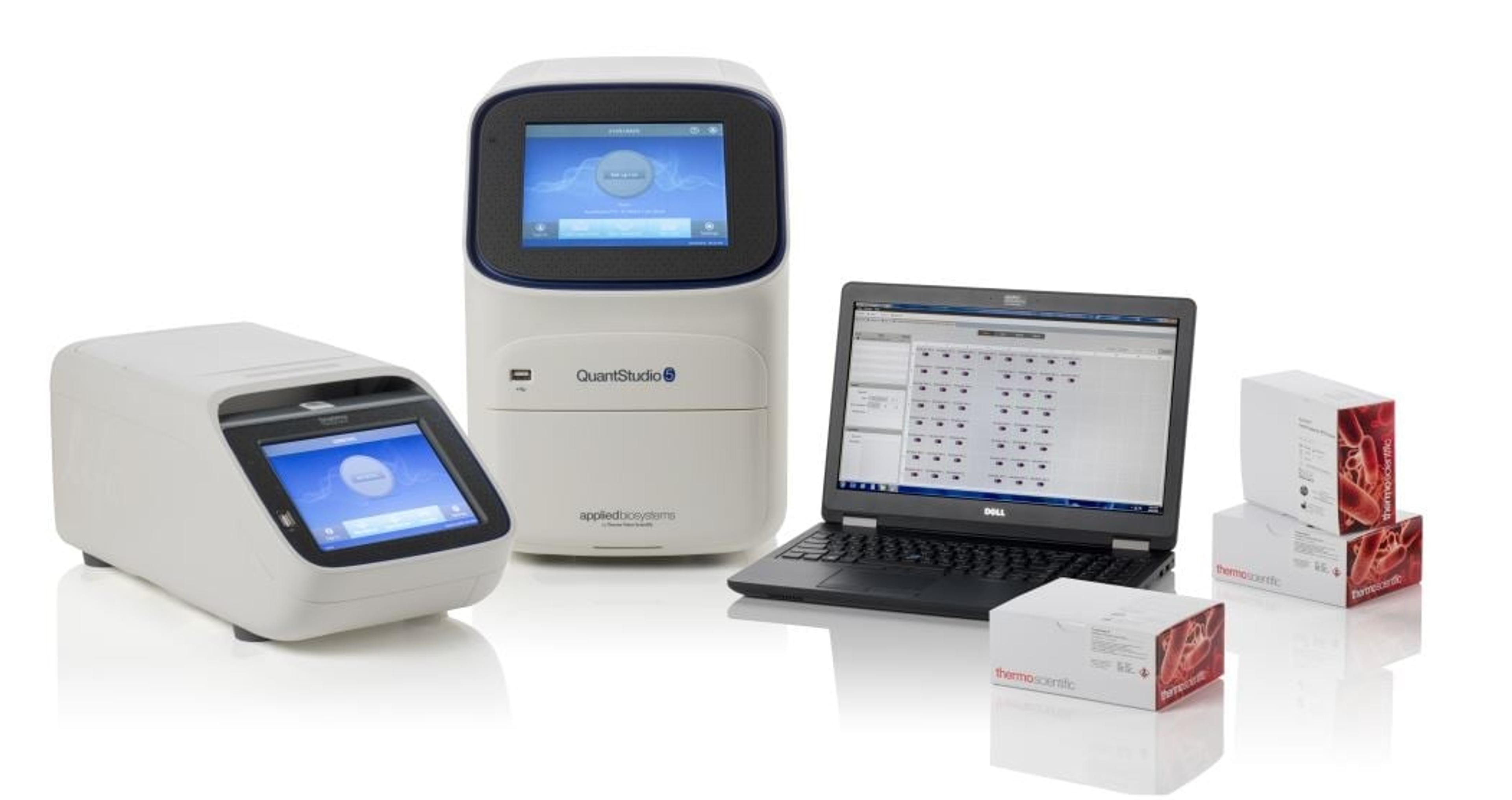
SureTect Real-Time PCR System
Thermo Fisher ScientificRapid and accurate detection of foodborne pathogens