The Latest Applications of Mass Spectrometry

Prepare for the American Society for Mass Spectrometry(ASMS) Annual Meeting by discovering the many applications of mass spectrometry – from pesticide detection to imaging for cancer therapy

1 Jun 2016
Alex Waite
Editorial Assistant

Editorial article


SelectScience® will be providing global media coverage of the American Society for Mass Spectrometry’s Annual Meeting in San Antonio, Texas, USA. This conference will explore how mass spectrometry technology is developing and its many applications. In this article, discover some of the recent developments in mass spectrometry and new ways they are being applied.

1. Waters Reveals Packed Program for ASMS 2016

With this guide from Waters Corporation, experience the best of ASMS and learn about the latest innovations and developments in mass spectrometry, including the new Xevo TQ-XS that gives you levels of reliability, reproducibility, and performance never previously seen in quantitative analysis. Download the guide >>

2. Mass Spectrometry Workflow Automation Optimizes Clinical Analysis at Kings College Hospital, London

Clinical Scientist, Lewis Couchman, spoke to SelectScience about how advances in mass spectrometry workflow automation are improving results at a leading London Pathology Department. Read the interview to learn how evolving technology and advances in sample preparation and separation are enabling clinical laboratories to benefit from the improved efficiency and higher quality results that mass spectrometry can provide. Read more >>

3. Detecting Contaminants from Food Contact Materials Using High Resolution Mass Spectrometry

Ed George, Thermo Fisher Scientific, describes the analysis of food contact materials. High resolution mass spectrometry enables the detection and identification of leached compounds into foodstuffs from packaging materials. Discover the range of instrument and software solutions available from Thermo Fisher Scientific, and how they can be applied to a food testing workflow. Watch the video >>

4. Pall Laboratory Celebrates 42nd Anniversary of Breakthrough Acrodisc® at ASMS 2016

Read about what to expect from Pall Laboratories at this year’s ASMS and what you can learn about its range of products for analytical sample preparation. Read more >>

5. Analysis of Geological Materials for Rare Earth Elements on the PlasmaQuant® MS Elite

This application note presents the analysis of geological reference materials, including rock, stream sediment and cement, regarding their REE content using ICP-MS and an Integrated Collision Reaction Cell to remove polyatomic interferences. Download the application note >>

6. Advantages of Mass Spectrometry Imaging for Cancer Therapy

Dr Arash Zarrine-Afsar, Techna Institute for the Advancement of Technology for Health at the University of Toronto, discusses the advantages of mass spectrometry imaging for tumor analysis and development of the technology for clinical applications, which could one day enhance therapeutic decision making.Watch the video >>

7. LECO Announces Special Events at ASMS

LECO Corporation will be at Booth #305 at ASMS 2016. Learn more about LECO's breakfast seminars taking place across the conference and how to register. Read more >>

8. Screening of Botanical Dietary Supplements Using NMR and Mass Spectrometry

Kimberly Colson’s group is focused on the botanical and herbal products industry, where it aims to bring improvements that help assess quality control. Watch this video to discover how NMR and Mass Spectrometry are used to screen botanical and dietary supplements. Watch the video >>

Discover more applications of mass spectrometry and new technology on the ASMS 2016 Special Feature page.

Do you use any of the products mentioned in this article? Is there a product you couldn’t live without? Share your experiences with our worldwide community and write a review today.

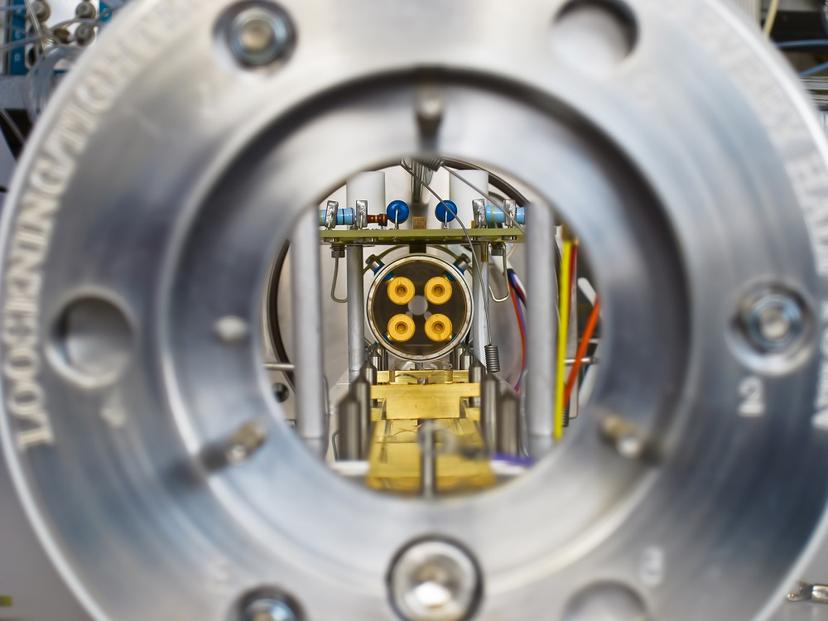
Image: Jens Goepfert/Shutterstock

Links

Tags

Sample PreparationSample preparation can improve the quality and speed of separation techniques. Products to assist sample preparation include filtration equipment, evaporators, membranes and sieves.LC-MSLC-MS (liquid chromatography-mass spectrometry) systems and equipment are used for separation and quantitative analysis of complex mixtures, combining liquid chromatography and mass spectrometry. Quantify proteins, contaminants, pesticides or screen for drug metabolites with a high level of sensitivity. LC-MS systems and equipment include reverse phase, normal phase and specialized columns integrated with various MS detectors such as time-of-flight (TOF), quadrupole, orbitrap or ion trap mass analyzers. LC-MS/MS instruments equipped with a qTOF or triple quadrupole analyzer give greater sensitivity and resolving power to your analysis. Find the best LC-MS equipment in our peer-reviewed product directory: compare products, check customer reviews and receive pricing direct from manufacturers.Mass SpectrometryMass spectrometry (MS) is a powerful analytical technique used to identify and quantify molecules based on the mass-to-charge ratio of gas-phase ions. It provides detailed information about the structure, composition, and properties of compounds and is widely used across fields such as environmental monitoring, materials science, drug discovery and development, food and beverage testing, and wider chemical research. Key MS techniques include tandem mass spectrometry (MS/MS), liquid chromatography–mass spectrometry (LS-MS) and inductively coupled plasma (ICP-MS). Choosing from these wide range of techniques and technologies can be a daunting task, so keep up to date with scientific applications, performance expectations, and customer reviews here all in one place. Visit our product directory to receive quotes direct from the manufacturer. NMR and EPR SpectroscopyNuclear magnetic resonance (NMR) spectroscopy is used to resolve the local chemical environment of atomic nuclei with spin, revealing information on molecular structure, dynamic processes and chemical reactions of organic molecules, from proteins to synthetics. Electron paramagnetic resonance (EPR) also known as electron spin resonance (ESR) spectroscopy is used to detect and quantify paramagnetic species in a sample, including free radicals as transition metal ions. By immersing the sample in a strong magnetic field, both NMR and EPR spectrometers probe the sample with either radio waves or microwaves respectively. A range of benchtop, solid-state and time domain NMR spectrometers & EPR spectrometers are available, as well as NMR tubes, NMR solvents, software, coils, and magnets. Find the best NMR & EPR equipment in our peer-reviewed product directory: compare products, check customer reviews and receive pricing direct from manufacturers.MicrobiologyMicrobiology is the study of microorganisms including protists, prokaryotes, fungi, and, often, viruses. Microorganisms are a useful research tool as genetic vectors and, in immunology, for antibiotic susceptibility testing, cellular biology and genetics. Microorganisms commonly grow readily in incubators with microbial culture media; this can contain chromogenic supplements to differentiate between cell lines. Estimate your culture’s density of microorganisms with colony counters, or screen and select colonies for desirable clones with automated colony pickers. Additionally, equipment is available to monitor environments for the presence of microbes and identify with microbial identification instruments. Find the best microbiology products in our peer-reviewed product directory: compare products, check customer reviews and receive pricing direct from manufacturers.Sample ManagementSample management systems include sample storage devices such as freezers and plate storers, sample environment enclosures and sample organization, retrieval and sorter systems. Useful system features include high-throughput, automation, robotic arms, automated liquid handling and associated database systems. Accessories in sample management include barcode scanners, heat sealers and tubes.Cellular PathologyCellular Pathology deals with the microscopic analysis of tissue samples and cells. Sample preparation and processing includes fixation, staining, sectioning and slide mounting, using equipment such microtomes and cryostats. In choosing immunohistochemistry and immunocytochemistry kits, consider chromogens, staining method, antibodies, microscopes and imaging.Environmental Monitoring and TestingEnvironmental monitoring and testing uses handheld portable analyzers, kits, spectrometers or chromatography systems for air, water, soil, food and other sample testing. Useful features of analyzers such as BOD and COD include portability, easy calibration, automation and sensitivity.  Environmental test kits for pH, water, moisture, etc, should be accurate, sensitive, reliable, fast and easy to use.Biopharmaceutical AdvancesBiopharmaceutical advances follow the development of pharmaceuticals derived from biotechnology, also known as biotechnology medicines. Biopharmaceuticals may be produced from cell lines, plants, or microbial cells. Important considerations of biopharmaceutical use include application, cost, production process and purification.Robotic InstrumentsRobotic instruments can be used for high-throughput automation of many lab processes. Such processes use instruments for assays like cell based assays and ELISA, for sample preparation like shakers, centrifuges and incubators, and for analysis such as sequencing and western blot analyzers. Useful features of robotic instruments include speed, reproducibility, barcode readers, software and automation.Robotic WorkstationsRobotic workstations are automated platforms enabling the user to perform high-throughput, multi-application processes, from sample preparation tasks such as PCR set-up, DNA purification and NGS library preparation, to integrated sample prep and analysis workstations. Automation makes processes consistent, fast, precise and fully walk-away. Find the best robotic workstations in our peer-reviewed product directory: compare products, check customer reviews and receive pricing direct from manufacturers.Clinical GeneticsMolecular Genetics covers the analysis of hereditary genetic disease and chromosomal abnormalities. Genetics can be analysed using DNA, RNA, and protein microarrays, PCR, RT PCR and DNA sequencing. Genetic equipment includes genetic workstations, thermal cyclers, cooling blocks and electrophoresis products. Diagnostic kits are used for DNA / RNA extraction and purification.Food and Beverage AnalyzersFood and Beverage Analyzers are commonly used to provide information about the chemical composition, structure and physical properties of food materials.Food and Beverage ProcessingFood and Beverage Processing involves the preparation of food products for further analysis. Typical instrumentation includes blanchers, color sorters, cookers, grinders, and refrigeration. These are used to replicate the processes commonly used in the commercial preparation of food and beverages.GC-MS GC-MS (gas chromatography-mass spectrometry) instruments and equipment are used to separate, quantify and identify mixtures of small and volatile compounds, such as polycyclic aromatics, fatty acids and alcohols. Often used in drug detection, forensic investigation and environmental analysis for pesticides and contaminants, GC-MS is a powerful addition to your lab’s analytical capabilities. GC-MS/MS instruments equipped with a qTOF or triple quadrupole analyzers can give greater sensitivity and resolution to your analysis. Find the best GC-MS instruments and equipment in our peer-reviewed product directory: compare products, check customer reviews and receive pricing direct from manufacturers.