PerkinElmer launches Solus One E. coli O157 Pathogen Detection Assay for beef & beef trim testing

This highly sensitive, cost effective assay is designed for customers who receive a high volume of food samples daily

10 Feb 2021

Diane Li
Assistant Editor

Product news

PerkinElmer, Inc., a global leader committed to innovating for a healthier world, has launched the Solus One E. coli O157 Pathogen Detection Assay for raw ground beef and raw beef trim. This system is designed for customers who receive a high volume of food samples daily and need a highly sensitive, cost-effective assay. The assay is compatible with the Dynex DS2 automated reader, offering industry-leading result sample volume.

Escherichia coli (E. coli) is bacteria commonly found as part of the normal gut flora of humans and animals. Most are harmless; however, some strains -- including the most common E. coli O157 -- produce toxins that can cause intestinal illness especially in people in higher risk categories such as pregnant women, immunosuppressed people and the elderly. Having robust and accurate E. coli testing capabilities enables food suppliers to take action faster if the pathogen is detected in their facilities.

PerkinElmer’s Solus One E. coli O157 system features a single, 10-hour enrichment, one-step sample preparation and automated workflow to process up to 192 tests per run. The user-friendly instrument, kits and methods also require less training than traditional approaches for lab technicians, enabling them to “set it and forget it” for up to two hours, freeing their time to conduct other lab work such as running another automated protocol to maximize sample throughput.

“E. coli O157 is important and requires scientific expertise to provide solutions that food processors and contract labs can trust,” said Greg Sears, VP and GM of Food at PerkinElmer. “With our new high throughput offering, we can help food processors stay ahead of the constant E. coli testing cycle by streamlining their testing workflows and increasing productivity while helping to protect consumer safety in the global food chain.”

PerkinElmer’s meat testing and analysis innovations are part of the Company’s broader safety and quality solutions for food, including grain, dairy, meats, produce, edible oils and seafood. For more information please visit https://www.perkinelmer.com/category/pathogens-in-food.

Do you use PerkinElmer products in your lab? Write a review today for your chance to win a $400 Amazon Gift Card>>

chemagic 360

Revvity

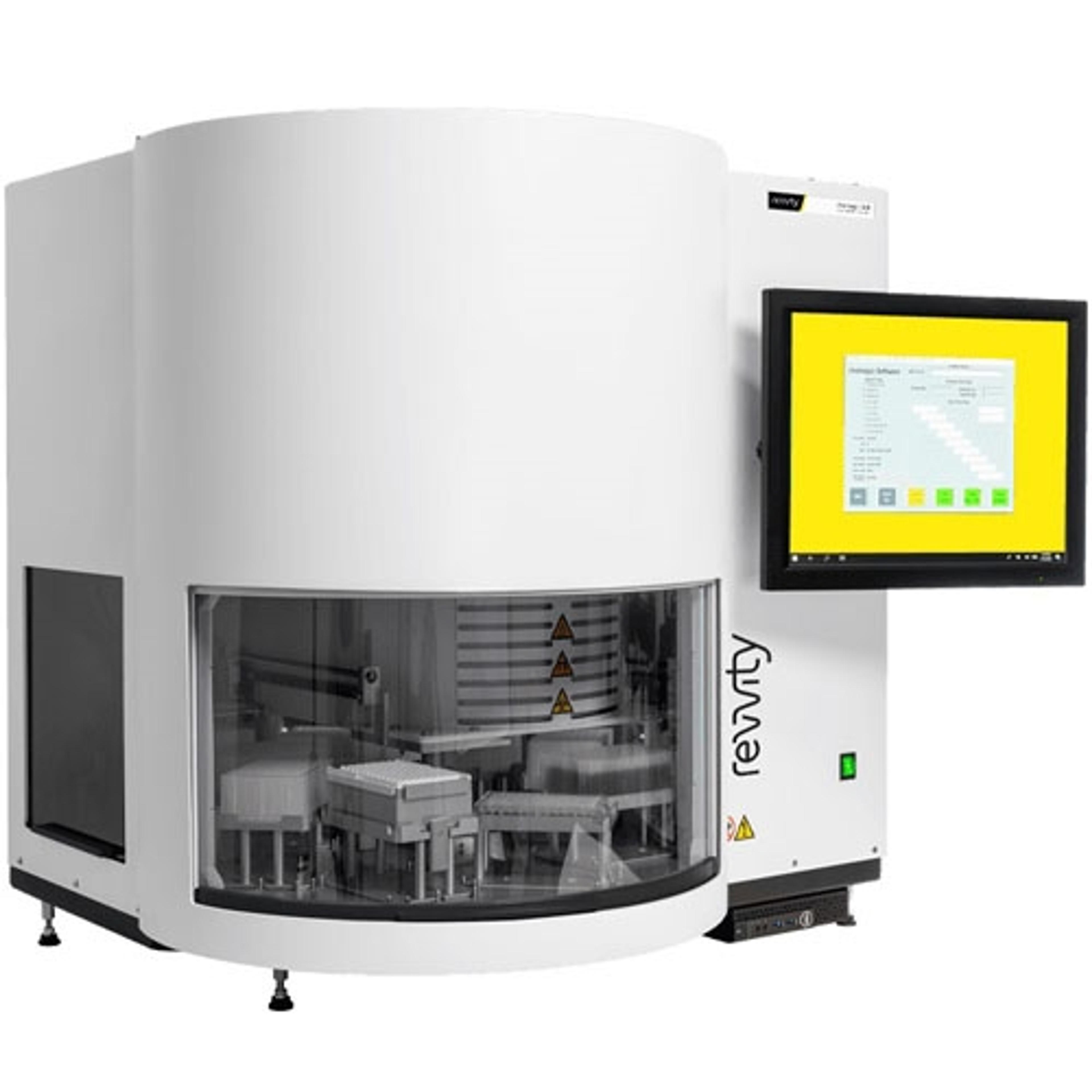
The chemagic™ chemagic 360 instrument is a flexible compact solution for automated nucleic extraction from diverse sample materials.

(5)

Links

Tags

Gas ChromatographyGas chromatography (GC) is an analytical technique used to separate and quantitate mixtures of small and volatile compounds. Gas chromatographs or GC systems include components such as GC columns, detectors, pumps and autosamplers. Choose from packed or capillary GC columns, flame ionization (FID), photoionization (PID) electron capture detectors and selective or non-selective detectors. Find the best gas chromatographs in our peer-reviewed product directory: compare products, check customer reviews and receive pricing direct from manufacturers.Mass SpectrometryMass spectrometry (MS) is a powerful analytical technique used to identify and quantify molecules based on the mass-to-charge ratio of gas-phase ions. It provides detailed information about the structure, composition, and properties of compounds and is widely used across fields such as environmental monitoring, materials science, drug discovery and development, food and beverage testing, and wider chemical research. Key MS techniques include tandem mass spectrometry (MS/MS), liquid chromatography–mass spectrometry (LS-MS) and inductively coupled plasma (ICP-MS). Choosing from these wide range of techniques and technologies can be a daunting task, so keep up to date with scientific applications, performance expectations, and customer reviews here all in one place. Visit our product directory to receive quotes direct from the manufacturer. Cell Adhesion AssaysCell adhesion assays are used to quantitate attachment and analyze the molecular mechanisms for extracellular matrix adhesion, cell migration and sensitivity to inhibitors. Find the best cell adhesion assay equipment in our peer-reviewed product directory: compare products, check customer reviews and receive pricing direct from manufacturers.PCR and Thermal CyclingPolymerase chain reaction (PCR) kits and thermal cyclers are used for the in vitro amplification of DNA permitting subsequent analysis and experimental procedures. Explore a range of high-quality polymerase, primers and nucleotides or simplify your workflow with a PCR mastermix. Find reverse transcription PCR (RT-PCR) and cDNA synthesis kits for RNA products and libraries. Quantitatively measure the amplification of DNA with real-time PCR (qPCR) and droplet digital PCR (ddPCR) kits and systems, and discover automated PCR setup solutions to increase throughput. Alternative DNA amplification methods also include recombinase polymerase amplification (RPA) kits. Find the best PCR kits and thermal cyclers and purification equipment in our peer-reviewed product directory: compare products, check customer reviews and receive pricing direct from manufacturers.MicrobiologyMicrobiology is the study of microorganisms including protists, prokaryotes, fungi, and, often, viruses. Microorganisms are a useful research tool as genetic vectors and, in immunology, for antibiotic susceptibility testing, cellular biology and genetics. Microorganisms commonly grow readily in incubators with microbial culture media; this can contain chromogenic supplements to differentiate between cell lines. Estimate your culture’s density of microorganisms with colony counters, or screen and select colonies for desirable clones with automated colony pickers. Additionally, equipment is available to monitor environments for the presence of microbes and identify with microbial identification instruments. Find the best microbiology products in our peer-reviewed product directory: compare products, check customer reviews and receive pricing direct from manufacturers.Cell-Based AssaysCell-based assays are used to monitor the presence, quantity and activities of a desired cellular analyte including drug molecules or biomarkers. This can reveal information on cell health (apoptosis, cytotoxicity, viability and proliferation assays), cell metabolism, cell migration and cell signaling mechanisms. Find the best cell-based assay products, kits and equipment with our peer reviewed product directory: compare products, check customer reviews and receiving pricing direct from manufacturers.TitrationTitration is an analytical technique for determining substance concentration in a solution. For titration consider a manual or automated system, volumetric or coulometric reagent addition and indication by a potentiometer, spectrometer, turbidometer or by the Karl Fischer method. Other features of titration to consider include burettes, reagents, concentration range, reaction time and autosamplers.Food and Beverage AnalyzersFood and Beverage Analyzers are commonly used to provide information about the chemical composition, structure and physical properties of food materials.Food and Beverage ProcessingFood and Beverage Processing involves the preparation of food products for further analysis. Typical instrumentation includes blanchers, color sorters, cookers, grinders, and refrigeration. These are used to replicate the processes commonly used in the commercial preparation of food and beverages.Particle CharacterizationParticle characterization instruments are used to determine particle size distribution, shape, surface area, zeta potential, density and porosity of particles and materials. Multiple tecchniques are available for determining particle size, shape and count including dynamic light scattering (DLS), laser diffraction, electrozone (Coulter technique), imaging particle analysis and single particle optical sensing. Determine the density of your material with a gas pycnometer or examine its surface area and porosity with gas adsorption analyzers and mercury porosimeters. Find the best particle characterization instruments in our peer-reviewed product directory: compare products, check customer reviews and receive pricing direct from manufacturers.GC-MS GC-MS (gas chromatography-mass spectrometry) instruments and equipment are used to separate, quantify and identify mixtures of small and volatile compounds, such as polycyclic aromatics, fatty acids and alcohols. Often used in drug detection, forensic investigation and environmental analysis for pesticides and contaminants, GC-MS is a powerful addition to your lab’s analytical capabilities. GC-MS/MS instruments equipped with a qTOF or triple quadrupole analyzers can give greater sensitivity and resolution to your analysis. Find the best GC-MS instruments and equipment in our peer-reviewed product directory: compare products, check customer reviews and receive pricing direct from manufacturers.QuEChERSThe QuEChERS (Quick, Easy, Cheap, Effective, Rugged, and Safe) method is a streamlined approach that is used to extract multi-residue target compounds from food samples. It is most commonly used by analytical chemists studying pesticide residues in food.Food SafetyFood safety describes the prevention of food-borne illnesses. Contamination with a variety of pathogens can be prevented with adequate temperature control, hygiene and labeling. Food samples can be tested using GC/MS, HPLC, SPE, and qPCR to ensure their adherence to regulations.BacteriaBacteria are microorganisms that play critical roles in the environment, human health, and biotechnology. Understanding bacterial genetics, growth, and metabolism is essential for developing antibiotics, vaccines, and improving industrial processes. Browse our peer-reviewed product directory to find the best bacterial research tools, compare products, check reviews, and get pricing directly from manufacturers.Food TestingFood testing refers to a variety experiments including PCR, mass spectrometry, processing, QuEChERS, analyzing and Kjeldahl.
PerkinElmer launches Solus One E. coli O157 Pathogen Detection Assay for beef & beef trim testing