Leading European Honey Packer Adopts New Honey-Profiling Module of Bruker’s NMR FoodScreener™ Solution

Famille Michaud Apiculteurs are the first to integrate the Honey-Profiling module in their analytical portfolio

7 Mar 2016
Weylan Kiam-Laine
Microbiologist

Industry news

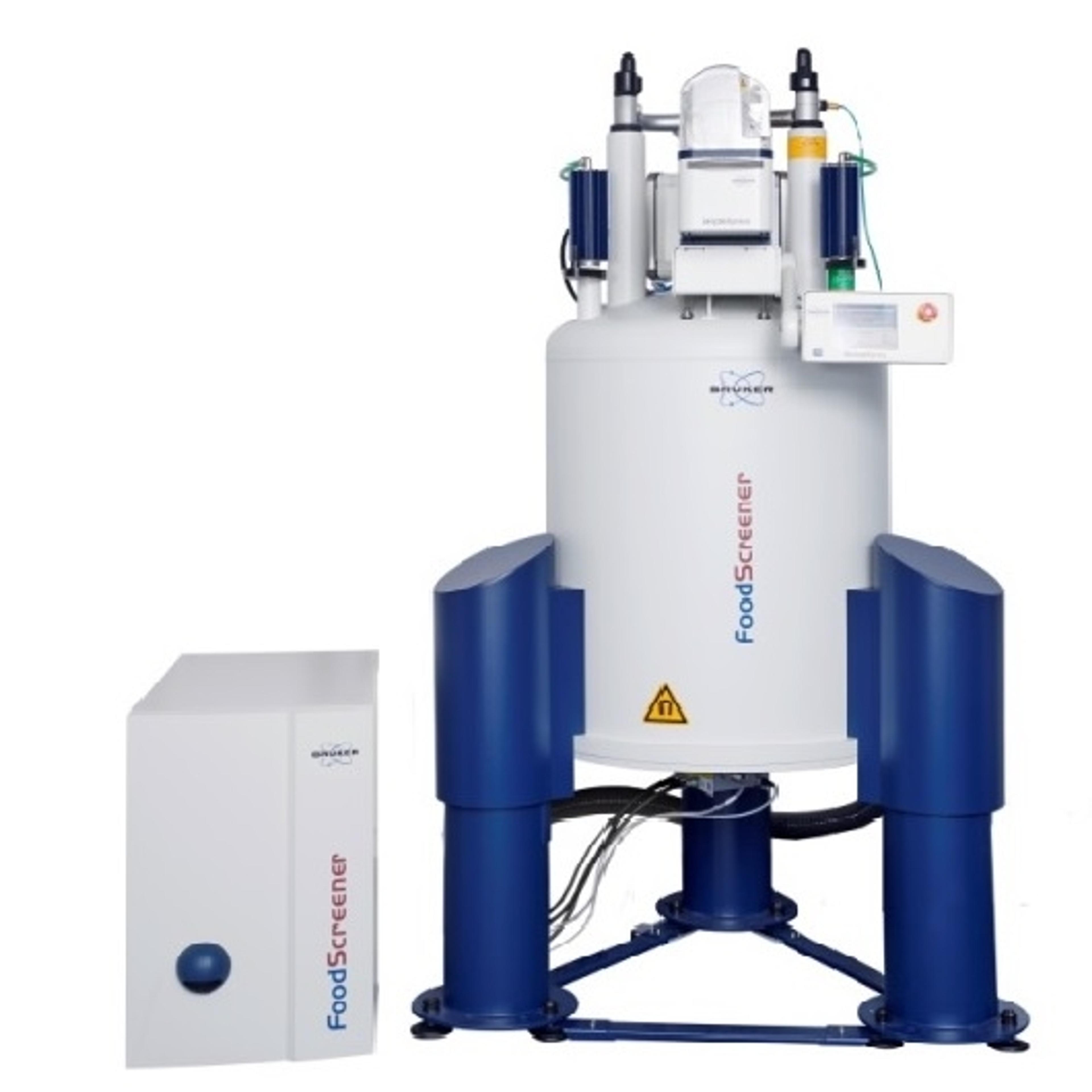
Following its launch in 2015, the new Honey-Profiling module of the NMR FoodScreener™ solution from Bruker has been adopted by several analytical testing laboratories, and is gaining acceptance from producers in the industry. The Honey-Profiling module uses Bruker’s and its collaboration partners expertise in NMR and complex mixture analysis to deliver a solution for both targeted and non-targeted analysis of honey, and is a novel, comprehensive analytical solution for producers to ensure the purity, origin and quality of their high-value honeys.

Leading independent company Famille Michaud Apiculteurs is the first honey packer to take up this novel NMR solution and expects to install the NMRFoodScreener™ and its Honey-Profiling™ module in their laboratory early in 2016. According to a press release issued by the family-run company, integrating these innovative methods will support their commitment that their honey is 100% pure and natural. This enables Famille Michaud Apiculteurs to guarantee a truly authentic honey which continues to set the benchmark for quality honey.

With the integration of the Honey-Profiling module in their analytical portfolio, Famille Michaud Apiculteurs can increase the scope of analysis, while reducing the time for a full analysis from 2 days to just 20 minutes. This will reduce production lead-time drastically, while reducing total costs. Honeys from the well-respected Lune de Miel® brand will be the first to be tested with the new NMR solution.

Patricia Beaune, Laboratory Manager at Famille Michaud Apiculteurs, explained: “With this novel measurement technology, we strengthen our position as worldwide expert in the control of the quality and authenticity of honey. Now, with the new Honey-Profiler, close to 4,000 samples of honey will be analyzed by NMR each year.”
Links

Tags

Mass SpectrometryMass spectrometry (MS) is a powerful analytical technique used to identify and quantify molecules based on the mass-to-charge ratio of gas-phase ions. It provides detailed information about the structure, composition, and properties of compounds and is widely used across fields such as environmental monitoring, materials science, drug discovery and development, food and beverage testing, and wider chemical research. Key MS techniques include tandem mass spectrometry (MS/MS), liquid chromatography–mass spectrometry (LS-MS) and inductively coupled plasma (ICP-MS). Choosing from these wide range of techniques and technologies can be a daunting task, so keep up to date with scientific applications, performance expectations, and customer reviews here all in one place. Visit our product directory to receive quotes direct from the manufacturer. NMR and EPR SpectroscopyNuclear magnetic resonance (NMR) spectroscopy is used to resolve the local chemical environment of atomic nuclei with spin, revealing information on molecular structure, dynamic processes and chemical reactions of organic molecules, from proteins to synthetics. Electron paramagnetic resonance (EPR) also known as electron spin resonance (ESR) spectroscopy is used to detect and quantify paramagnetic species in a sample, including free radicals as transition metal ions. By immersing the sample in a strong magnetic field, both NMR and EPR spectrometers probe the sample with either radio waves or microwaves respectively. A range of benchtop, solid-state and time domain NMR spectrometers & EPR spectrometers are available, as well as NMR tubes, NMR solvents, software, coils, and magnets. Find the best NMR & EPR equipment in our peer-reviewed product directory: compare products, check customer reviews and receive pricing direct from manufacturers.Food and Beverage AnalyzersFood and Beverage Analyzers are commonly used to provide information about the chemical composition, structure and physical properties of food materials.Food and Beverage ProcessingFood and Beverage Processing involves the preparation of food products for further analysis. Typical instrumentation includes blanchers, color sorters, cookers, grinders, and refrigeration. These are used to replicate the processes commonly used in the commercial preparation of food and beverages.Quality ControlQuality control is needed in all production processes. Quality control is a monitoring procedure or set of procedures that are put in place to ensure that a manufactured product adheres to a defined set of quality criteria. AutomationAutomation in laboratories and manufacturing processes enhances efficiency, precision, and scalability by reducing the need for manual intervention. It plays a critical role in improving productivity, minimizing human error, and accelerating workflows in fields like diagnostics, drug development, and industrial testing. Automation technologies include robotic systems, automated liquid handlers, and process control systems that streamline complex tasks and ensure consistent, reproducible results. Explore our peer-reviewed product directory to discover the best automation solutions, compare options, read user reviews, and get prices directly from manufacturers.Targeted ScreeningNon-Targeted ScreeningFood TestingFood testing refers to a variety experiments including PCR, mass spectrometry, processing, QuEChERS, analyzing and Kjeldahl.Food QualityFood quality refers to the attributes of food that influence its safety, nutrition, and taste. Monitoring and ensuring food quality are essential in production to meet health regulations and consumer expectations. Techniques like spectroscopy, chromatography, and microbial testing are used to assess food properties and detect contaminants. Browse our peer-reviewed product directory to find food quality testing solutions; compare products, check reviews, and get pricing directly from manufacturers.Device Integration
Leading European Honey Packer Adopts New Honey-Profiling Module of Bruker’s NMR FoodScreener™ Solution