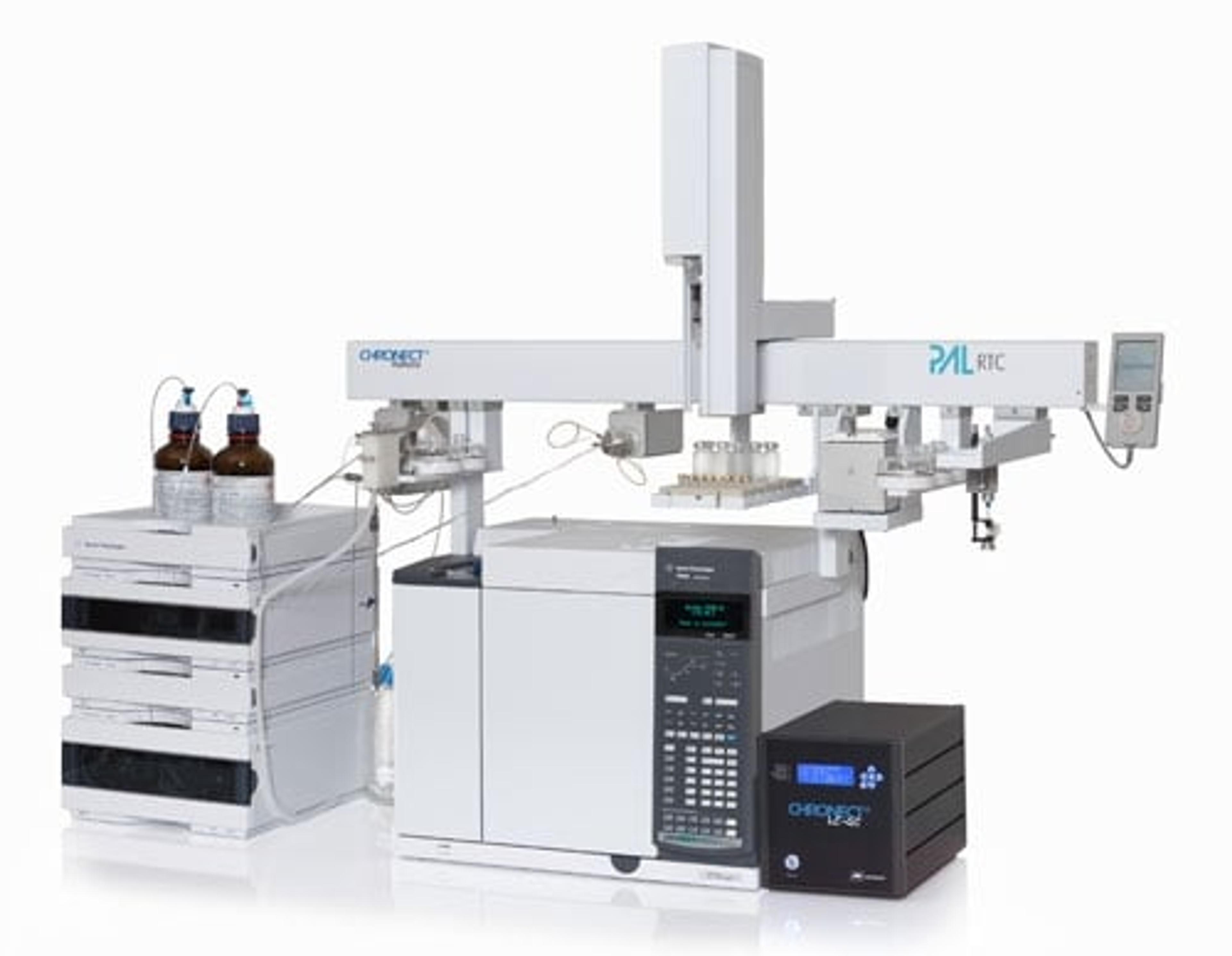
Discover a LC-GC System for Online Determination of Mineral Oil Contaminants

29 Aug 2017

Emily Adam
Publishing / Media

Product news

Foodstuffs are frequently found to contain undesired mineral oil residues, which originate in many cases from the packaging materials. A migration of hydrocarbons into the foodstuffs can occur in particular through the use of printing inks derived from mineral oils. Additionally, lubricants during food processing, wax coatings directly applied to the food, environmental pollution, jute bags, etc. can be sources for contamination.

The LC-GC System MOSH/MOAH is specifically designed for the sensitive and fast detection of mineral oil contaminations. Over the last years, this system has proven its performance in several routine environments in Europe. Due to the LC-GC Interface, a development of Axel Semrau, various LC and GC brands can be coupled. The method is comprehensively published and proven. Also EFSA published in the EFSA Journal 2012 : "Currently, the most effective methods for analysis of MOSH and MOAH in food and feed comprise extraction followend by pre-separation liquid chromatography (HPLC) online coupled to GC with flame ionization detection (FID)."*

Special advantages of the LC-GC-System MOSH/MOAH:

  • Simultaneous and fast determination of MOSH and MOAH
    • This system allows a determination of MOSH and MOAH in 30 minutes only.
  • High level of automation
    • Through normal phase HPLC an automated sample preparation and pre-separation is realized. Thereby, MOSH and MOAH fractions are separated from one another and simultaneously from disturbing components like paraffin or wax esters. Standard sample preparation steps as solid phase extraction or manual purification are no longer required.
  • Sensitive determination
  • High level of reproducibility and accuracy
    • Great measuring accuracy, similar to a normal split/splitless injection; the system is fully amenable to DIN EN 16995.
  • Routine-capable methods
    • A proper coupling of LC and GC reduces solvent consumption and contamination of the GC system. Additionally, it strongly increases the stability of the system. The sample throughput is therefore increased and facilitated by the control through the user-friendly CHRONOS software.


Beside the analysis of MOSH and MOAH in food, cosmetics or packaging, LC-GC coupled systems can be used for the analysis of PAHs, sterols and other analytes.

`*EFSA Journal 2012;10(6):2704, Page 3

Links

Tags

Food and Beverage AnalyzersFood and Beverage Analyzers are commonly used to provide information about the chemical composition, structure and physical properties of food materials.Food and Beverage ProcessingFood and Beverage Processing involves the preparation of food products for further analysis. Typical instrumentation includes blanchers, color sorters, cookers, grinders, and refrigeration. These are used to replicate the processes commonly used in the commercial preparation of food and beverages.GC-MS GC-MS (gas chromatography-mass spectrometry) instruments and equipment are used to separate, quantify and identify mixtures of small and volatile compounds, such as polycyclic aromatics, fatty acids and alcohols. Often used in drug detection, forensic investigation and environmental analysis for pesticides and contaminants, GC-MS is a powerful addition to your lab’s analytical capabilities. GC-MS/MS instruments equipped with a qTOF or triple quadrupole analyzers can give greater sensitivity and resolution to your analysis. Find the best GC-MS instruments and equipment in our peer-reviewed product directory: compare products, check customer reviews and receive pricing direct from manufacturers.LC-MSLC-MS (liquid chromatography-mass spectrometry) systems and equipment are used for separation and quantitative analysis of complex mixtures, combining liquid chromatography and mass spectrometry. Quantify proteins, contaminants, pesticides or screen for drug metabolites with a high level of sensitivity. LC-MS systems and equipment include reverse phase, normal phase and specialized columns integrated with various MS detectors such as time-of-flight (TOF), quadrupole, orbitrap or ion trap mass analyzers. LC-MS/MS instruments equipped with a qTOF or triple quadrupole analyzer give greater sensitivity and resolving power to your analysis. Find the best LC-MS equipment in our peer-reviewed product directory: compare products, check customer reviews and receive pricing direct from manufacturers.Chromatography Method DevelopmentChromatography method development is the process of designing and optimizing chromatographic techniques to separate and analyze complex mixtures. This includes selecting appropriate stationary and mobile phases, determining flow rates, and optimizing detection methods. Successful method development is essential for high-quality results in fields like pharmaceuticals, food safety, and environmental analysis. Explore chromatography method development tools in our peer-reviewed product directory; compare products, check reviews, and get pricing directly from manufacturers.Food SafetyFood safety describes the prevention of food-borne illnesses. Contamination with a variety of pathogens can be prevented with adequate temperature control, hygiene and labeling. Food samples can be tested using GC/MS, HPLC, SPE, and qPCR to ensure their adherence to regulations.ChromatographyChromatography is a powerful technique used to separate and analyze components of mixtures based on their chemical properties. It is widely used in fields like biochemistry, pharmaceuticals, and environmental analysis. By exploiting differences in the interaction of substances with a stationary phase and a mobile phase, chromatography enables precise purification and quantification of compounds. Whether you're working with complex biological samples or industrial chemicals, chromatography is essential for obtaining high-quality results. Browse our peer-reviewed product directory to find the best chromatography systems, compare products, read customer reviews, and get pricing directly from manufacturers.Food TestingFood testing refers to a variety experiments including PCR, mass spectrometry, processing, QuEChERS, analyzing and Kjeldahl.Food QualityFood quality refers to the attributes of food that influence its safety, nutrition, and taste. Monitoring and ensuring food quality are essential in production to meet health regulations and consumer expectations. Techniques like spectroscopy, chromatography, and microbial testing are used to assess food properties and detect contaminants. Browse our peer-reviewed product directory to find food quality testing solutions; compare products, check reviews, and get pricing directly from manufacturers.GC-MSGas Chromatography-Mass Spectrometry (GC-MS) combines the separation power of gas chromatography with the detection capabilities of mass spectrometry, allowing for the analysis of complex mixtures. It is widely used in environmental, forensic, and pharmaceutical analysis. Explore GC-MS systems in our peer-reviewed product directory; compare products, check reviews, and get pricing directly from manufacturers.