Bruker’s NMR FoodScreener™ Laboratory Achieves ISO/IEC 17025 Accreditation

NMR FoodScreener™ laboratory for food authenticity and quality determination, located in Rheinstetten, Germany, has been granted ISO/IEC 17025 accreditation

28 Sept 2015

Lois Manton-O'Byrne, PhD
Executive Editor

Industry news

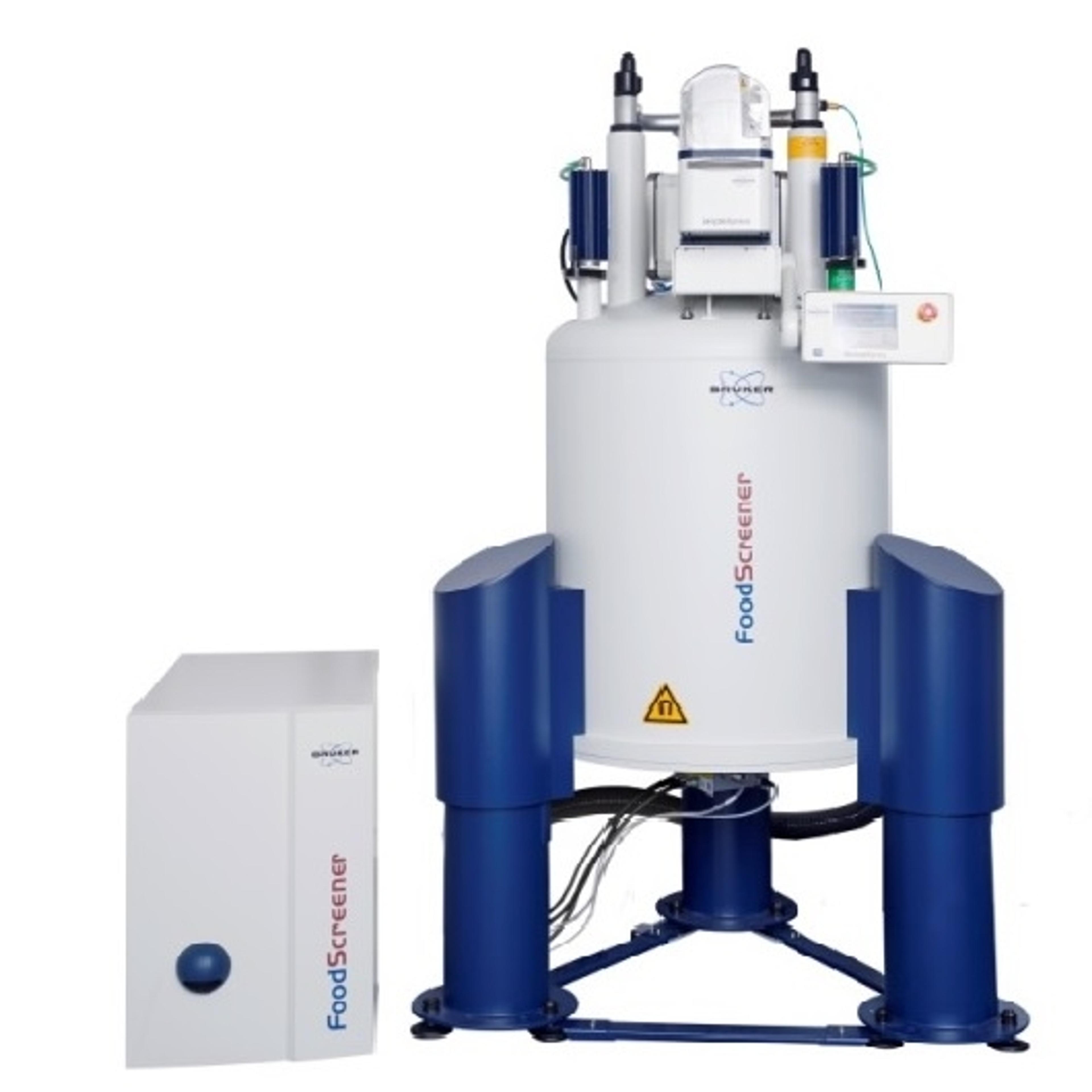
Bruker announced that its NMR FoodScreener™ laboratory for food authenticity and quality determination, located in Rheinstetten, Germany, has been granted ISO/IEC 17025 accreditation. The certificate has been awarded for Bruker’s validated methods for the determination of ingredients and measures of authenticity and quality of liquid foods and food extracts by NMR spectroscopy. Government and private analytical service laboratories offering NMR-based testing for food authenticity and quality with Bruker’s standard operating procedures (SOPs) and validated methods can now more easily get these NMR methods accredited in their lab.

Christian Kost, Managing Director of Winespin-Analytics GmbH, commented “as a company providing NMR-based analytical wine profiling, the ISO/IEC 17025 accreditation of Bruker BioSpin is of significant importance, allowing us to now offer accredited NMR wine profiling according to international standards to our customers. The accreditation represents a milestone towards NMR becoming a more widely used technique for wine analysis, enabling us to offer this unique, information-rich technique to a broader set of wine industry customers.”

All of Bruker’s current NMR food-screening applications for juice, wine and honey profiling are now covered by this accreditation. Dr. Iris Mangelschots, President of Bruker BioSpin’s Applied, Industrial and Clinical (AIC) division, explained: “we are excited that the ISO/IEC 17025 accreditation has been achieved. NMR now delivers certified methods for targeted, as well as non-targeted food screening. For food analysis this enables the identification of unexpected and unknown deviations and falsifications that can highlight processing issues, frauds or adulterations.”
Links

Tags

NMR and EPR SpectroscopyNuclear magnetic resonance (NMR) spectroscopy is used to resolve the local chemical environment of atomic nuclei with spin, revealing information on molecular structure, dynamic processes and chemical reactions of organic molecules, from proteins to synthetics. Electron paramagnetic resonance (EPR) also known as electron spin resonance (ESR) spectroscopy is used to detect and quantify paramagnetic species in a sample, including free radicals as transition metal ions. By immersing the sample in a strong magnetic field, both NMR and EPR spectrometers probe the sample with either radio waves or microwaves respectively. A range of benchtop, solid-state and time domain NMR spectrometers & EPR spectrometers are available, as well as NMR tubes, NMR solvents, software, coils, and magnets. Find the best NMR & EPR equipment in our peer-reviewed product directory: compare products, check customer reviews and receive pricing direct from manufacturers.Environmental Monitoring and TestingEnvironmental monitoring and testing uses handheld portable analyzers, kits, spectrometers or chromatography systems for air, water, soil, food and other sample testing. Useful features of analyzers such as BOD and COD include portability, easy calibration, automation and sensitivity.  Environmental test kits for pH, water, moisture, etc, should be accurate, sensitive, reliable, fast and easy to use.Food and Beverage AnalyzersFood and Beverage Analyzers are commonly used to provide information about the chemical composition, structure and physical properties of food materials.Food and Beverage ProcessingFood and Beverage Processing involves the preparation of food products for further analysis. Typical instrumentation includes blanchers, color sorters, cookers, grinders, and refrigeration. These are used to replicate the processes commonly used in the commercial preparation of food and beverages.WineTargeted ScreeningNon-Targeted ScreeningFood TestingFood testing refers to a variety experiments including PCR, mass spectrometry, processing, QuEChERS, analyzing and Kjeldahl.Food QualityFood quality refers to the attributes of food that influence its safety, nutrition, and taste. Monitoring and ensuring food quality are essential in production to meet health regulations and consumer expectations. Techniques like spectroscopy, chromatography, and microbial testing are used to assess food properties and detect contaminants. Browse our peer-reviewed product directory to find food quality testing solutions; compare products, check reviews, and get pricing directly from manufacturers.Fruit JuiceFood FraudFood adulteration refers to food when it has been has been altered unlawfully with the addition of another lower commodity food product to increase quantity. The 2013 European horsemeat scandal saw the adulteration of beef products with the addition of horse meat.
Bruker’s NMR FoodScreener™ Laboratory Achieves ISO/IEC 17025 Accreditation