Bruker launches latest version of its NMR Honey-Profiling™ module
The new module expands the growing database to 28,000 reference honey samples, covering over 50 countries, 100 monofloral varieties and many polyfloral varieties
12 Jul 2021
Product news
Bruker has launched the latest version of its NMR Honey-Profiling™ module for the advanced detection of the ever evolving modes of honey adulteration. The new module expands the growing database to 28,000 reference honey samples, covering over 50 countries, 100 monofloral varieties and many polyfloral varieties. It allows honey producers and distributors to check for purity, botanical source, country of origin, and identify atypical profiles for further investigation.
The rapid and comprehensive Honey-Profiling 3.0 screening tool, based on nuclear magnetic resonance (NMR) spectroscopy, evaluates honey identity and authenticity in one reliable, push-button method under full automation. It analyzes the honey sample’s 1H-NMR spectrum and identifies specific components that make up its unique ‘fingerprint’, comparing it to the carefully curated honey reference database. The new NMR Honey-Profiling module includes additional geographical and varietal markers, which further strengthen the detection of adulterations, such as the presence of sugar syrup or low-cost honey sources.
As a high-value food product, honey is particularly vulnerable to economically motivated adulteration (EMA), which can impact the entire value chain, not only influencing consumer trust but potentially damaging the reputation of honey producers or resellers. Adulteration is partly responsible for the fall in raw honey prices over the last decade, putting the livelihood of beekeepers at risk, while honey prices charged to consumers have been increasing due to growing demand. Using a sophisticated, hands-off analytical method that is able to detect new modes of adulteration is vital to protecting the authenticity, integrity, and economic viability of honey.
Thomas Spengler, Senior Market Manager for Food Analysis Solutions at Bruker Biospin, commented: “It is not only about sugar syrups in the honey. Economically motivated adulteration in honey impacts the viability of the beekeeping industry, and a continued decline in the numbers of beekeepers poses a threat to global food security given the role that bees play in pollination of crops. NMR, as a powerful multi-marker and non-targeted technique, is increasingly adopted worldwide to tackle new and more sophisticated modes of adulteration.”
Global regulatory bodies, governments, and the industry are quickly recognizing the potential of NMR to combat fraudulent activity, to protect consumers and brands, and to enhance supply chain integrity. For example, tThe Export Inspection Council in India made testing by NMR mandatory for all honey exports to the US from August 2020. Government agencies in USA, Canada, Australia, New Zealand, Estonia, Spain, and Germany are adopting NMR, and the International Federation of Beekeepers’ Associations – APIMONDIA – also recommends more advanced and powerful methodologies such as NMR to test for multiple modes of adulteration.1
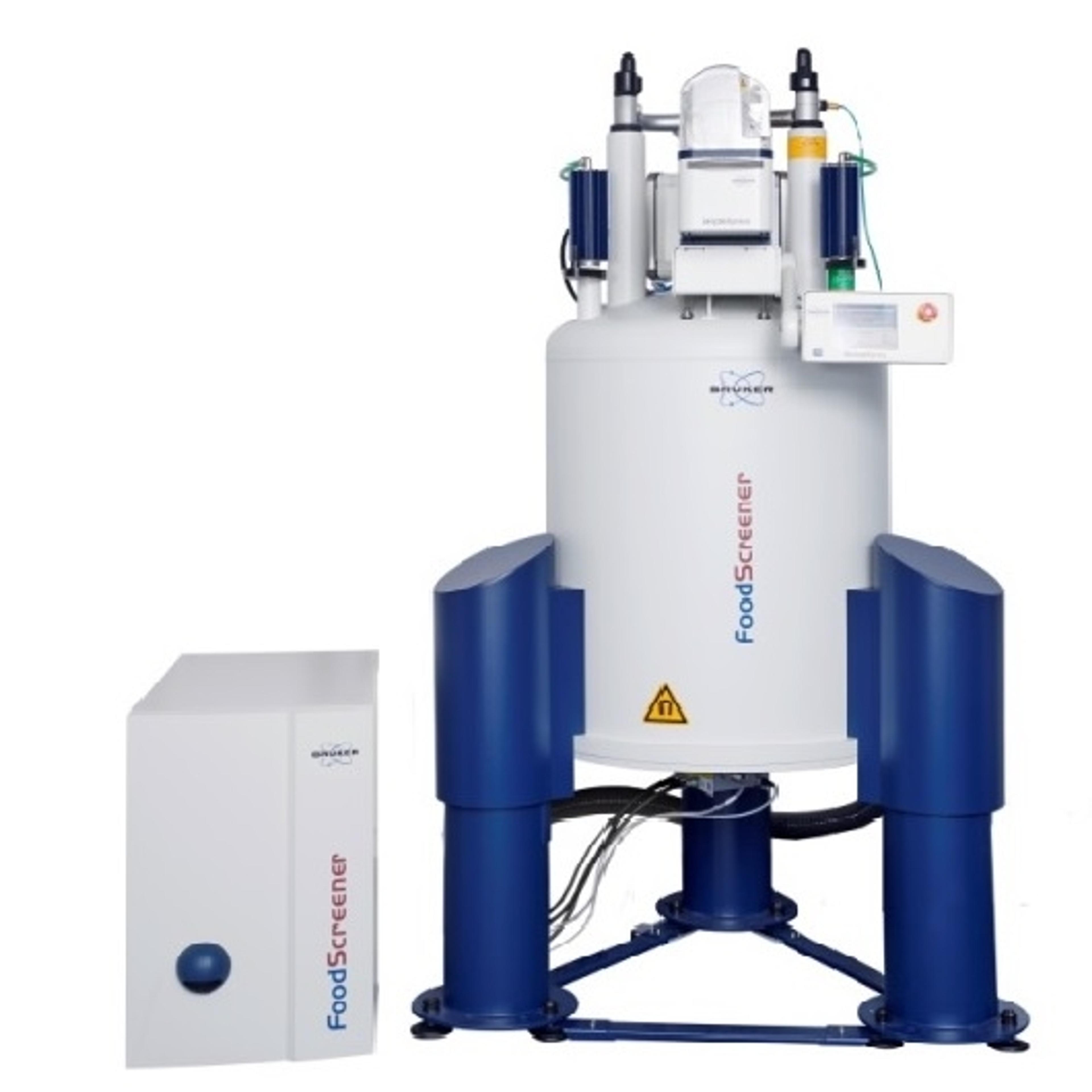
Addressing the needs of the market, Bruker has also introduced the NMR FoodScreener Essential Honey, a system dedicated to honey analyses only and tailored to the honey industry. This cost-effective solution uses the NMR Honey-Profiling method and allows honey packers to perform honey analyses on site without requiring NMR expertise to operate the instrument.
Professor Norberto Luis Garcia, Senior Consultant at NEXCO S.A., Argentina, one of the first adopters of the NMR FoodScreener Essential Honey, said: “NEXCO has a portfolio of selected clients around the world, who constitute the most attractive options -commercially speaking- but who also have the highest quality requirements for the honey they buy. NMR testing has become a must when selling honey with the highest guarantee of purity and authenticity to markets like the EU, USA, and Japan.”
The NMR Honey-Profiling 3.0 module is the latest step in Bruker’s continued effort to provide the honey industry with a powerful tool to maintain sustainable and fair business, and to defend honey’s reputation as a natural healthy food product. The new NMR Honey-Profiling module is available on Bruker’s NMR FoodScreener Essential Honey and on the full NMR FoodScreener™ platform – an automated NMR solution that also supports Bruker’s NMR Wine-Profiling™ and NMR Juice-Profiling™ modules.
Do you use Bruker instruments in your lab? Write a review today for your chance to win a $400 Amazon gift card>>