SZ-100 Nanoparticle Size and Zeta Potential Analyzer
17 Dec 2014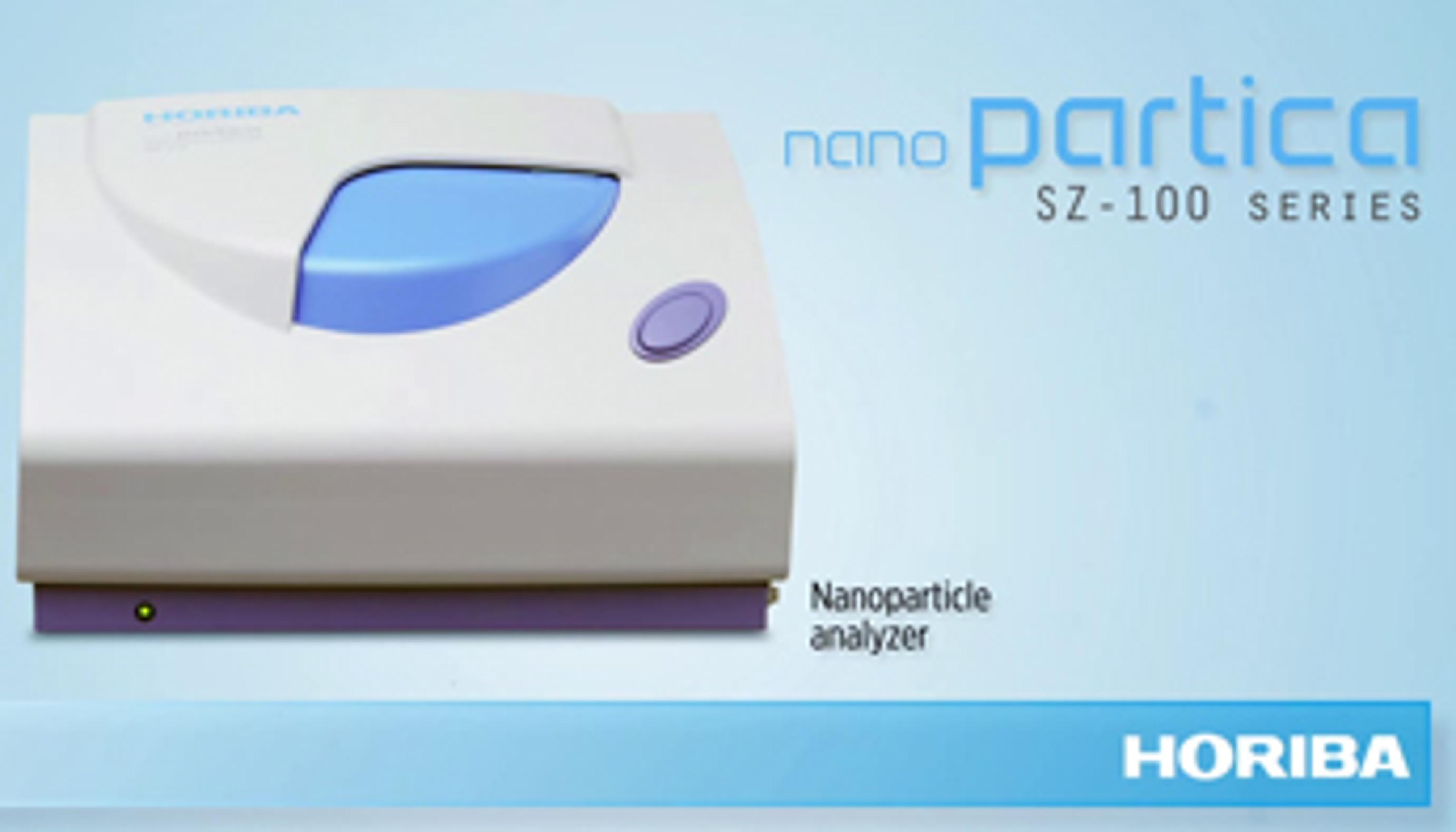
This video presents the SZ-100 nanoparticle analyzer, for measuring particle size and zeta potential for materials between 1 nanometer and 1 millimeter. HORIBA's patented zeta potential cell requires less than 100 microliters of material for analysis.
About the company

HORIBA Scientific
Optical spectroscopy has played a key role in the development of modern physics, from the early confirmation of quantum mechanics predictions of the spectrum of hydrogen to the observation of stars and interplanetary matter by astronomers refining their theory of the universe. Today, optical spectroscopy has become a routine method for the physicists and the astronomers, but also gained acceptance with chemists, biologists and metallurgists, amongst others.
At the heart of an optical spectroscopy apparatus, the single device most closely associated with spectroscopic performance is the diffraction grating. It is therefore no surprise to see that the study and manufacture of diffraction gratings remain the domain of excellence of HORIBA Jobin Yvon and a select few competitors worldwide.
With its R&D Centres located in Edison (New Jersey, USA) and in Longjumeau (France, in the heart of the French Optics Valley), HORIBA Jobin Yvon employs more than 70 Ph.Ds, an unequalled force focusing on the advancement of diffraction gratings and their applications to optical spectroscopy. HORIBA Jobin Yvon can call upon the Kyoto R&D Centres of its parent HORIBA, and in particular its "Optical Frontier" project studying nanosystems. Each year the HORIBA Jobin Yvon R&D teams are granted more than 10 patents worldwide.
Related products
Request Quote for All Products
SZ-100: Particle size, zeta potential and molecular weight all in one system
HORIBA ScientificSize, Zeta Potential and Molecular Weight of Proteins, Biomolecules, Liposomes, and other Particles used in the Life Sciences The new SZ-100 series instruments analyze key particle physical properties including size, zeta potential, molecular weight, and second virial coefficient (A2). Particle size analysis is performed by dynamic light scattering (DLS). Zeta potential is measured by electrophoretic light scattering. Molecular weight and A2 are analyzed by static light scattering using a Debye plot. The SZ-100 is the only instrument available capable of performing size measurements at both 90° and backscatter (173°). This unique feature provides maximum sensitivity and allows the user to optimize measurement conditions for all possible sample types. Particle size measurements are performed in a variety of cells at volumes down to 12 µL. Zeta potential measurements are made in either disposable cells for aqueous samples or dip cells for organic and biological samples. The unique disposable cells using carbon electrodes can typically measure hundreds of samples before requiring replacement. An automatic titrator is available for iso-electric point determinations of zeta potential vs. pH, or studies investigating optimum surfactant concentration for formulation or processing. Particle size measurements can be made from 0.3 nm – 8 µm at concentrations from 0.1 mg/mL (lysozyme) to 40 wt percent depending on sample properties. Zeta potentials from -200 to +200 mV can be analyzed manually or with the auto titrator. Molecular weight of small particles (Visit the manufacturer website at the top of the page to view application notes and webinars on life science subjects including; • Zeta potential of proteins • Particle size of gold nanoparticles • Particle size of liposomes • Nanoparticles for drug delivery