ResourceSeparations

Tandem GC/MS Analysis of Pesticides in Food Oils by Large Volume Injection with a Back-flush Option

Tandem GC/MS Analysis of Pesticides in Food Oils by Large Volume Injection with a Back-flush Option

24 Sept 2015

This application note describes a method to detect pesticides at very low concentrations in challenging food matrices on a routine use gas chromatograph/mass spectrometer (GC/MS). The target concentration was 1 pg/µL injected on-column, or 50 ppt equivalent in matrix. Pesticide analysis is an important aspect of food safety and the sheer number of analyses dictates that the methods used must be reliable, robust, and, given the competitive nature of the food industry, the cost per analysis must be low. Food is a complicated matrix for an analysis, and the chemical complexity of the food makes co-elution of matrix peaks with residues of interest inevitable. Even when using the mass spectrum of a compound of interest, there can be difficulty in determining pesticide contamination, especially at low levels.

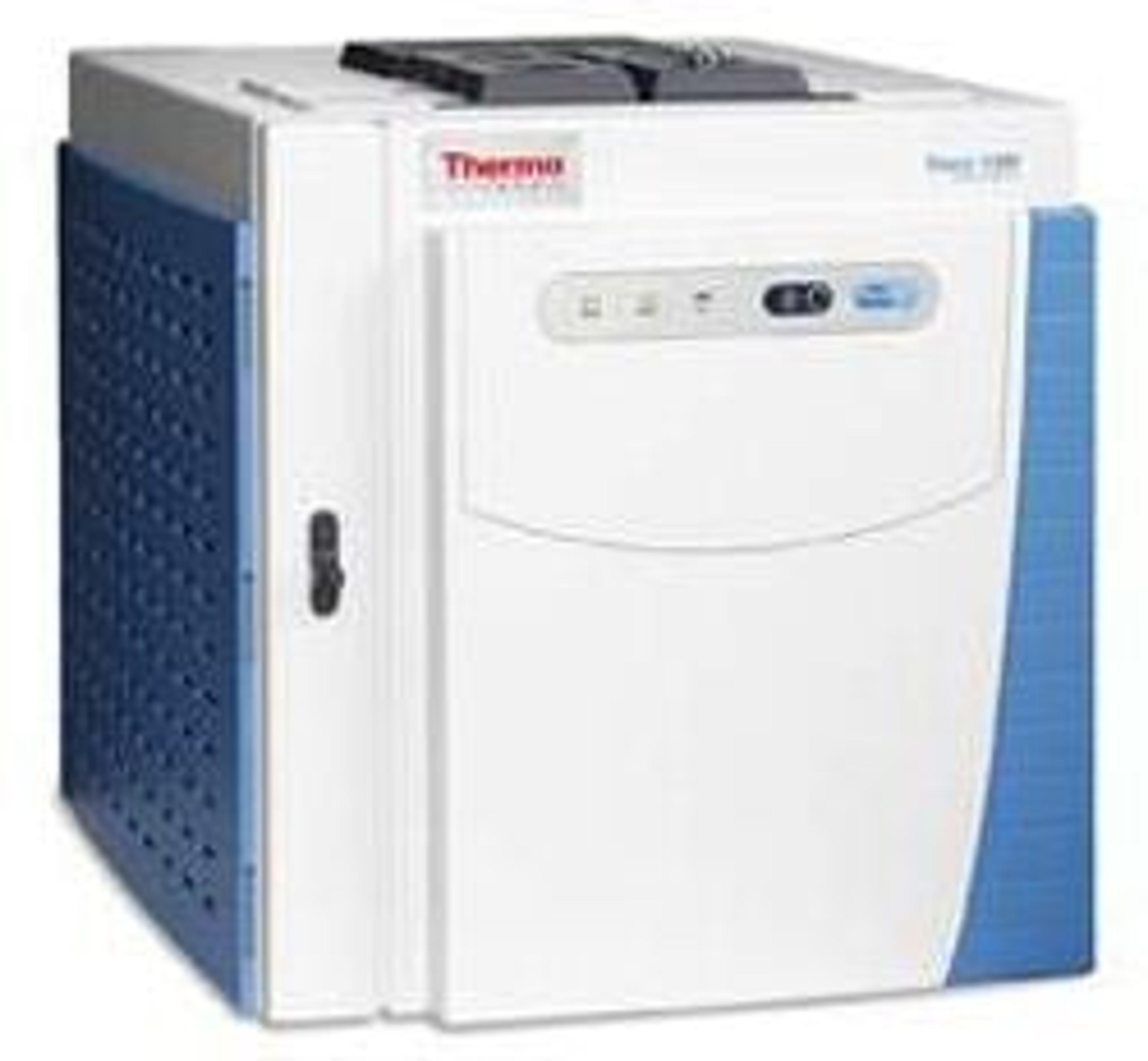
Thermo Scientific™ TRACE™ 1300 Series GC System

Thermo Fisher Scientific

The Thermo Scientific TRACE 1300 Series GC offers the most versatile gas chromatograph platform in the market, with unique "instant connect" modularity for ground-breaking ease of use and performance, setting a new era in GC technology.The Thermo Scientific TRACE 1300 Series GC is the ideal budget-conscious investment for the basic routine laboratory when lower operator expertise requires ease of use with minimal instrument interaction. Its simplified user-interface is also ideal for 24/7 operations that require single-button start/stop/maintenance local interactions while maintaining full programmability through the networked control software.Interchangeable modules free your laboratory from the challenges and constraints of the past. Remove the complexity and eliminate the need for specialized service assistance or new system requirements with modular injectors and detectors.Thermo Scientific Trace 1300 Series GC Features: Analyze dirtier matrices with minimum cleanup using the system's robust injector technology Analyze trace concentrations with smaller injection amounts and minimum preconcentration results using enhanced detector sensitivity and micro-volume technology Protect system components and reduce run time and maintenance using optional backflush capabilities Shorten sample cycle times using low thermal mass injectors and detectors and fast oven technology Automate your entire workflow—from pipetting to injection—using a full range of sample handling options Streamline and speed up data analysis using Thermo Scientific™ Dionex™ Chromeleon™ Chromatography Data System (CDS) software Expands easily from single-channel to multi-injector/detector GC configurations Reduces training and startup time with simplified installation, plug-in components, minimal local control and intuitive Chromeleon software Minimizes downtime with easy-access, tool-free modules Reduces operational costs by allowing use of standard consumables Saves energy with low thermal mass and quick start-up Minimizes sample and solvent consumption with micro-volume sample capability Modular design lets you easily reconfigure to meet changing requirements

(30)

Links

Tags

Gas ChromatographyGas chromatography (GC) is an analytical technique used to separate and quantitate mixtures of small and volatile compounds. Gas chromatographs or GC systems include components such as GC columns, detectors, pumps and autosamplers. Choose from packed or capillary GC columns, flame ionization (FID), photoionization (PID) electron capture detectors and selective or non-selective detectors. Find the best gas chromatographs in our peer-reviewed product directory: compare products, check customer reviews and receive pricing direct from manufacturers.Environmental Monitoring and TestingEnvironmental monitoring and testing uses handheld portable analyzers, kits, spectrometers or chromatography systems for air, water, soil, food and other sample testing. Useful features of analyzers such as BOD and COD include portability, easy calibration, automation and sensitivity.  Environmental test kits for pH, water, moisture, etc, should be accurate, sensitive, reliable, fast and easy to use.Food and Beverage AnalyzersFood and Beverage Analyzers are commonly used to provide information about the chemical composition, structure and physical properties of food materials.Food and Beverage ProcessingFood and Beverage Processing involves the preparation of food products for further analysis. Typical instrumentation includes blanchers, color sorters, cookers, grinders, and refrigeration. These are used to replicate the processes commonly used in the commercial preparation of food and beverages.GC-MS GC-MS (gas chromatography-mass spectrometry) instruments and equipment are used to separate, quantify and identify mixtures of small and volatile compounds, such as polycyclic aromatics, fatty acids and alcohols. Often used in drug detection, forensic investigation and environmental analysis for pesticides and contaminants, GC-MS is a powerful addition to your lab’s analytical capabilities. GC-MS/MS instruments equipped with a qTOF or triple quadrupole analyzers can give greater sensitivity and resolution to your analysis. Find the best GC-MS instruments and equipment in our peer-reviewed product directory: compare products, check customer reviews and receive pricing direct from manufacturers.PesticidesPesticides are used to protect crops from diseases, pests and unwanted plants. They are classed as persistent organic pollutants (POPs) and can be harmful to humans. The Environmental Protection Agency (EPA) currently regulates the use of pesticides in the USA. Routine QuantitationFood SafetyFood safety describes the prevention of food-borne illnesses. Contamination with a variety of pathogens can be prevented with adequate temperature control, hygiene and labeling. Food samples can be tested using GC/MS, HPLC, SPE, and qPCR to ensure their adherence to regulations.Food ContaminationFood contamination refers to the presence of harmful substances or pathogens in food, posing risks to human health. Contaminants can be biological, chemical, or physical, and their detection is crucial for ensuring food safety. Advanced testing methods like PCR, chromatography, and spectroscopy are used to identify contaminants in food products. Browse our peer-reviewed product directory to find the best solutions for food contamination detection, compare products, check reviews, and get pricing directly from manufacturers.