
Quantitative Determination of Total Solids in Coffee and Espresso
Quantitative Determination of Total Solids in Coffee and Espresso
23 Feb 2016A look at how the Anton Paar Abbemat range of refractometers can determine the amount of total solids in coffee, measured on the Brix scale. The amount of total solids can affect the quality of taste; the refractometers can give a measurement in seconds.
Related products
Request Quote for All Products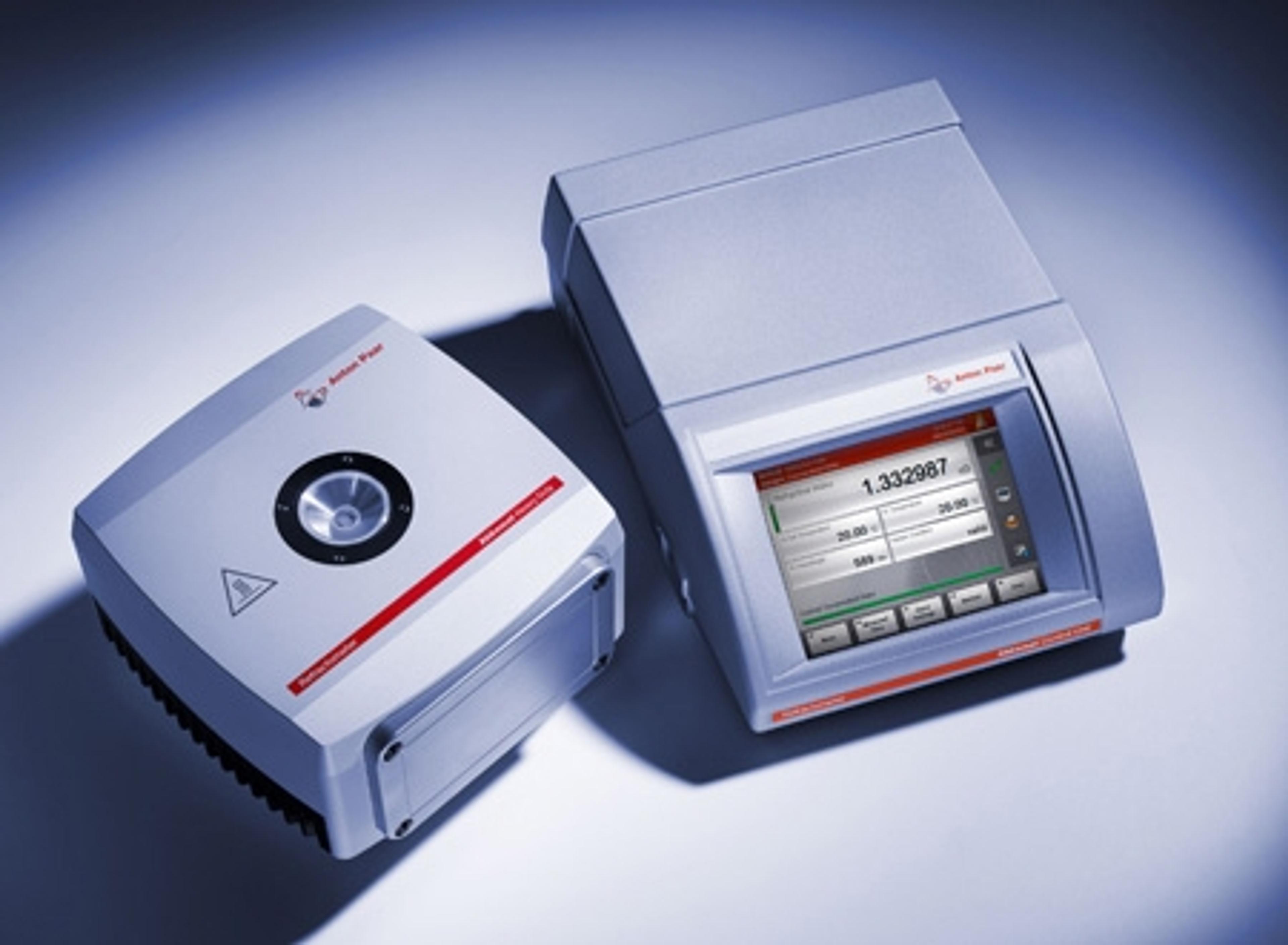
Abbemat Heavy Duty Line
Anton PaarThe refractometers of the Heavy Duty line are designed formeasuring the refractive index under harsh environments and in special applications. To withstand rough conditions they have a hermetically sealed stainless steel or aluminium casing. The refractometers of the Heavy Duty Line are either operated by a separate control unit or by a PC from a remote position. Abbemat Heavy Duty refractometers can be placed on their side to prevent sedimenation and disturbances which would affect the results. All Abbemat Heavy Duty refractometers are fully compliant with 21 CFR Part 11, featuring user levels, an audit trail and forgery-proof data export. Anton Paar also provides a qualification documentation package (DQ/IQ/OQ/PQ). Models: Abbemat 450, Abbemat 650 - The Abbemat 450/650 refractometers are extremely robust and waterproof (IP68). To measure samples containing solid particles or air bubbles you can position the Heavy Duty Abbemat on its side to prevent sedimentation and disturbances from affecting the results. A separate control unit allows for convenient operation from a remote position. Abbemat MW - Abbemat MW is the multi-wavelength refractometer for refractive dispersion and Abbe number determinations. The Abbemat MW refractometer is operated by a Windows-based PC software. Abbemat HT - Abbemat High Temperature (HT) offers temperature control up to 110 °C. The Abbemat HT refractometer is operated by a Windows-based PC software. Features: Unique performance – reliable results within seconds Optimal stability and analytical performance Fast temperature control Optimal sample temperature measurement Easy cleaning; no sample carry-over due to smooth junction between prism and sample mould No moving parts – no drift Withstanding rough operating conditions – at no extra cost Well suited for lab environments with rough operating conditions Robust stainless steel or anodized aluminum housing Resistant against acids, bases and solvents Water proof No internal condensation in cold or humid environments Versatile configurations – for the flexibility you need High temperature model (Abbemat HT) Multi-wavelength models (Abbemat MW) Separate measuring and control unit for remote operation 90° setup for samples containing pulp or particles Optionally combined with Anton Paar density meters, polarimeters and viscometers User-friendly software – making your work easier Large number of predefined methods User-definable methods Warning if the sample volume is too low or the prism needs extra cleaning Plausibility checks of measuring results and adjustments Data export with own design, logo, company address Multi-fill, temperature and time scans 21 CFR part 11 and GMP/GLP compliance – for a regulated environment Audit trail User management with different access levels Electronic signature Pharma qualification package Disabling of data memory