ResourceSeparations

LC-MS/MS Analysis of Emerging Food Contaminants

4 Oct 2015

Recent findings (in February 2015) of allergens in spices caused the recall of many food products in North America and Europe. The US Food and Drug Administration (FDA) advised people who are highly allergic to peanuts to consider avoiding products that contain ground cumin or cumin powder, because some shipments of these products have tested positive for undeclared peanut protein. This application note presents a method to detect the presence of peanut and almond in spices. Samples were extracted and then the allergenic proteins were reduced, alkylated and digested using trypsin. The extract containing peptides from the digested proteins were filtered and analyzed by LC-MS/MS using a reverse phase chromatography and positive polarity electrospray ionization (ESI).

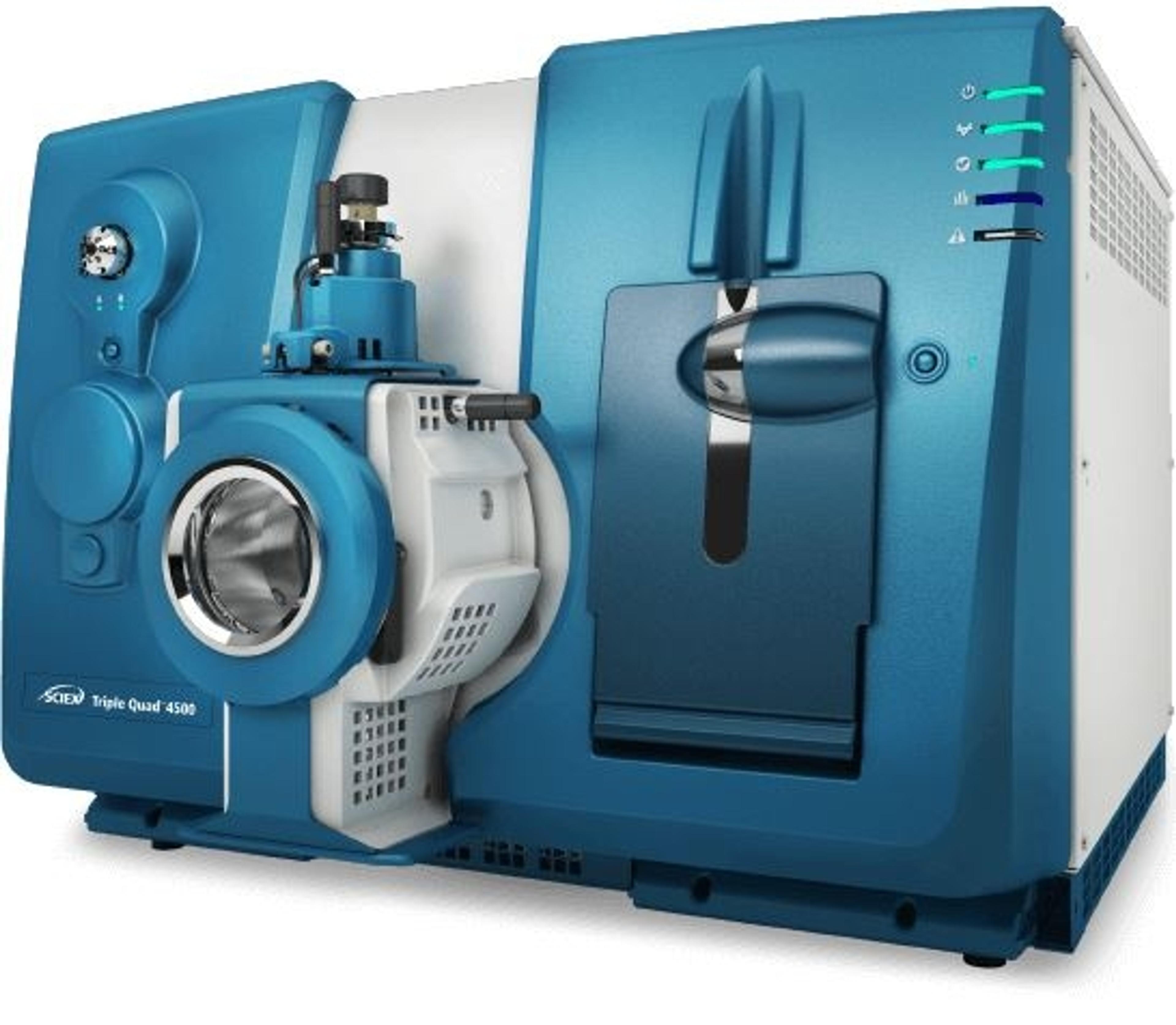
QTRAP 4500 system

SCIEX

The QTRAP 4500 system takes the legendary 4000 QTRAP platform and intelligently re-engineers it to set a new benchmark for reliable quantitation and library searching – with 100-fold more full-scan sensitivity over basic triple quadrupoles in the same class.  The LC-MS/MS workhorse is intelligently re-engineered. As one of the only triple quadrupole instruments with optional Linear Accelerator Trap technology, the QTRAP 4500 system enables powerful, unique workflows that deliver a new level of confidence in your data. High-confidence library searching and fast eQ electronics for UHPLC: The 4500 series uses proven eQ electronics delivering polarity switching speeds of 50 msec and scan speeds of 20,000 Da/sec, creating a potent solution for detecting unexpected contaminants. Combined with a single comprehensive library of thousands of QTRAP spectra for library matching, contaminants at the lowest levels can be confidently identified on a UHPLC time scale.   Features: Simultaneously quantitate MRMs and perform full scan library searches for non-targeted contaminants. Achieve a 100X increase in full-scan sensitivity over triple quads providing an enhanced level of confidence for forensic toxicology applications. Boost selectivity with quantitative MRM3 workflows – and reduce the need for extensive sample cleanup or labor-intensive chromatography methods. Obtain comprehensive peptide sequence confirmation and simplify MRM assay development for peptide quantitation.  

(9)

Links

Tags

UHPLC and HPLCHigh performance liquid chromatography (HPLC) and ultra high performance liquid chromatography (UHPLC), also known as UPLC, are analytical techniques used to separate, identify and quantitate components of complex mixtures including biological samples such as proteins and lipids as well as chemical mixtures of pesticides, drugs and oils. Both techniques are liquid chromatographic methods but differ by operating pressures (HPLC < 6000 psi < UHPLC ). Components of HPLC and UHPLC systems include columns, detectors, pumps, autosamplers and column heaters. Explore a range of UHPLC and HPLC columns for your specific sample needs including reverse phase, normal phase, ion exchange, HILIC, ion exclusion and size exclusion columns. For more specialized HPLC, explore FPLC, countercurrent LC and simulated moving bed systems. Find the best UHPLC and HPLC equipment in our peer reviewed product directory: compare products, check customer reviews and receive pricing direct from manufacturers.LC-MSLC-MS (liquid chromatography-mass spectrometry) systems and equipment are used for separation and quantitative analysis of complex mixtures, combining liquid chromatography and mass spectrometry. Quantify proteins, contaminants, pesticides or screen for drug metabolites with a high level of sensitivity. LC-MS systems and equipment include reverse phase, normal phase and specialized columns integrated with various MS detectors such as time-of-flight (TOF), quadrupole, orbitrap or ion trap mass analyzers. LC-MS/MS instruments equipped with a qTOF or triple quadrupole analyzer give greater sensitivity and resolving power to your analysis. Find the best LC-MS equipment in our peer-reviewed product directory: compare products, check customer reviews and receive pricing direct from manufacturers.Mass SpectrometryMass spectrometry (MS) is a powerful analytical technique used to identify and quantify molecules based on the mass-to-charge ratio of gas-phase ions. It provides detailed information about the structure, composition, and properties of compounds and is widely used across fields such as environmental monitoring, materials science, drug discovery and development, food and beverage testing, and wider chemical research. Key MS techniques include tandem mass spectrometry (MS/MS), liquid chromatography–mass spectrometry (LS-MS) and inductively coupled plasma (ICP-MS). Choosing from these wide range of techniques and technologies can be a daunting task, so keep up to date with scientific applications, performance expectations, and customer reviews here all in one place. Visit our product directory to receive quotes direct from the manufacturer. Food and Beverage AnalyzersFood and Beverage Analyzers are commonly used to provide information about the chemical composition, structure and physical properties of food materials.Food and Beverage ProcessingFood and Beverage Processing involves the preparation of food products for further analysis. Typical instrumentation includes blanchers, color sorters, cookers, grinders, and refrigeration. These are used to replicate the processes commonly used in the commercial preparation of food and beverages.Protein DetectionProtein detection techniques are essential for understanding protein expression, localization, and function. Methods such as western blotting, ELISA, and mass spectrometry are commonly used in research and diagnostics. Browse our peer-reviewed product directory to find the best tools for protein detection, compare products, check reviews, and get pricing directly from manufacturers.Food ContaminationFood contamination refers to the presence of harmful substances or pathogens in food, posing risks to human health. Contaminants can be biological, chemical, or physical, and their detection is crucial for ensuring food safety. Advanced testing methods like PCR, chromatography, and spectroscopy are used to identify contaminants in food products. Browse our peer-reviewed product directory to find the best solutions for food contamination detection, compare products, check reviews, and get pricing directly from manufacturers.Allergen
LC-MS/MS Analysis of Emerging Food Contaminants