
ResourceLife Sciences
Intelligent tools to generate clonal cell lines faster
4 Apr 2022The generation of biologic-producing cell lines comprises numerous time-consuming, expensive, and often technically challenging steps.
In this new eBook, we examine these challenges in greater detail and explore a range of intelligent analytical solutions that can be incorporated into cell line development workflows to eliminate bottlenecks in clone selection, fast-track development timelines, optimize CQAs, and reduce costs.
Download your free copy today to learn more about:
- Critical steps in cell line development
- Areas to improve efficiency
- Overcoming bottlenecks through streamlined clone selection
- Accelerating process optimization with integrated analysis tools
Related products
Request Quote for All Products
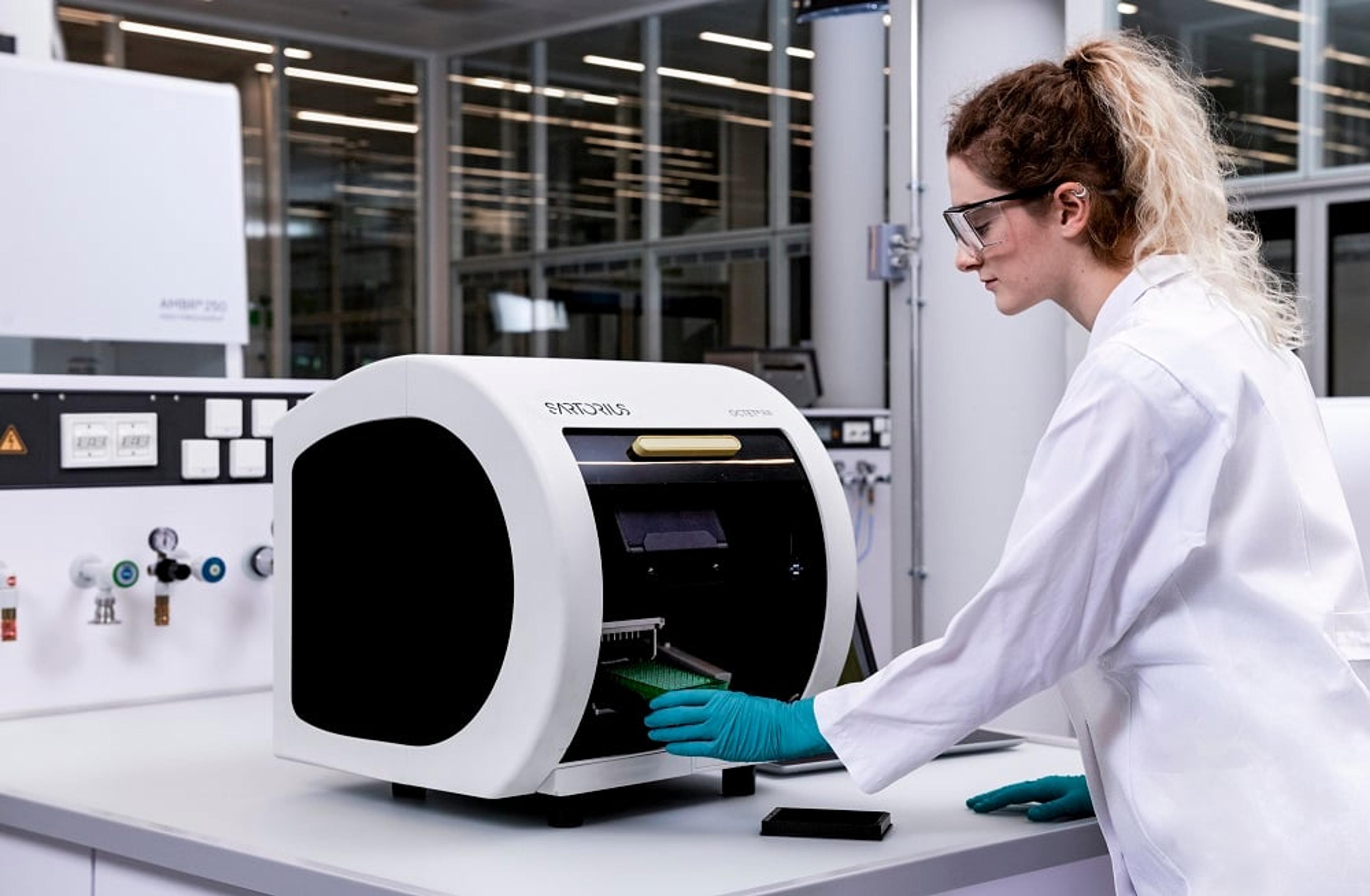
Octet® R8 BLI System
Sartorius GroupSuperior quantitation and kinetics performance with increased assay flexibility and cost efficiency.
Links
Tags
Cell Lines Stem Cells and Primary CellsPrimary cell cultures, established cell lines and stem cells are vital for <i>in vitro</i> and <i>ex vivo</i> experimentation. High-quality cells, optimized for your applications, alongside optimized cell substrates, growth medium and supplements, are critical for experimental success. Explore a range of cells suitable for your applications, including isogenic cell lines, competent cells, induced pluripotent stem cell (iPSC)-derived cell lines, fungal/bacterial/mammalian cell lines, stem cells and cancer cell lines. Find the best cells for your research in our peer-reviewed product directory: compare products, check customer reviews and receive pricing direct from manufacturers.Scale-upScale-Up is generally defined as the process of transferring the results of the discovery phases of the drug discovery process, obtained on a laboratory scale, to the pilot plant and finally to production scale. Scale-Up uses reactors and pump systems as well as reagents, standards and buffers. Often Scale-Up is provided as a service by Contract Manufacturing Organizations (CMOs). Bioprocessing / FermentationBioprocessing is the use of biological materials to perform commercial, scientific or medical research processes. Biological materials used include cells, enzymes and organisms. Usually bioprocessing requires a batch or continuous bioreactor such as a fermentor or cell culture system. The advantages of using a reactor include high productivity, easy configuration, adjustable values and automation.Cell / Tissue CultureCell culture or tissue culture is used to study the biology of cells or tissues and to isolate cellular products in an environment which can be manipulated and well defined. Accurately control your culture environment with bioreactors or culture incubators, bind your cells to a surface or together with an extracellular matrix. Distinguish cell types with differential media or proliferate cells with certain characteristics using selective media. Enrich your media with supplements such as growth factors, sera and vitamins. Find the best cell and tissue culture products, kits and equipment in our peer-reviewed product directory: compare products, check customer reviews and receive pricing direct from manufacturers.Cell ViabilityCell viability assays assess the health of cells and their ability to proliferate. These tests are crucial in drug development, toxicity testing, and cell-based research. Common methods for assessing viability include MTT, live/dead assays, and flow cytometry. Browse our peer-reviewed product directory to find the best tools for cell viability assays, compare products, check reviews, and get pricing directly from manufacturers.Cell AnalysisThe analysis of cells allows researchers to understand the factors which contribute to cell health and function. These influencing processes can then be predicted and altered, leading to the development of medication and disease treatments.BioprocessingBioprocessing is the use of biological systems for the conversion of raw materials to desired products. This includes the research, development and manufacturing stages of production and can refer to food processing, small-molecule pharmaceutical manufacture, production of recombinant protein therapeutics, or the generation of renewable energy.BiopharmaceuticalsBiopharmaceuticals are proteins and other compounds (such as nucleic acids) produced by living organisms that have uses as therapeutics or for in vivo diagnostics. The most well known example of a biopharmaceutical product, and the first to be approved for therapeutic use, was recombinant human insulin.Cell GrowthCell growth refers to the process by which cells increase in size and number. It is essential for tissue development, wound healing, and cancer research. Understanding and controlling cell growth is a fundamental part of cell biology and regenerative medicine. Browse our peer-reviewed product directory to find the best tools for studying cell growth, compare products, check reviews, and get pricing directly from manufacturers.BiotherapeuticsBiotherapeutics are proteins and other compounds (such as nucleic acids) produced by living organisms that have uses as therapeutics or in <i>in vivo</i> diagnostics. The most well-known example of a biotherapeutic product, and the first to be approved for therapeutic use, was recombinant human insulin.Antibody ProductionAntibody production is essential for a wide range of applications in biochemistry and immunology. Ensuring high-quality monoclonal and polyclonal antibodies are produced is key. Explore antibody production tools in our peer-reviewed product directory; compare products, check reviews, and get pricing directly from manufacturers.