
Evaluation of a ‘Soil Gas’ Sorbent Tube for Improving the Measurement of Volatile and Semi-Volatile Fuel Vapors in Contaminated Land
7 Aug 2014This Application Note describes the development of a two-bed sorbent tube in conjunction with Markes’ Micro-Chamber/ Thermal Extractor for the sampling of petroleum, diesel and kerosene vapors collected from soil gas. Both lighter and heavier (polyaromatic, longer-chain) hydrocarbons were detected, and quantitative recovery is demonstrated for even the heaviest fuel components.
Related products
Request Quote for All Products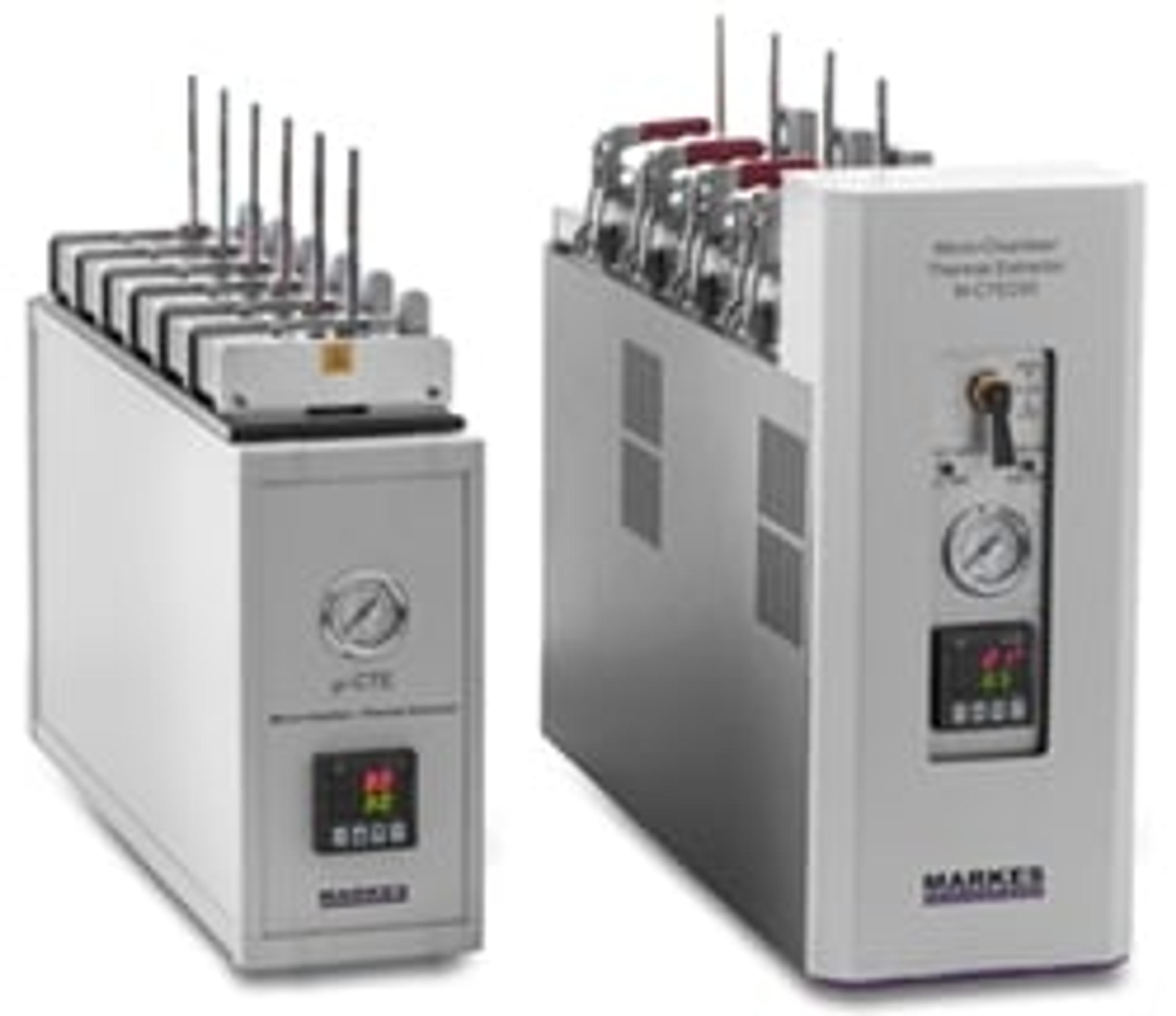
Micro-Chamber/Thermal Extractor
Markes International LtdFast sampling of emissions from products and materials. The Micro-Chamber/Thermal Extractor™ (µ-CTE™) is a versatile and compact unit with up to six small cylindrical chambers that enables the sampling of chemicals released from products or materials. Released volatile and semi-volatile organic compounds (VOCs and SVOCs) are collected onto sorbent tubes for analysis by TD–GC–MS. The capability of the Micro-Chamber/Thermal Extractor has been further extended by the release of the Humidifier Accessory, which supplies the Micro-Chamber/Thermal Extractor with air or gas at up to 50% relative humidity. Features: The four-chamber model has a chamber volume of 114 mL and a maximum temperature of 250°C The six-chamber model has a chamber volume of 44 mL and a maximum temperature of 120°C Volatiles are collected on sorbent tubes for analysis by TD–GC–MS; also compatible with DNPH cartridges for formaldehyde monitoring No sample preparation needed – simply place the material in the chamber A constant flow of heated air or gas ensures rapid production of a representative VOC/SVOC profile Results can be correlated with longer-term reference methods Construction from inert-coated stainless steel – compatibility with reactive or thermally labile chemicals Accessories allow surface-only sampling or permeation testing An optional humidifier accessory (available for both models of microchamber) supplies air/gas at up to 50% relative humidity to allow closer simulation of conditions used in reference tests and to enhance the recovery of some less-volatile polar compounds Benefits: Save time and money by minimising the need for third-party reference tests Convienient and fast – test multiple samples in minutes, not days, for efficient quality control Confidence in results – Data from the Micro-Chamber/Thermal Extractor has been shown to correlate with longer-term reference-test results Avoid tedious and time-consuming sample preparation – simply place your sample in the microchamber Complies with international standard methods ISO 12219-3 (interior air of road vehicles) and ASTM D7706 (rapid screening of VOC emissions from products) Peace-of-mind – you are buying a quality product from the recognised leader in thermal desorption instrumentation Applications: RMicro-Chamber/Thermal Extractor analysing Rapid emissions screening of materials used indoors and in vehicles, especially to aid compliance with regulations and safety labels Product R&D and formulation of lower-emitting products Testing of raw materials and production-line quality control Comparison with competitors’ products Testing permeation of vapours through materials Aroma profiling of foods or fragranced materials