
Controlled Cultivation of Stem Cells – Factors to Consider When Thinking of Scale-Up
1 Jul 2015This white paper describes the process and difficulties that can be encountered during the scale-up of stem cells for therapy or research. It also describes how these problems can be resolved and offers case studies to support this.
Related products
Request Quote for All Products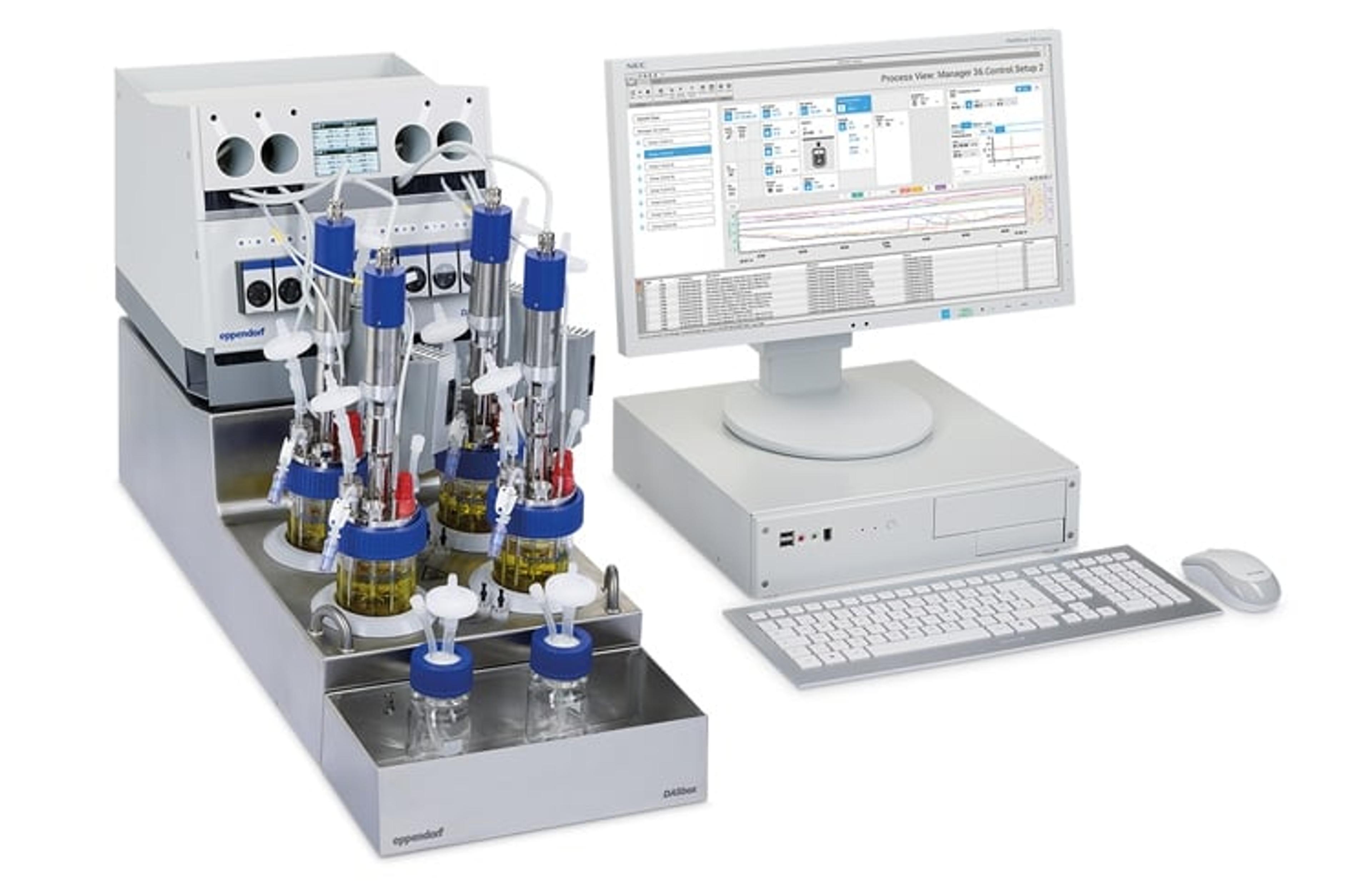
DASbox® Mini Bioreactor System
EppendorfThe DASbox is a unique mini bioreactor system suitable for microbial and cell culture as well as stem cell applications. It is designed as a 4-fold system with up to twenty-four parallel operating bioreactors. With working volumes of 60 – 250 mL the DASbox is the optimal tool for advanced process development and Design of Experiments (DoE) applications. All critical process parameters can be precisely controlled. Liquid-free temperature control and exhaust condensation satisfy users with easy handling. In addition to using industry standard glass bioreactors the DASbox can be equipped with Eppendorf BioBLU® 0.3 vessels, all fully instrumented single-use mini bioreactors. Eppendorf DASbox® Mini Bioreactor System Features: Parallel set-up of up to 24 bioreactors; Excellent scalability and reproducibility in both microbial and cell culture applications; Supports industry standard glass bioreactors (DASbox Mini Bioreactor) as well as the BioBLU 0.3 Single-Use Vessels; Small working volumes save on the amount of cell material, media and supplements required; Extremely compact system with a footprint of only 7.5 cm (3 in) benchspace per vessel; Individual temperature control with liquid-free heating and cooling (Peltier); Liquid-free Peltier exhaust condenser with easy handling by automatic slide in activation and slide out deactivation mode; LC display with key process parameters and integrated alarm function simplifies monitoring; Fully mass flow-controlled gas mixing with individual gas mixture from Air, O2, CO2 and N2, each directable either to headspace or sparger; Standard sensors for precise measurement and control of temperature, pH, DO, level and ORP (redox potential); optical pH sensors available; Precise miniature variable speed pumps, continuous flow rates down to 0.3 mL/h; Sealed magnetic overhead drives for single-use vessels and direct overhead drives for autoclavable vessels; up- or downflow selectable; Optional pull-out system for enhanced accessibility of bioreactors and control unit. Applications: Process development in cell culture and microbiology; Design of Experiments (DoE) Media optimization Clone and cell line screening, strain characterization.
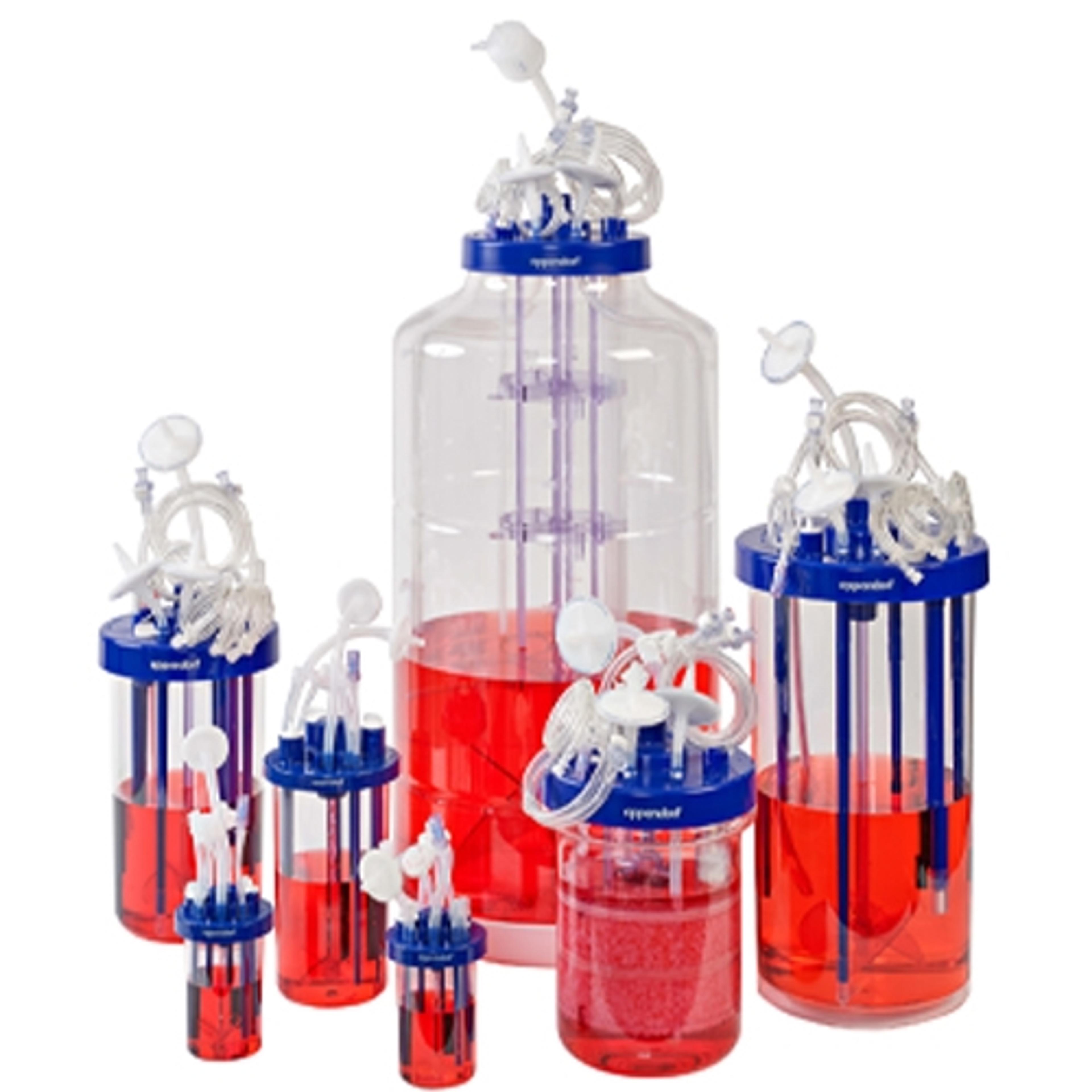
Eppendorf BioBLU® Single-use Vessels
EppendorfEppendorf BioBLU Single-use Vessels combine all the advantages of single-use technology with the trusted performance and scalability of a stirred-tank design.