ResourceDrug Discovery & Development
Accelerate green chemistry with smarter synthetic biology
13 May 2025
Dora Wells
Clinical Content Editor
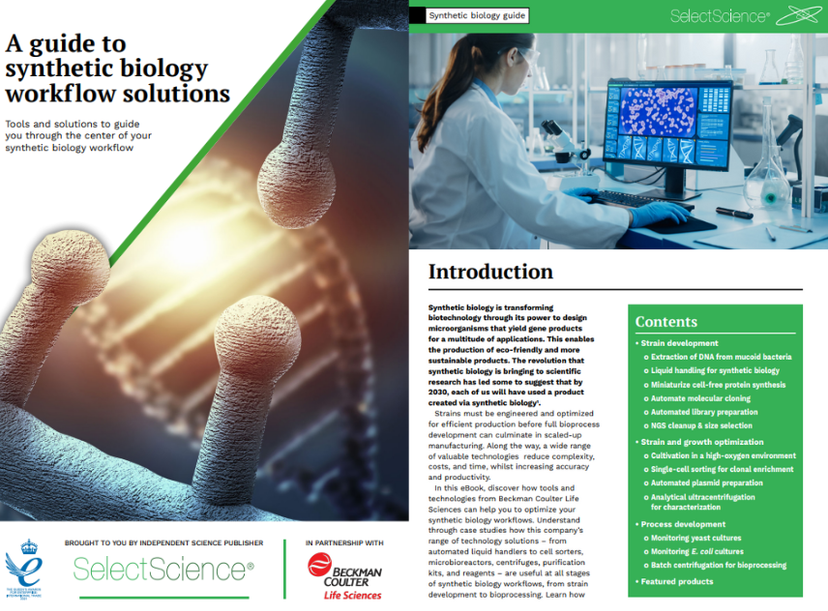
Tools and solutions to guide you through the center of your synthetic biology workflow
Synthetic biology is driving a new era in sustainable science—enabling researchers to design microorganisms for the efficient production of environmentally friendly materials. Whether you're engineering microbial strains or optimizing growth conditions, minimizing waste and maximizing process efficiency are core goals of any green chemistry workflow.
Download this eBook to:
- Miniaturize and automate strain development — cut reagent use and reduce plastic waste
- Improve strain growth and optimization — minimize costly trial-and-error steps
- Speed up process development — reduce timelines without sacrificing data quality
Explore real-world case studies and practical tools that support sustainable innovation—from DNA purification to high-throughput bioprocessing. Learn how automation, precision liquid handling, and scalable workflows can help you bring green chemistry principles to life in your lab.
Links
Tags
OligonucleotidesOligonucleotides are small nucleic acid polymers, usually less than 20 bases in length. Oligonucleotides can be made via enzymatic cleavage or more commonly by chemical synthesis with polymerases. Their use includes FISH, southern blots, microarrays and as primers in PCR. High fidelity synthesis kits and detection systems are available for easy production and detection, respectively.Synthetic ChemistrySynthetic BiologyDNADeoxyribonucleic Acid (DNA) is the main component of chromosomes and the carrier of genetic information of living organisms. Find out here about PCR, NGS, ChIP-Seq, gel imaging, and many other techniques which can be used for the analysis of DNA.