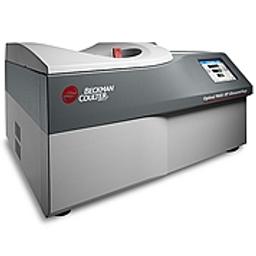
Optima MAX-XP
The latest in tabletop ultracentrifuge technology

The supplier does not provide quotations for this product through SelectScience. You can search for similar products in our Product Directory.
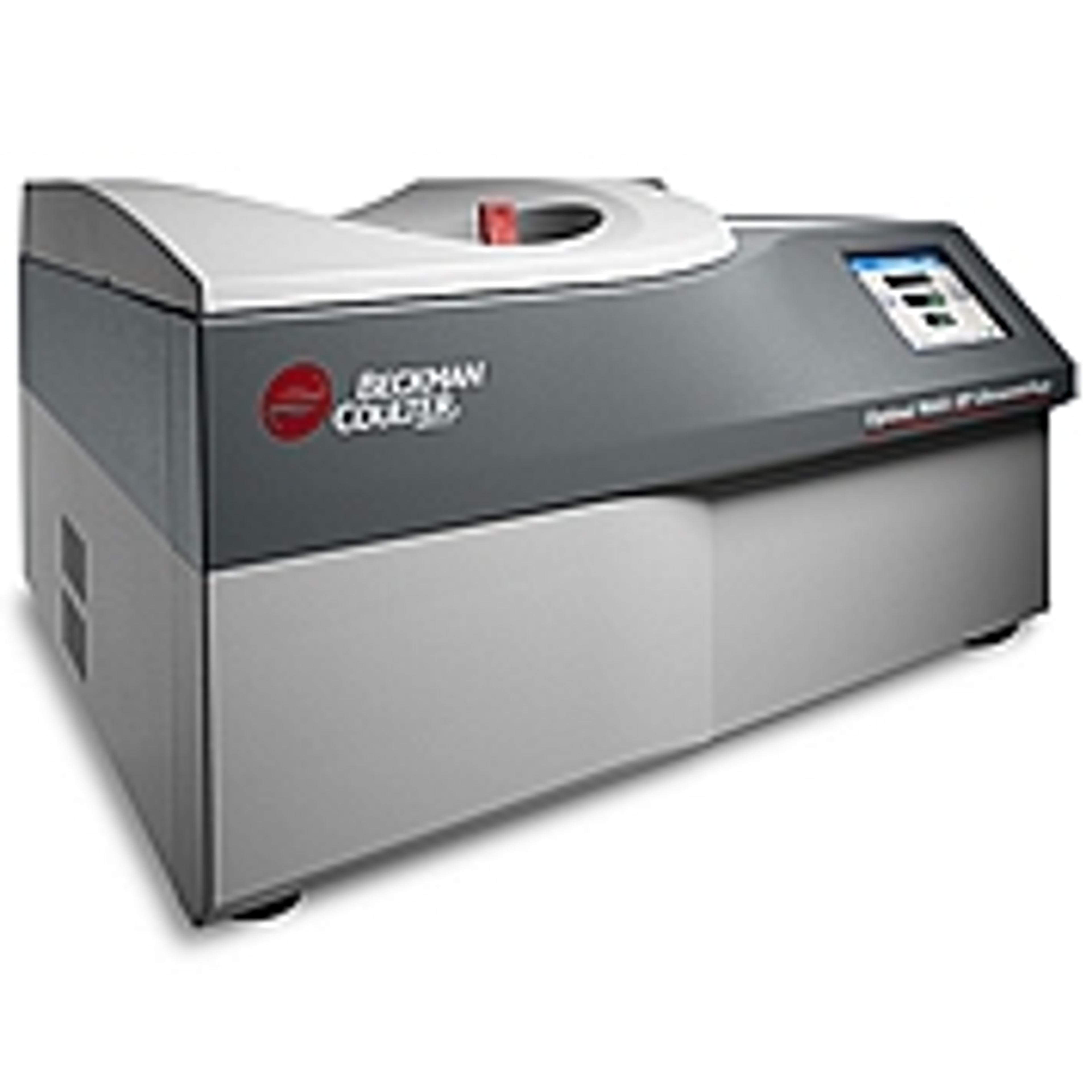
The Optima MAX-XP tabletop ultracentrifuge is a power-packed solution that delivers fast, efficient separations from samples as small as 175 μl up to 32.4 ml and at speeds of up to 150,000 RPM and more than 1,000,000 x g. Every detail of the Optima MAX-XP is designed with the user in mind–from the system's compact design, versatility and quiet operation to advanced multi-lingual software.
High-Performance Automation and Centrifugation Preparation of Carbon Nanotubes for Analytical Ultracentrifugation
Single walled carbon nanotubes experienced increasing interest in the past 15 years for semiconductors, fuel cells and biomedical applications. This application note focuses on two challenging areas for nanoparticles: reliable, rapid scale-up of nanoparticle purification; and quantitative analysis of the concentration of species present. The Biomek 4000 Laboratory Automation Workstation helps overcome the human variable and gives a consistent, reproducible, high-throughput method for gradient setup, which provides a breakthrough for scale-up problems.
Analysis of Nanotoxicity: Particle Characterization & Centrifugation
This application note provides insight into the inherent shortcomings that are present in traditional cellular toxicity assays, and how these shortcomings are magnified when the toxicity assay involves nanomaterial. Nanomedicine is a field common to materials scientists, chemists, biomedical engineers, biologists and medical scientists. Beckman Coulter tools enable quantification of cellular toxicity caused by nanoparticles; reducing time to remove aggregated particles and quantifying cell toxicity in the presence of single-walled carbon nanotubes.
Stability of the Human Immunodeficiency Virus-1 Reverse Transcriptase Heterodimer
This application note describes the characterization of a heteroassociating system. The thermodissociation is studied using band sedimentation analysis, whilst the electrostatic dissociation is studied using boundary sedimentation analysis. Analytical ultracentrifugation represents a powerful methodology for expressing HIV-1 viral components. In conjunction with appropriate data analysis methodologies, analytical ultracentrifugation can be used to examine sample purity, detect and characterize conformational changes, determine subunit stoichiometries, characterize assembly and disassembly mechanisms of macromolecular complexes, and measure equilibrium constants and thermodynamic parameters of associating systems.
Beckman Coulter to Unveil Next Generation Analytical Ultracentrifuge at Analytica 2016
Optima AUC delivers enhanced optics and improved software to open new applications