Rainin NanoRep
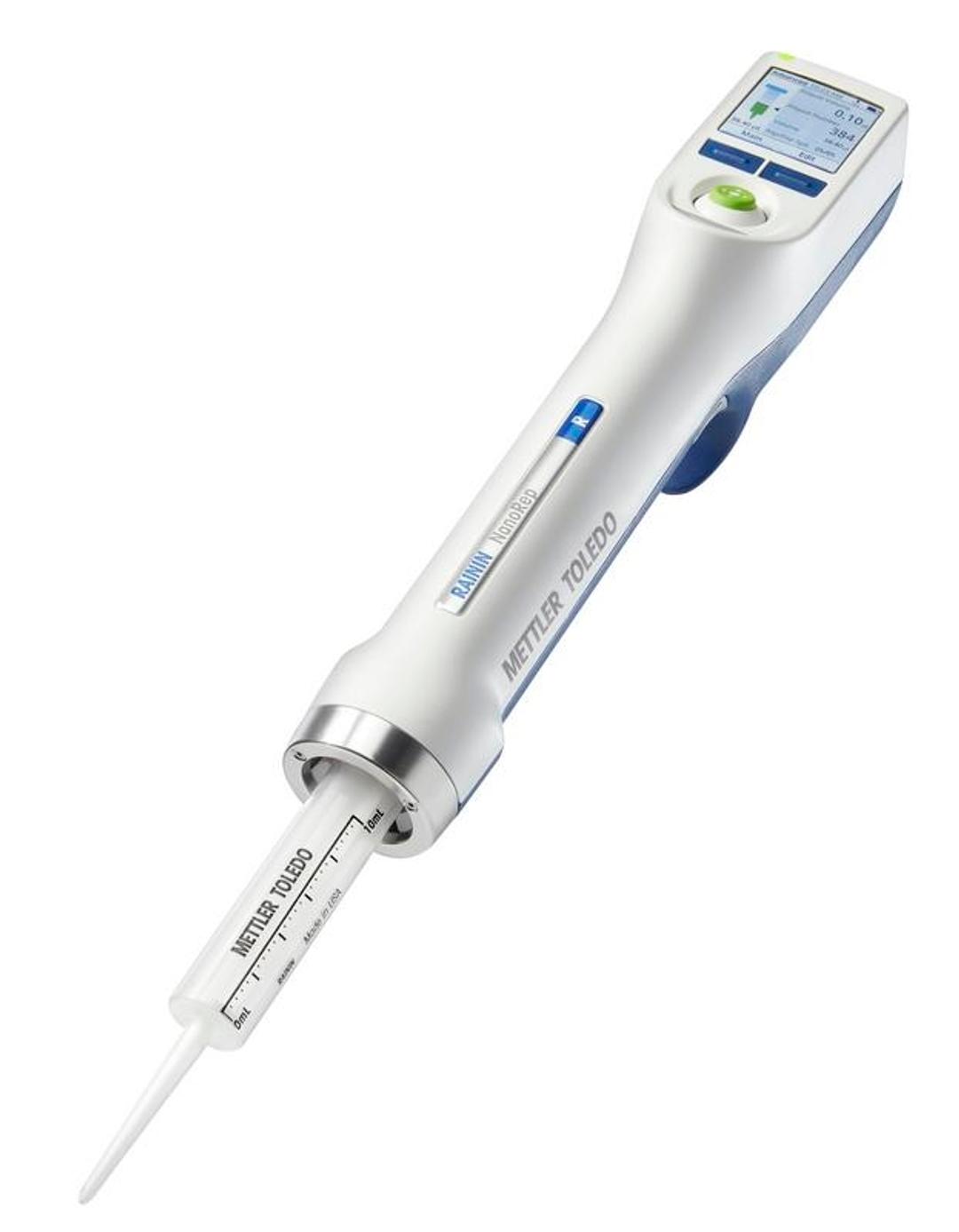
An electronic repeater pipette dispenses multiple aliquots of the same volume. Also known as an electronic multi-dispenser pipette, these handheld lab tools include features beyond the delivery of multiple aliquots, such as mixing and titrating. NanoRep is the first handheld electronic pipette capable of repeat-dispensing aliquots as low as 0.1 μL.


The supplier does not provide quotations for this product through SelectScience. You can search for similar products in our Product Directory.
Accurate, precise, No Touch Off dispenser.
Dispense aliquots as low as 100 nL. Increments: 1/10,000th tip size. Full range 100 nL – 50 mL. Up to 1,000 aliquots from one aspiration. No Touch Off™ dispenser. Includes: NanoRep™, 10 mL syringe tip, wall charger, hang-up and Quick Reference Guide.
No Touch Off dispenser
World's first handheld repeater pipette with non-contact dispensing. Reduce the risk of cross contamination and speed up workflows. Min. interval 0.5 sec.
3 Tips, 100 nL – 50 mL Range
Use less plastic and less space storing tips. Up to 1,000 aliquots from any of 3 syringe tips, with increment adjustment down to 1/10,000th tip size.
Positive displacement
Confidently handle viscous, volatile, and other challenging liquids with extreme accuracy.

Steps to ensure cell culture success
Optimal selection and use of liquid handling equipment is essential to preventing challenges with sterility, reproducibility, efficiency, and scalability that can arise when working with cell culture.
Many cell types with different structural and functional characteristics exist and the most appropriate cell line to use depends on the specific research area and application. Optimizing cell culture conditions is vital for investigating biological research questions with applications including the study of diseases and the production of biologics such as vaccines. Cell culture also plays a vital role in tissue engineering, where cells can be grown on a scaffold to create functional tissues and organs. To get the most out of your cell culture workflow it is vital to understand the characteristics of your cell lines, as well as the origin of your cells. Another factor to consider is how cells grow inside of a microplate well. For example, cells can adhere to the bottom of the well (adherent), they can float in media (suspension), or they can form spheroids in a matrix.
Liquid handling equipment used in cell culture workflows can include single channel, multichannel, repeater pipettes, and semi-automated pipetting systems. Many of the challenges that arise when working with cell cultures are rooted in poor, sub-optimal, or inappropriate liquid handling tools and techniques. Processes can be improved by optimal selection and use of liquid handling equipment. In this infographic, learn more about the different types of cells used in biological research and discover how to overcome four common cell culture challenges with optimized liquid handling.
Download this infographic to learn more about:
- How different cell types can be used for various applications
- The liquid handling tools required for efficient workflows, including single channel, multichannel, repeater, and semi-automated pipettes, and how optimal tool selection can help overcome common challenges in cell culture workflows related to sterility, reproducibility, efficiency, and scalability
- Semi-automated 96-channel pipetting solutions that can speed up cell culture workflows and help overcome the challenges associated with manual pipetting