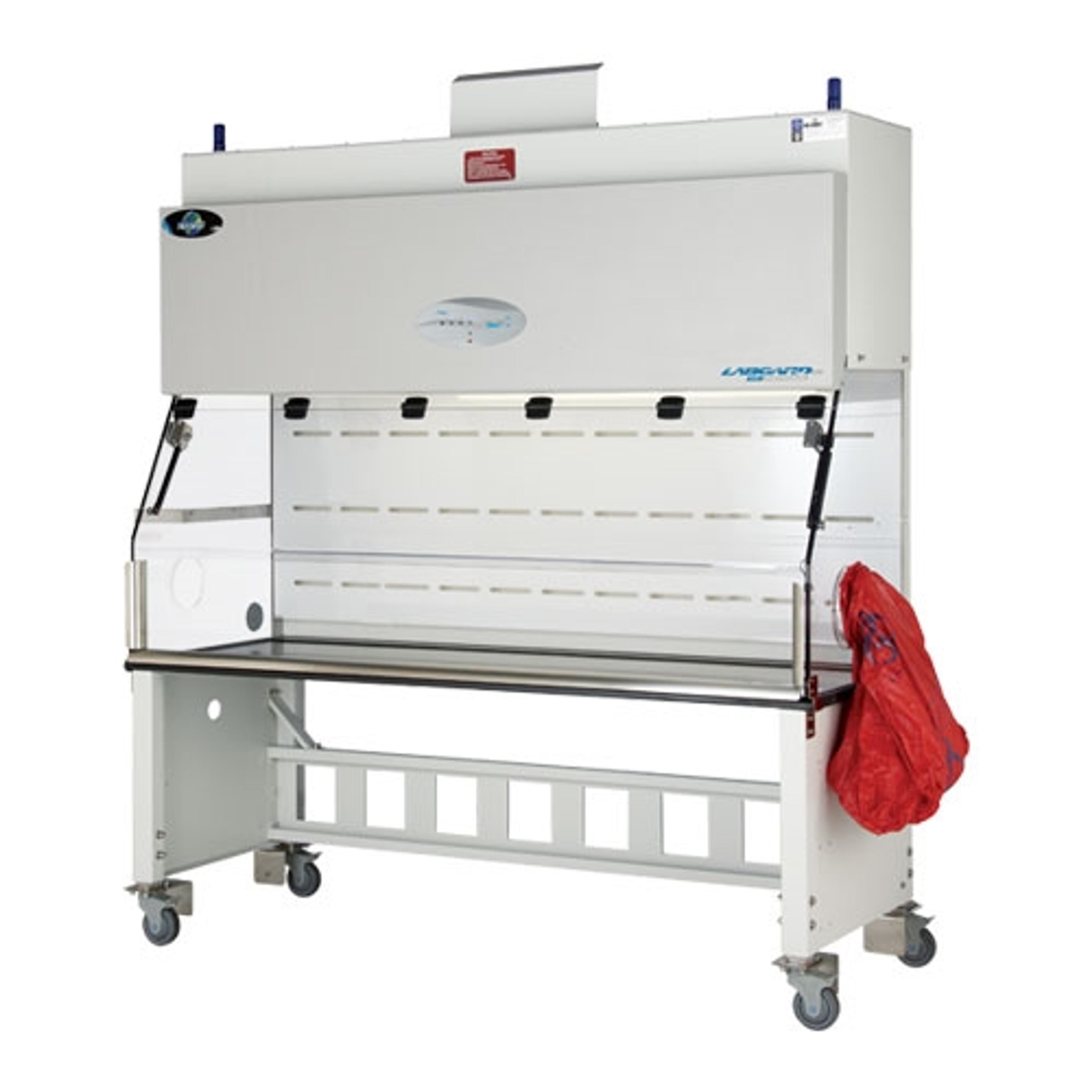
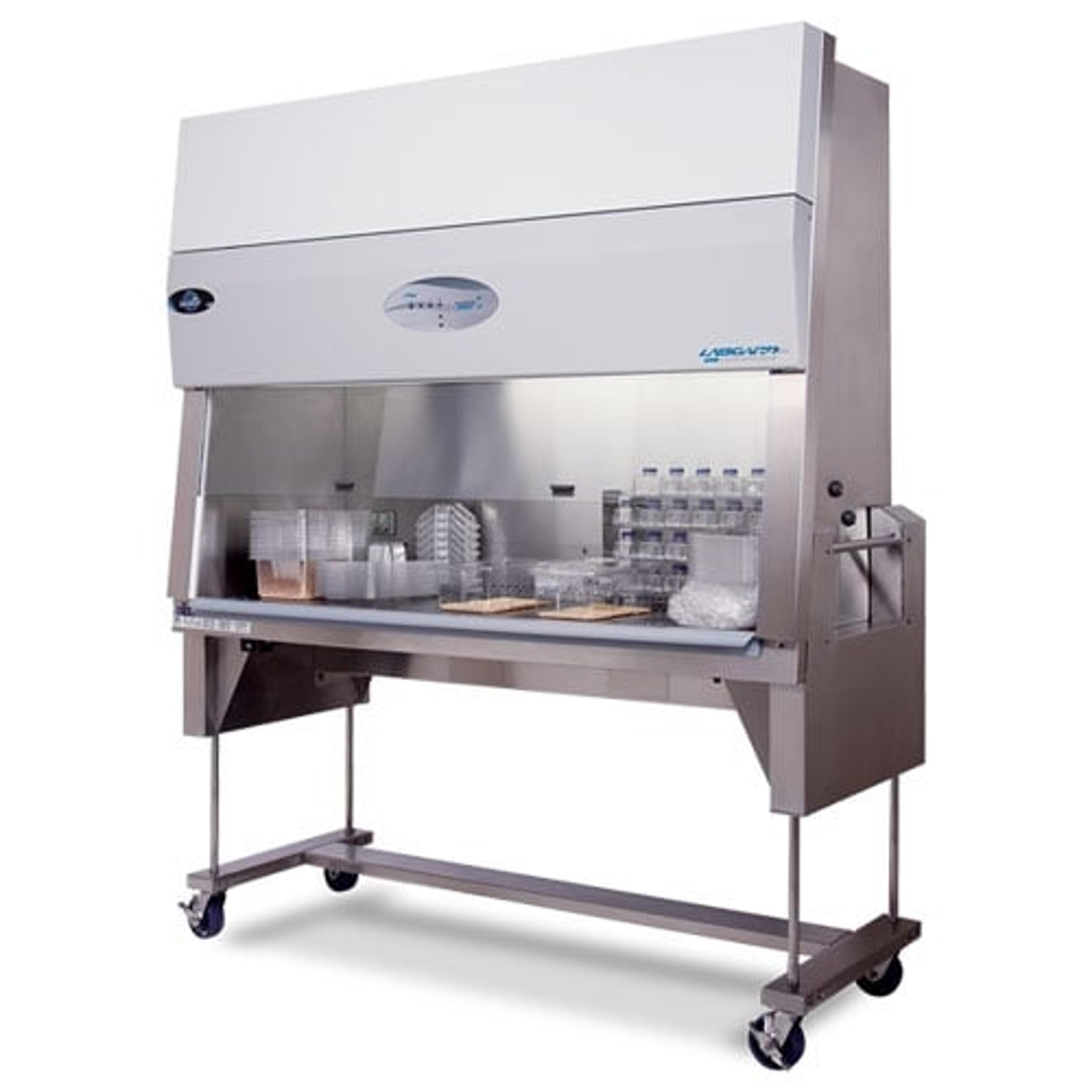
LabGard® TE (Total Exhaust) NU-560 Class II, Type B2 Biosafety Cabinet
NU-560 Total Exhaust Biological Safety Cabinet (BSC) may be used for work with non-flammable, non-explosive volatile chemicals and radionuclides by providing personnel, product, and environmental protection by exhausting 100% of contaminated air.



Receive your quote directly from the manufacturer.
NU-560 Total Exhaust Biological Safety Cabinet (BSC) may be used for work with non-flammable, non-explosive volatile chemicals and radionuclides by providing personnel, product, and environmental protection by exhausting 100% of contaminated air. LabGard® ES offers economical operation through the use of an ultra-high efficiency motor to maximize filter life and monolithic silicone-free construction for long product life all for an affordable price.
Standard Features
- 8-Inch (203 mm) Access Opening Tempered Sliding Glass
- Metal Frame Supply HEPA Filter 99.99% @ 0.3 Micron
- Metal Frame Exhaust HEPA Filter 99.99% @ 0.3 Micron
- Standard Outlet Left Front Faring, Outlet Plate Cover Right Front Faring
- Right Middle Service Coupling
- Right Bottom Service Valve
- Left Middle Service Coupling
- Left Bottom Service Coupling
- Monolithic 16/18 GA Stainless Steel Interior and Exterior Construction
- Recessed and Removable Front Intake Grill
- Heavy Duty Ergonomic Plastic Armrest
- 3/16” Diameter Stainless Steel Mesh Accessible Paper Catch
- 100% Front Maintenance Construction
- 250% Filter Load Capacity
- 10° Sliding View Window
- TouchLink Control System w/ Intelliflow Airflow Probe
- Ultra-high Efficiency DC/ECM Motor
- Ultra-high Efficiency LED Lighting
- Certification Value Exhaust Requirement: 740 CFM @ 1.7” w.g.
- Concurrent Value Exhaust Requirement: 815 CFM @ 1.7” w.g.
- Power Cord

Biosafety cabinet selection in the context of risk assessment
The process of conducting a risk assessment can be crucial before initiating experiments involving potentially hazardous conditions or materials in the laboratory. This eBook provides comprehensive guidance on understanding, performing, and incorporating risk assessments into biological materials work. It covers the definition of a risk assessment, evaluation of hazards, implementation of control measures, and selection of biosafety cabinets (BSCs) based on risk assessment outcomes.
by Julianne Baron, PhD, CPH, RBP
10 tips for working safely with the NuAire Biosafety Cabinet
When working in the laboratory with a NuAire Biosafety Cabinet, following strict safety protocols is crucial. This infographic highlights a number of safety procedures ranging from understanding airflow and maintaining the proper sash level to the superior handling of tubes, Petri dishes, and aspirator bottles. Many common procedures in Biological Safety Cabinets (BSCs) may create splatter or aerosols, so techniques to reduce their generation are crucial to minimize personnel exposure to infectious materials.