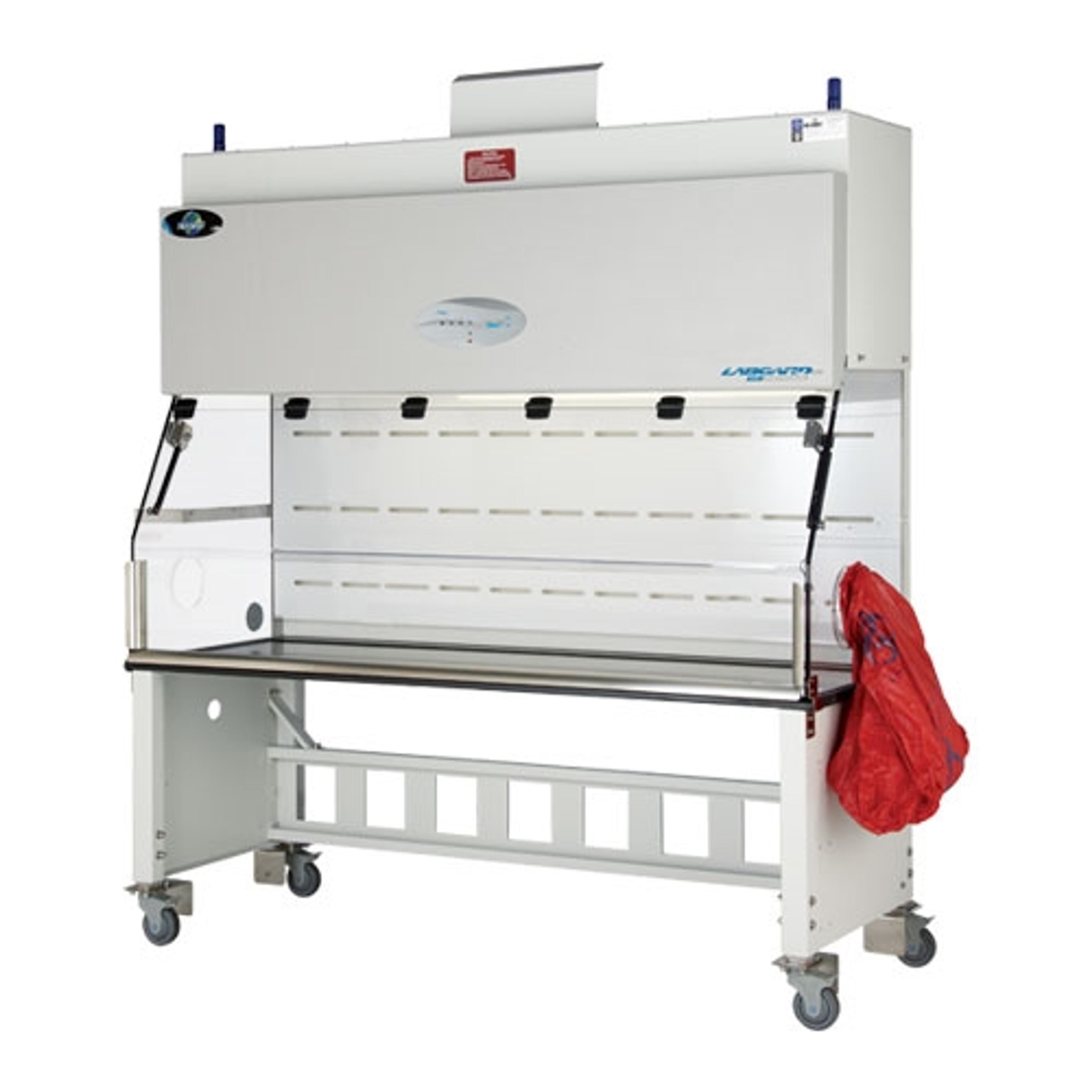
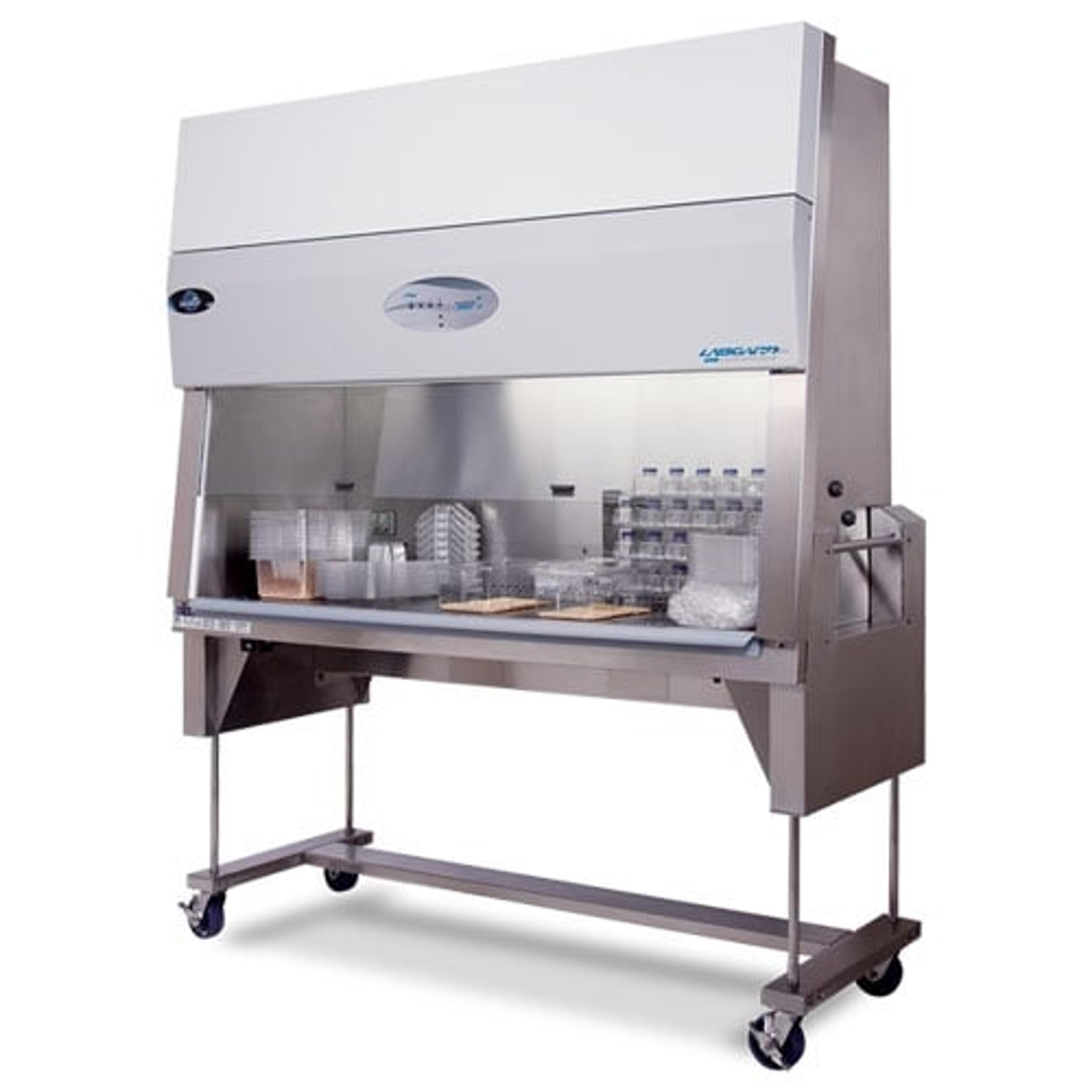
LabGard ES (Energy Saver) NU-540 Class II, Type A2 Biological Safety Cabinet
The LabGard® ES NU‐540 Class II, Type A2 Laminar Flow Biological Safety Cabinet (LFBSC) is an effective primary engineering control in obtaining the optimum product quality while reducing the potential for exposure of both product and personnel to airborne biological or particulate chemical agents in low to moderate risk‐hazard research and drug preparation. The NU-540 offers economical operation through the use of an ultra…



Receive your quote directly from the manufacturer.
The LabGard® ES NU‐540 Class II, Type A2 Laminar Flow Biological Safety Cabinet (LFBSC) is an effective primary engineering control in obtaining the optimum product quality while reducing the potential for exposure of both product and personnel to airborne biological or particulate chemical agents in low to moderate risk‐hazard research and drug preparation.
The NU-540 offers economical operation through the use of an ultra high efficiency motor to maximize filter life and monolithic silicone-free construction for long product life.

Evaluating side-by-side placement of class II biosafety cabinets
In this white paper, NuAire presents evidence-based guidance for laboratory professionals, facility designers, and biosafety officers on optimal biological safety cabinet (BSC) positioning. Authored by industry experts Bill Peters, Dan Hillman, and Ron Trower, the paper explores how environmental variables—including HVAC systems, airflow patterns, and personnel movement—can influence containment performance at the cabinet’s critical work access opening.
Through rigorous testing, including bacterial aerosol challenge studies, the white paper evaluates the impact of placing BSCs side by side or in close proximity. It references key standards such as NSF/ANSI 49 and the CDC/NIH Biosafety in Microbiological and Biomedical Laboratories (BMBL) guidelines to support its findings.
Among the core recommendations is the establishment of adequate clearance between adjacent cabinets to preserve airflow integrity and containment reliability. The paper also underscores the importance of accounting for laboratory layout, room air velocities, and staff traffic patterns when planning BSC placement.
This resource offers practical, scientifically validated strategies to help ensure that BSCs perform to their intended safety specifications—contributing to a safer and more efficient laboratory environment.
Access the white paper to optimize your BSC installation strategy and uphold the highest biosafety standards.
Best practices for positioning a class II, type A2 biosafety cabinet
This expert-designed infographic provides essential guidance for scientists, laboratory managers, and pharmacy professionals on the correct placement of Class II, Type A2 biosafety cabinets (BSCs) within laboratory or cleanroom environments. It outlines how improper positioning—particularly near disruptive air currents—can compromise airflow integrity, increasing the risk of contamination.
The infographic details how high-velocity cross-drafts may interfere with the cabinet’s inflow and exhaust dynamics, especially at the vulnerable exhaust HEPA filter area. Such disturbances can overwhelm the cabinet’s protective air barrier, reducing operational safety and compromising sample integrity.
Additionally, the resource addresses critical exhaust considerations for cabinets used in procedures involving trace amounts of radionuclides or small quantities of non-flammable, non-explosive, volatile, toxic chemicals. Guidance is provided on the role of properly functioning canopy exhaust systems in maintaining compliance and ensuring safe handling.
Download to support the correct and compliant installation of your BSC and promote a safe, contamination-controlled workspace.
Utilizing custom solutions for robotics & automation
In this whitepaper, NuAire discusses its custom airflow solutions for robotics and automation in the pharmaceutical industry. The paper highlights a specific case study with the French pharmaceutical company Sanofi, which partnered with NuAire to develop custom class II biosafety cabinets to accommodate the increasing need for automation and oversized equipment in its labs. NuAire's expertise in custom design helped Sanofi overcome standard biosafety cabinets' limitations and safely interact with samples in a large-scale format. The paper also describes the custom design process, which begins with an in-depth interview and progresses through an iterative exchange of engineering drawings and models.
This resource is shared as part of the global #CLINICAL24 conversation

How to Perform a Risk Assessment and Choose a Biosafety Cabinet
June 3, 2025 – 16:00 BST / 17:00 CEST / 11:00 EDT / 08:00 PDT
This webinar will introduce the concept of risk assessment and its role in choosing a biosafety cabinet. It will explain risk assessment in general and move to an explanation of the kinds of cabinets one can choose for their protective needs as well as the possibilities for configuring and even customizing one for their specific workflow and instruments. The webinar will also include a brief discussion of model/design certification/listing to the NSF/ANSI 49 standard.
Key learning objectives:
- Explain why lab staff should conduct a risk assessment before choosing a biosafety cabinet (BSC) for their work, and continually thereafter
- Describe the classes and types of biosafety cabinets and their function
- Explain how to plan an appropriate workflow considering ergonomic needs for work in a BSC
- Identify the reasons a laboratory may need a custom BSC for containing their equipment
Who should attend?
Lab managers, biosafety officers, and laboratory technicians.
Certificate of attendance
SelectScience is approved as a provider of continuing education programs in the clinical laboratory sciences by the ASCLS P.A.C.E.® Program. Continuing education units are also provided for the ABSA International Credentialing Maintenance Program. Webinar 1: Risk Assessment and Choosing a BSC is approved for 0.125 CM points, approval # 25-2574.
All webinar participants can request a certificate of attendance, including a learning outcomes summary, for continuing education purposes.
If you view the on-demand webinar, you can request a certificate of attendance by emailing editor@selectscience.net.

Lab design and where to install a biosafety cabinet
August 20, 2025 – 16:00 BST / 17:00 CEST / 11:00 EDT / 08:00 PDT
Proper biosafety cabinet (BSC) placement is critical to maintaining safety and performance in laboratory environments — yet many professionals face uncertainty when it comes to clearance guidelines and certification requirements. Join this webinar to gain clarity on these concepts and get practical insights to support optimal BSC installation and compliance.
Dr. Julianne L. Baron, President and owner of Science and Safety Consulting, and Dr. Lora Grainger, owner, founder, CEO, and biorisk management consultant of Project Safe Lab, LLC, discuss the importance of providing clearance around biosafety cabinets from a conceptual perspective. They will also share a series of illustrations that compare and contrast the specific guidelines given by various industry sources.
Additionally, they will explain the importance of field certification of newly installed biosafety cabinets.
Key learning objectives:
- Explain why the correct placement of a BSC in the laboratory is important to ensure its proper function
- Describe the guidelines that recommend BSC clearances and how to select an appropriate guideline to follow for your laboratory’s design
- Identify recommended clearances between BSCs and other common laboratory equipment and facility features
- Describe the importance of BSC field certification
Who should attend?
Lab managers, biosafety officers, laboratory technicians, lab planners, lab designers, and architects.
Certificate of attendance
SelectScience is approved as a provider of continuing education programs in the clinical laboratory sciences by the ASCLS P.A.C.E.® Program. Continuing education units are also provided for the ABSA International Credentialing Maintenance Program. Webinar 2: Lab design and where to install a BSC is approved for 0.125 CM points, approval # 25-2575.
All webinar participants can request a certificate of attendance, including a learning outcomes summary, for continuing education purposes.

Kewaunee and NuAire collaborate to drive groundbreaking innovation
NuAire has joined the Kewaunee Scientific Corporation family of companies to work together to produce equipment for your laboratory