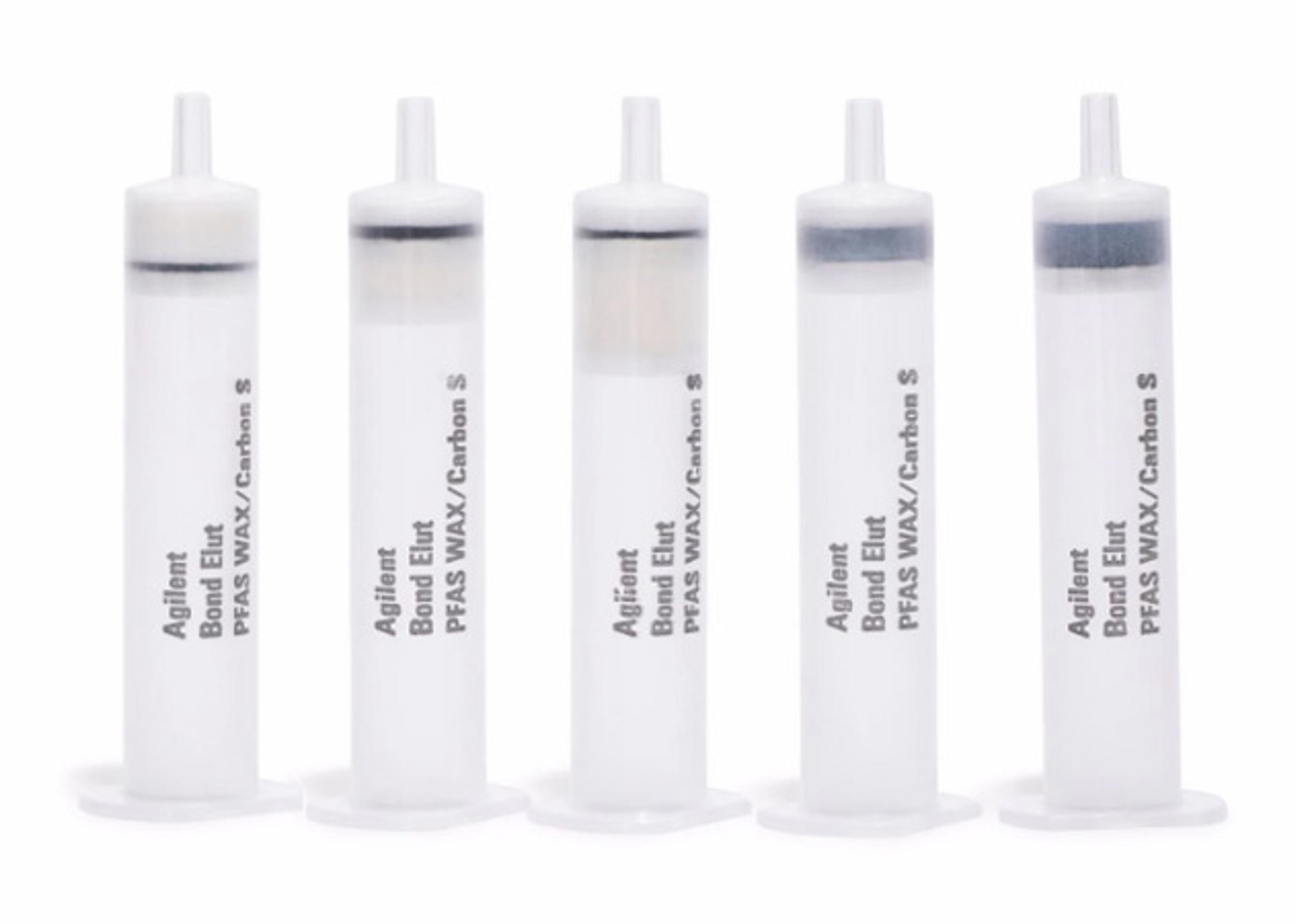
HybridSPE®-Precipitation, 96-well Plate, pk of 1
Patent pending HybridSPE – Precipitation (HybridSPE-PPT) technology is a simple and generic sample prep platform designed for the gross level removal of endogenous protein and phospholipid interferences from biological plasma and serum prior to LC-MS or LC-MS/MS analysis. Biological plasma or serum is first subjected to protein precipitation via the addition and mixing of acidified acetonitrile. Precipitated proteins are then…

The supplier does not provide quotations for this product through SelectScience. You can search for similar products in our Product Directory.
Patent pending HybridSPE – Precipitation (HybridSPE-PPT) technology is a simple and generic sample prep platform designed for the gross level removal of endogenous protein and phospholipid interferences from biological plasma and serum prior to LC-MS or LC-MS/MS analysis. Biological plasma or serum is first subjected to protein precipitation via the addition and mixing of acidified acetonitrile. Precipitated proteins are then removed by centrifugation and the resulting supernatant is loaded on the HybridSPE-PPT 96-well plate or cartridge which acts as a chemical filter that specifically targets the removal of endogenous sample phospholipids. The phospholipid retention mechanism is based on a highly selective Lewis acid-base interaction between the proprietary zirconia ions functionally bonded to the HybridSPE-PPT stationary phase and the phosphate moiety consistent with all phospholipids. The resulting eluent is ready for immediate LC-MS or LC-MS-MS analysis.
An alternative “In-well Precipitation” method is available for the HybridSPE-PPT 96-well version in which biological plasma/serum is first added to the 96-well plate followed by acidified acetonitrile (precipitation agent). After a brief mixing/vortexing step, vacuum is applied to the 96-well plate. Because the 96-well version contains a series of low porosity hydrophobic filters/frits, the packed-bed filter/frit assembly acts as a depth filter facilitating the concurrent removal of both phospholipids and precipitated proteins during the extraction process.
Overcoming the Matrix Effect in LC/MS of Serum or Plasma Samples Using Two Distinct Sample Prep Approaches
This article highlights the impact that sample matrix effects can have on LC/MS response and discusses two novel approaches to reduce it. Advancements in electrospray ionization mass spectrometry (ESI-MS) have changed the way identification and quantification of small molecules in biological fluids is conducted. Systems are capable of routinely detecting sub-femtogram levels of analytes. This report demonstrates that targeted phospholipid depletion using HybridSPE-Phospholipid and analyte enrichment using biocompatible SPME, both provide effective means to reduce matrix interference that can rob the method of sensitivity, reproducibility, precision, and accuracy.
Rapid, Sensitive, and Quantitative LC/MS/MS Determination of Digitoxin and Digoxin in Plasma
This application note describes the development of an LC/MS/MS method to measure digoxin and Digitoxin levels in the body, as these glycosides are used for treating heart conditions. Current methods using immunoassays are not selective between the two compounds due to the similarities between the molecules.
SUPELCO® Application Compendium: Forensic, Clinical and Bioanalytical Applications
This application compendium presents a series of technical articles covering forensic, clinical, and bioanalytical applications. Topics include SPME of VOCs in Breath, Analysis of Vitamin D Metabolite Critical Pairs in Serum, Chiral LC-MS of Methamphetamine, and more.
Method Optimization for LC-MS Analysis of Vitamin D Metabolite Critical Pairs in Serum
Analysis of vitamin D metabolites has continued to be a topic of interest in recent publications, primarily as biomarkers for possible disease states and vitamin deficiency. There is also an interest in analytical means to differentiate the D2 and D3 forms from the D2 and D3 epimers because of their different degrees of bioactivity. Ascentis® Express F5 gives a fast and efficient analytical method for 25-hydroxyvitamin D and related forms from serum samples.
Isolation and Characterization of Analytes in Serum
The high concentration of phospholipids in blood serum is a frequent limitation in metabolomics analysis based on mass spectrometric detection, mainly owing to their ionization suppression effects. Using HybridSPE®- Phospholipid solid phase extraction followed by LC -MS is useful for global metabolome analysis by fractionation of phospholipid and non-phospholipid analytes.