ResourceSeparations

SUPELCO® Application Compendium: Forensic, Clinical and Bioanalytical Applications

17 Jul 2014

This application compendium presents a series of technical articles covering forensic, clinical, and bioanalytical applications. Topics include SPME of VOCs in Breath, Analysis of Vitamin D Metabolite Critical Pairs in Serum, Chiral LC-MS of Methamphetamine, and more.

HybridSPE®-Precipitation, 96-well Plate, pk of 1

Sigma-Aldrich Supelco

Patent pending HybridSPE – Precipitation (HybridSPE-PPT) technology is a simple and generic sample prep platform designed for the gross level removal of endogenous protein and phospholipid interferences from biological plasma and serum prior to LC-MS or LC-MS/MS analysis. Biological plasma or serum is first subjected to protein precipitation via the addition and mixing of acidified acetonitrile. Precipitated proteins are then removed by centrifugation and the resulting supernatant is loaded on the HybridSPE-PPT 96-well plate or cartridge which acts as a chemical filter that specifically targets the removal of endogenous sample phospholipids. The phospholipid retention mechanism is based on a highly selective Lewis acid-base interaction between the proprietary zirconia ions functionally bonded to the HybridSPE-PPT stationary phase and the phosphate moiety consistent with all phospholipids. The resulting eluent is ready for immediate LC-MS or LC-MS-MS analysis. An alternative “In-well Precipitation” method is available for the HybridSPE-PPT 96-well version in which biological plasma/serum is first added to the 96-well plate followed by acidified acetonitrile (precipitation agent). After a brief mixing/vortexing step, vacuum is applied to the 96-well plate. Because the 96-well version contains a series of low porosity hydrophobic filters/frits, the packed-bed filter/frit assembly acts as a depth filter facilitating the concurrent removal of both phospholipids and precipitated proteins during the extraction process.

(0)

Astec CHIROBIOTIC™ V2 Chiral HPLC Column

Sigma-Aldrich Supelco

The polar organic and the polar ionic modes have become increasingly popular largely because of their ideal compatibility with MS detection and preparative LC. Two years of extensive research at Astec in understanding these mechanisms has resulted in new possibilities for extending their effectiveness even further. Important changes in linkage chemistries and the silica and the silica have now led to the new CHIROBIOTIC V2 and T2 chiral stationary phases – columns of choice for those really difficult separations, and especially, for preparative LC. These new phases extend the capabilities of the series. They are designed to be used in the optimization process since they offer some distinct advantages in the polar ionic mode and polar organic mode. The standard CHIROBIOTIC phases remain the columns of choice for method development screening and for reversed phase separations. Read about the Astec CHIROBIOTIC being applied to Drug testing for Amphetamine and Methamphetamine Abuse here.     Features: New extension for the CHIROBIOTIC series Enhanced selectivity and capacity in the polar organic mode and polar ionic mode Capacity increases of 2 to 20 fold over standard CHIROBIOTIC phases Most beneficial for basic molecules Neutral molecules can often be run in pure methanol
(0)

Ascentis® Express RP-Amide HPLC Columns

Sigma-Aldrich Supelco

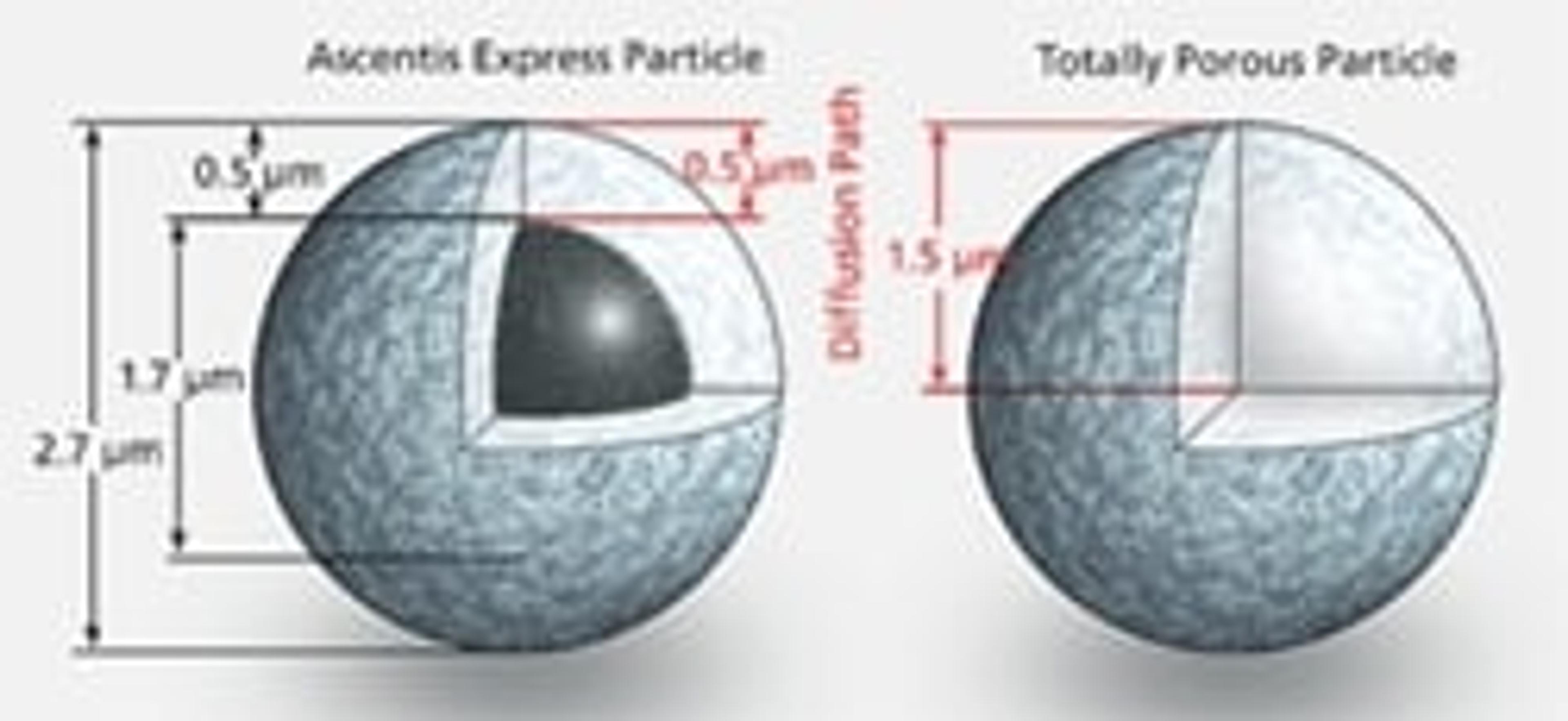
Ascentis Express RP-Amide HPLC columns are the most recent product additions to the Supelco HPLC product line. Combining an embedded polar group (EPG) stationary phase with the Fused-Core particles, Ascentis Express RP-Amide provides a host of useful benefits to the HPLC chromatographer.   Ascentis Express RP-Amide is a blend of modern phase technology and innovative particle technology. The Fused-Core particle provides benefits in terms of speed, resolution, sensitivity, and ruggedness. The one-step RP-Amide bonding chemistry provides benefits in terms of selectivity, aqueous stability, and improved peak shape for bases. Read about how this product was used to analyze Riboflavin and impurities here.     Benefits: Alternative reversed-phase selectivity to C18 Improved peak shape for bases 100% aqueous compatible reversed-phase column Column Details: Chemistry: RP-Amide Particle Size: 2.7, 5.0 μm Pore Size: 90 Å Length: 20, 30, 50, 75, 100, 150, 250 mm ID: 2.1, 3.0, 4.6 mm

(1)

Links

Tags

Gas ChromatographyGas chromatography (GC) is an analytical technique used to separate and quantitate mixtures of small and volatile compounds. Gas chromatographs or GC systems include components such as GC columns, detectors, pumps and autosamplers. Choose from packed or capillary GC columns, flame ionization (FID), photoionization (PID) electron capture detectors and selective or non-selective detectors. Find the best gas chromatographs in our peer-reviewed product directory: compare products, check customer reviews and receive pricing direct from manufacturers.UHPLC and HPLCHigh performance liquid chromatography (HPLC) and ultra high performance liquid chromatography (UHPLC), also known as UPLC, are analytical techniques used to separate, identify and quantitate components of complex mixtures including biological samples such as proteins and lipids as well as chemical mixtures of pesticides, drugs and oils. Both techniques are liquid chromatographic methods but differ by operating pressures (HPLC < 6000 psi < UHPLC ). Components of HPLC and UHPLC systems include columns, detectors, pumps, autosamplers and column heaters. Explore a range of UHPLC and HPLC columns for your specific sample needs including reverse phase, normal phase, ion exchange, HILIC, ion exclusion and size exclusion columns. For more specialized HPLC, explore FPLC, countercurrent LC and simulated moving bed systems. Find the best UHPLC and HPLC equipment in our peer reviewed product directory: compare products, check customer reviews and receive pricing direct from manufacturers.LC-MSLC-MS (liquid chromatography-mass spectrometry) systems and equipment are used for separation and quantitative analysis of complex mixtures, combining liquid chromatography and mass spectrometry. Quantify proteins, contaminants, pesticides or screen for drug metabolites with a high level of sensitivity. LC-MS systems and equipment include reverse phase, normal phase and specialized columns integrated with various MS detectors such as time-of-flight (TOF), quadrupole, orbitrap or ion trap mass analyzers. LC-MS/MS instruments equipped with a qTOF or triple quadrupole analyzer give greater sensitivity and resolving power to your analysis. Find the best LC-MS equipment in our peer-reviewed product directory: compare products, check customer reviews and receive pricing direct from manufacturers.Mass SpectrometryMass spectrometry (MS) is a powerful analytical technique used to identify and quantify molecules based on the mass-to-charge ratio of gas-phase ions. It provides detailed information about the structure, composition, and properties of compounds and is widely used across fields such as environmental monitoring, materials science, drug discovery and development, food and beverage testing, and wider chemical research. Key MS techniques include tandem mass spectrometry (MS/MS), liquid chromatography–mass spectrometry (LS-MS) and inductively coupled plasma (ICP-MS). Choosing from these wide range of techniques and technologies can be a daunting task, so keep up to date with scientific applications, performance expectations, and customer reviews here all in one place. Visit our product directory to receive quotes direct from the manufacturer. Solid-Phase ExtractionSolid-phase extraction (SPE) is used for clean-up, extraction and concentration of semi-volatile or non-volatile analytes from complex mixtures including blood, urine and food samples. Multiple formats are available for conducting SPE, including prepacked SPE cartridges, disks and microplates, as well as SPE sorbent powders for manual packing. SPE systems can be used to automate the process and extract multiple samples at once. Solid-phase microextraction (SPME) and supported liquid extraction (SLE) products are also available in the same formats. Find the best SPE, SLE and SPME equipment in our peer-reviewed product directory: compare products, check customer reviews and receive pricing direct from manufacturers.BiomarkersBiomarkers are biological markers which can be measured and evaluated to indicate a biological state. The use of biomarkers in research and diagnosis can indicate a normal or disease state or drug response of cells / tissues. Biomarkers include genetic markers, cell surface markers such as antigens, antibodies or receptors and secreted molecules such as cytokines. An assay system is required for identification of biomarkers. :Toxicology / Drugs of Abuse TestingToxicology and Drugs of Abuse Testing is the investigation into toxic and illegal substances found at the scene of a crime or from a suspect and / or victim associated with a scene of a crime. Analyzers, immunoassays and drugs of abuse test kits and presumptive test kits are an essential aspect of toxicology investigation.GC-MS GC-MS (gas chromatography-mass spectrometry) instruments and equipment are used to separate, quantify and identify mixtures of small and volatile compounds, such as polycyclic aromatics, fatty acids and alcohols. Often used in drug detection, forensic investigation and environmental analysis for pesticides and contaminants, GC-MS is a powerful addition to your lab’s analytical capabilities. GC-MS/MS instruments equipped with a qTOF or triple quadrupole analyzers can give greater sensitivity and resolution to your analysis. Find the best GC-MS instruments and equipment in our peer-reviewed product directory: compare products, check customer reviews and receive pricing direct from manufacturers.BiochemistryBiochemistry (or clinical chemistry) involves the analysis of bodily fluids using chemical tests. Techniques used include HPLC, chromatography, spectroscopy, mass spectrometry, immunochemical, electrophoresis, turbidometric / spectrophotometric assay, MRI and ISE analysis. Tests are often carried out on plasma or serum but urine (urinalysis) and fecal specimens are also processed.Forensic ToxicologyForensic toxicology is used to determine cause of death, drug use and contaminations. Toxicological evaluations are commonly used in analytical chemistry, clinical, life sciences and forensics.MetabolomicsMetabolomics is the study of small metabolites (the intermediates and products of metabolism). It involves the identification and quantification of cellular metabolites using analytical technologies such as GC, HPLC, NMR, and LC/MS.Drug MetabolismDrug metabolism is the enzymatic conversion within the body of pharmaceutical substances into other chemical compounds. The primary site for drug metabolism is the liver.Cancer ResearchAlthough cancer is often referred to as a single condition, it actually consists of more than 100 different diseases. Microscopy, mass spectrometry, high throughput sequencing and flow cytometry are some of the most common techniques employed in cancer research labs.Biomarker DiscoveryClinical biomarkers refer to substances related to known medical conditions that can be accurately measured <i>in vitro</i>. Biomarkers can be used to diagnose presence of a disease and indicate disease severity. The discovery of new biomarkers is incredibly valuable in the field of diagnostics.
SUPELCO® Application Compendium: Forensic, Clinical and Bioanalytical Applications