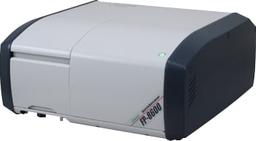
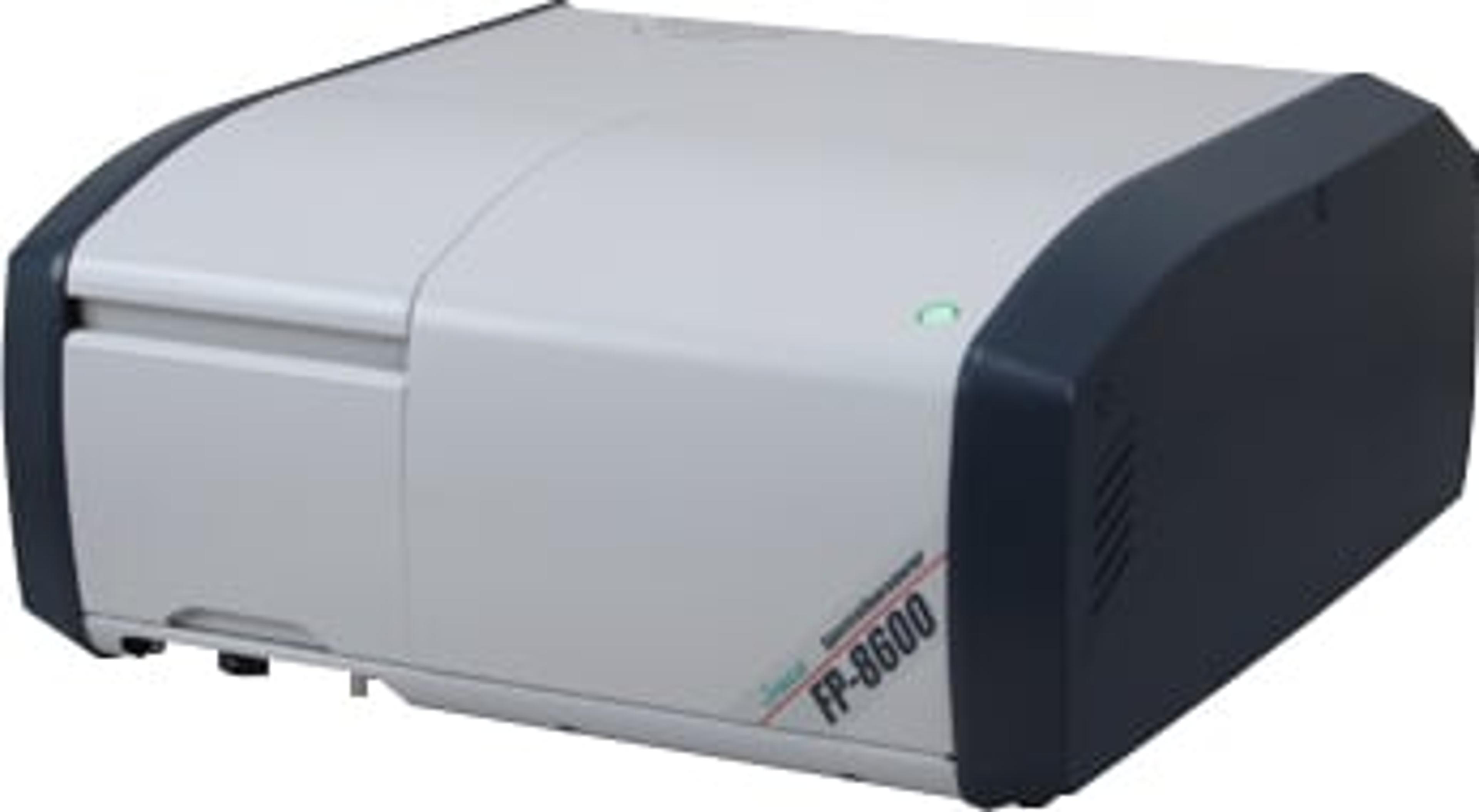
FP-8000 Series Spectrofluorometers
Designed with the latest technology, the JASCO FP-8000 Series spectrofluorometers incorporate the highest sensitivity, fastest spectral scanning capability and excellent analysis-oriented functionality offering integrated solutions for advanced materials research and biochemical analysis applications.To meet the most stringent analysis demands, a variety of accessories are available for integration with a range of sophisticate…

The supplier does not provide quotations for this product through SelectScience. You can search for similar products in our Product Directory.
Designed with the latest technology, the JASCO FP-8000 Series spectrofluorometers incorporate the highest sensitivity, fastest spectral scanning capability and excellent analysis-oriented functionality offering integrated solutions for advanced materials research and biochemical analysis applications.
To meet the most stringent analysis demands, a variety of accessories are available for integration with a range of sophisticated control and analysis applications available in the user-friendly Spectra Manager™ II software to offer a flexible platform for any luminescence application.
Excitation and Emission Wavelength Optimization of PAHs Using Spectral Auto-Scanning with the FP-4020 Fluorescence Detector
Polycyclic aromatic hydrocarbons (PAHs) are comprised of aromatic rings and are produced by the incomplete combustion of hydrocarbon-containing materials such as diesel oil and coal. Some PAHs are known to be carcinogenic, and so the detection and quantitative determination of environmental PAHs is extremely important. An HPLC system with a fluorescence detector can be used for high-sensitivity detection of these samples types by carefully selecting the optimal excitation and emission wavelength pairs for each target analyte. In this application note, the excitation and emission spectra for each PAH was measured using the auto-scan function of the FP-4020 fluorescence detector with control and analysis software ChromNAV 2.0.
Improvement in Fluorescence Sensitivity by Changing the Emission Slit Width of the FP-4020 Fluorescence Detector
Polycyclic aromatic hydrocarbons (PAHs) are comprised of aromatic rings and are produced by the incomplete combustion of hydrocarbon-containing materials such as diesel oil and coal. When using fluorescence detection, the sensitivity of the measurement can be increased by narrowing the detector’s emission slit width; when the excitation wavelength is close to fluorescence wavelength, narrowing the slit width increases the signal-to-noise (S/N) ratio. On the other hand, broadening the slit width can be an effective way to increase the S/N ratio when the excitation wavelength is far from the emission wavelength. In this application note, the fluorescence measurement of PAHs was performed using an HPLC system with an FP-4020 fluorescence detector to compare the effects of adjusting the emission slit width from 20 nm to 40 nm.
Improved Reproducibility in Fluorescence Detection With Flow-Cell Temperature Control
Indole-3-acetic acid, commonly known as auxin, is a growth inhibitor that plays a role in plant morphosis. A synthetic form of auxin is widely used as an herbicide and a fruit growth promoter. It is expected to make a significant contribution in increasing research focused on increasing crop yields and biomass. Generally, the intensity of fluorescence in a compound is temperature dependent. The intensity of fluorescence in Indole-3-acetic acid decreases as temperature rises. In this application note, indole-3-acetic acid was measured using an HPLC system with an FP-4020 fluorescence detector with a temperature controlled cell. The effects of fluctuation in room temperature and the benefits of cell temperature control are reported.