Products & ReviewSeparations

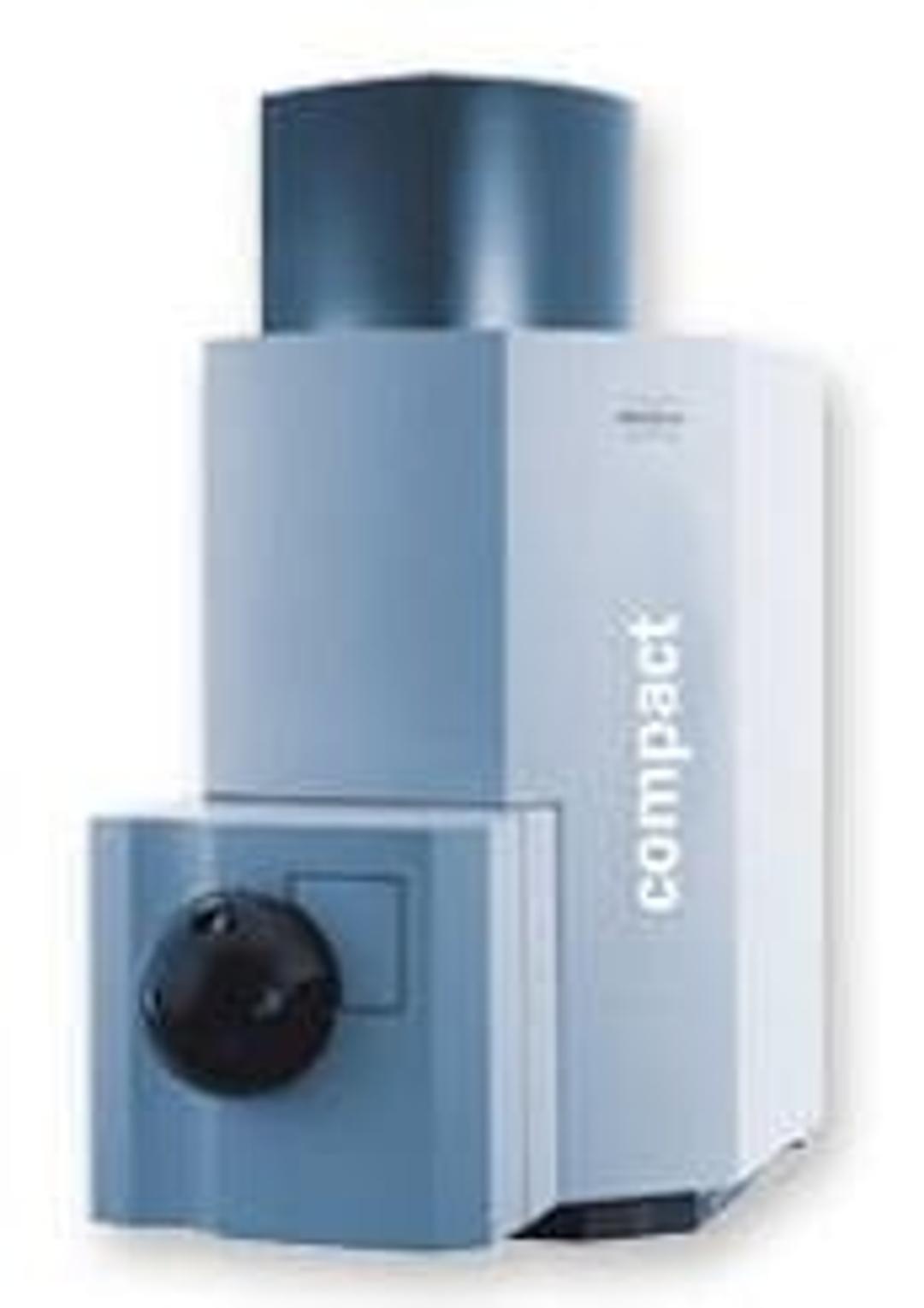
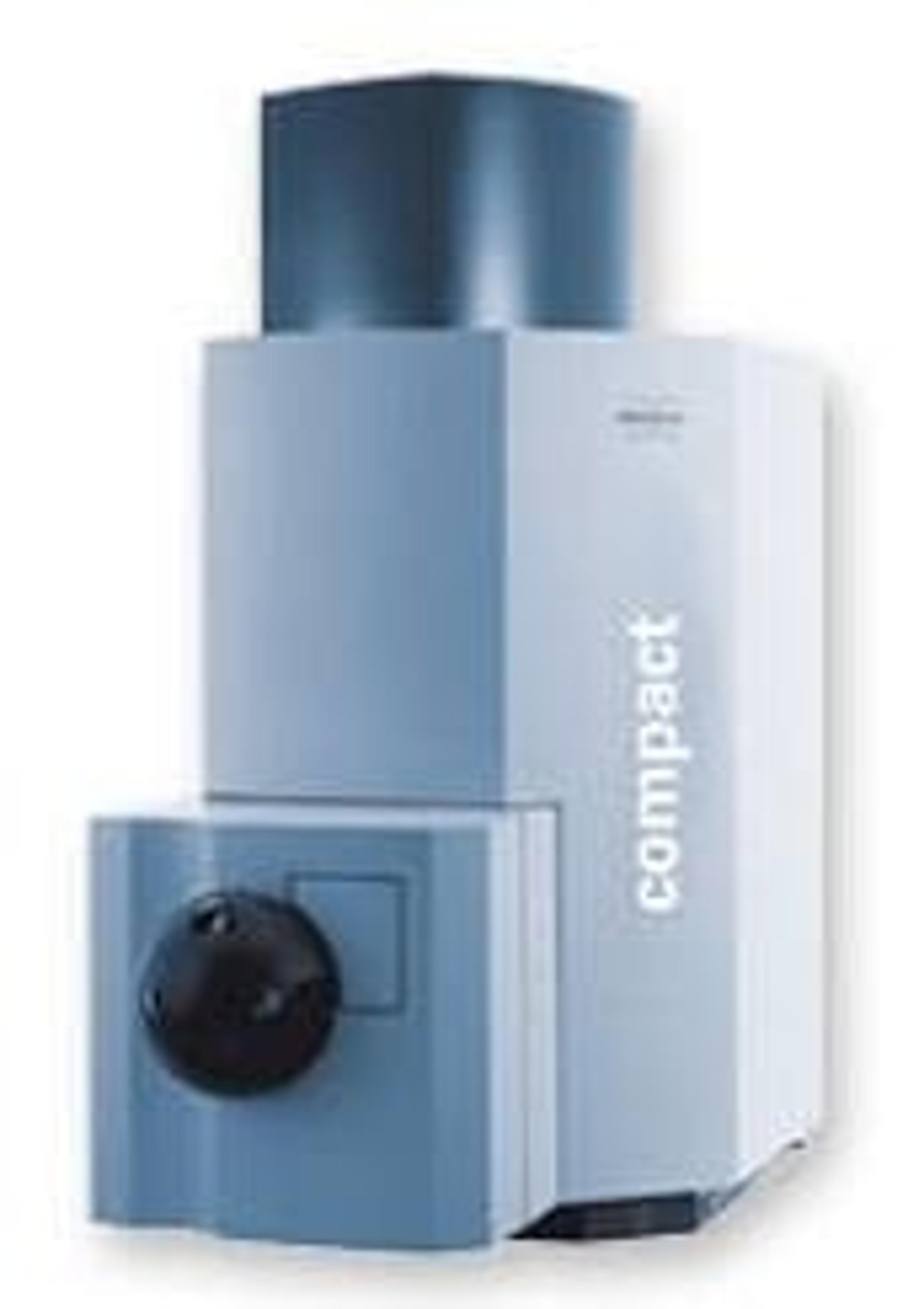
compact QToF

Bruker DaltonicsAvailable: Worldwide

High-quality, accurate, and versatile mass spectrometry analysis in a compact and user-friendly design.
Bruker Daltonics

The supplier does not provide quotations for this product through SelectScience. You can search for similar products in our  Product Directory.

Reviews

Average Rating 4.3

|1Scientists have reviewed this product

Ease of Use
After Sales Service
Value for Money
Write your own review

Great sensitivity and robust MS, easy to use.


Average Rating 4.3

Application Area:

Analyze metabolites in tissues

This MS has a high sensitivity and mass stability, you need not re-calibrate continuously to obtain ppm mass deviation.

Review Date: 21 Mar 2020 | Bruker Daltonics

  • Robust performance: Resistant to sample variations, minimizing the need for sample pre-treatment.
  • High sensitivity: Capable of detecting picogram levels with precise and reproducible MS and MS/MS data.
  • Simplified operation: Achieves all performance parameters in a single run without the need for tuning or optimization.
Application NoteSeparations

Trace Analysis of TCDD and PBDE Persistent Organic Pollutants

Persistent Organic Pollutants (POPs) are major concern for the environment, quantifying them with sensitivity and confidence increasingly important. The study in this application note uses an atmospheric pressure chemical ionization GC coupled to a high-resolution QTOF – MS to analyze the levels of key substances in POPs, including decaBDE which is the most difficult PBDE to analyze.


Application NoteSpectroscopy

A Systematic Investigation of CID Q-TOF-MS/MS Collision Energies to Improve N- and O-glycopeptide Identification by LC-MS/MS

Protein glycosylation is a dynamically regulated, non-template dependent process influenced by various factors such as age, sex, cell and tissue type as well as health status. This makes glycoproteins prime biomarker targets. In order to investigate the role individual glycoproteins play in the onset and progression of numerous diseases reliable and robust analytical approaches are crucial for determination of glycan composition in a protein/peptide specific manner. Mass spectrometry has developed as one of the most powerful tools for the sensitive identification and structure elucidation of glycopeptides. However, the optimal collision energy conditions required to obtain a maximum of information on both, the glycan as well as the peptide moiety have to date rarely been systematically investigated.


Scientific PosterSpectroscopy

Determination of Pesticides in Foods using Dopant-optimized Gas Chromatography-Atmospheric Pressure Chemical Ionization Quadrupole-Time-of Flight Mass Spectrometry

Soft ionization modes in GC-hyphenation studies such as chemical ionization (CI), field ionization (FD), supersonic molecular beam (SMB), or atmospheric-pressure chemical ionization (APCI) allows the effective formation of pseudo-molecular ions from biomolecules. GC-APCI generic source coupling is one of the more promising method as it is dually compatible with both GC and LC-hyphenated mass spectrometers. In this study, the optimization and development of a dopant-based APCI screening workflow using next-generation GC-APCI ion source on a QTOF platform for multi-target pesticide screening is presented using the Bruker Compact™ QTOF system.


Application NoteSpectroscopy

Applying Improved TOF Mass Resolving Capability to Enhance the Characterization of Therapeutic Antibodies in Middle-Up and –Down Workflows

This poster demonstrates a method to extend the specificity of intact mass analysis and Middle-Down sequencing by deploying MD MALDI-ISD for high quality identification of sequence variations in combination with a new ultrahigh resolution (UHR)-ESI QTOF providing monoisotopic mass determinations of HCs with no speed or dynamic range compromise.


Scientific PosterSeparations

Metabolic Pathway Directed Targeted Metabolomics by Mining High Resolution Full Scan MS Data Sets – a Food Metabolomics Case Study

A previous study demonstrated that non-targeted metabolomics enabled differentiation of coffee types based on their assigned flavor intensity and identified trigonelline (N-methyl-nicotinic acid) as one characteristic compound for weak coffee. This poster demonstrates a novel workflow for a pathway driven targeted metabolomics approach based on the same high resolution LC-QTOF data files used for the initial non-targeted profiling.


Product NewsSpectroscopy

Bruker Introduces Innovative timsTOF Mass Spectrometer

Unique trapped ion mobility spectrometry (TIMS) coupled to Bruker’s high-performance QTOF mass spectrometry enables high-resolution compound separation, significant duty cycle enhancements and studies of protein conformations, aggregation and structural isomers


Product Overview

Links

Buy compact QToF Read Reviews