
ResourceSeparations
Trace Analysis of TCDD and PBDE Persistent Organic Pollutants
28 Mar 2016Persistent Organic Pollutants (POPs) are major concern for the environment, quantifying them with sensitivity and confidence increasingly important. The study in this application note uses an atmospheric pressure chemical ionization GC coupled to a high-resolution QTOF – MS to analyze the levels of key substances in POPs, including decaBDE which is the most difficult PBDE to analyze.
Related products
Request Quote for All Products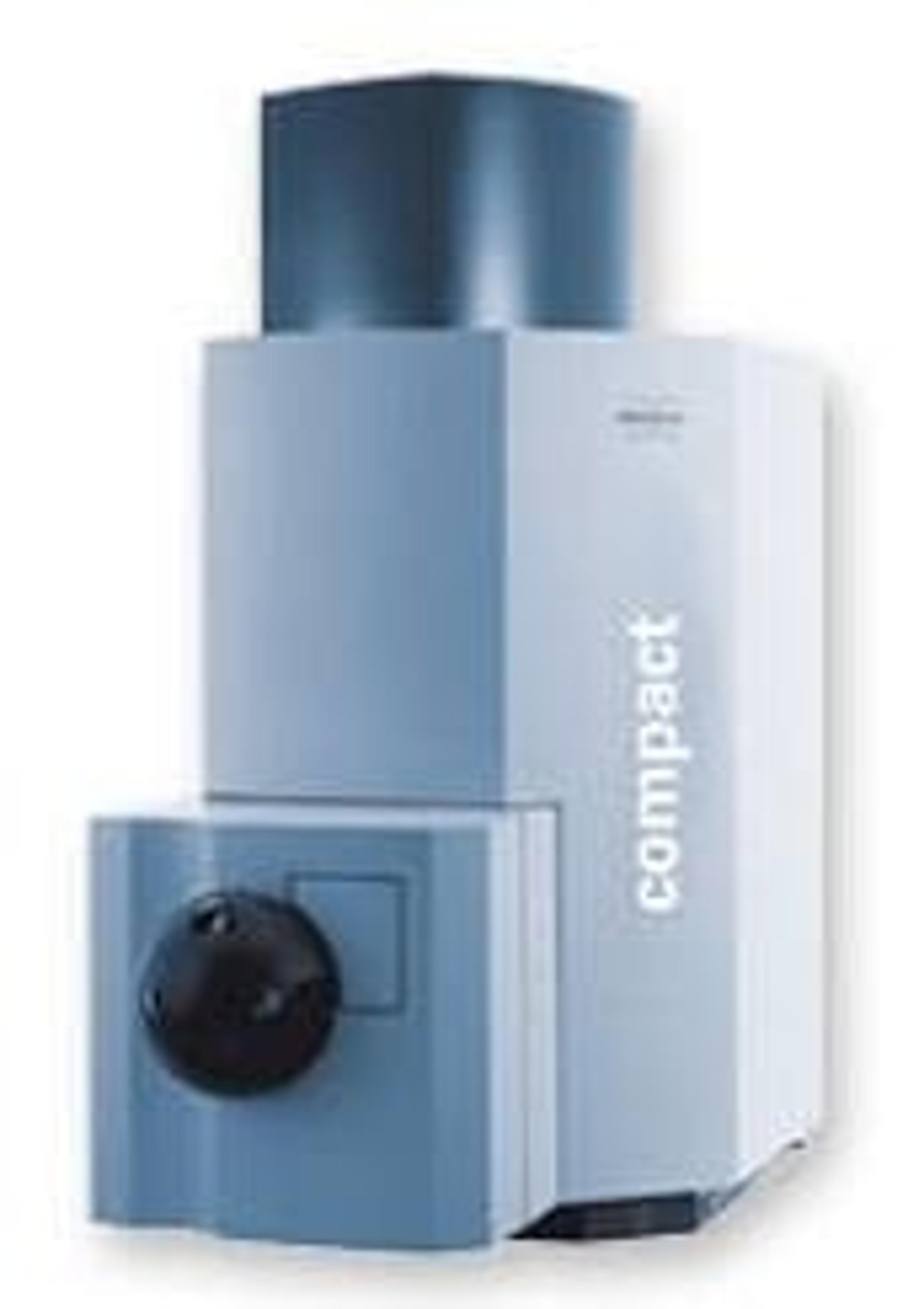
compact QToF
Bruker DaltonicsHigh-quality, accurate, and versatile mass spectrometry analysis in a compact and user-friendly design.
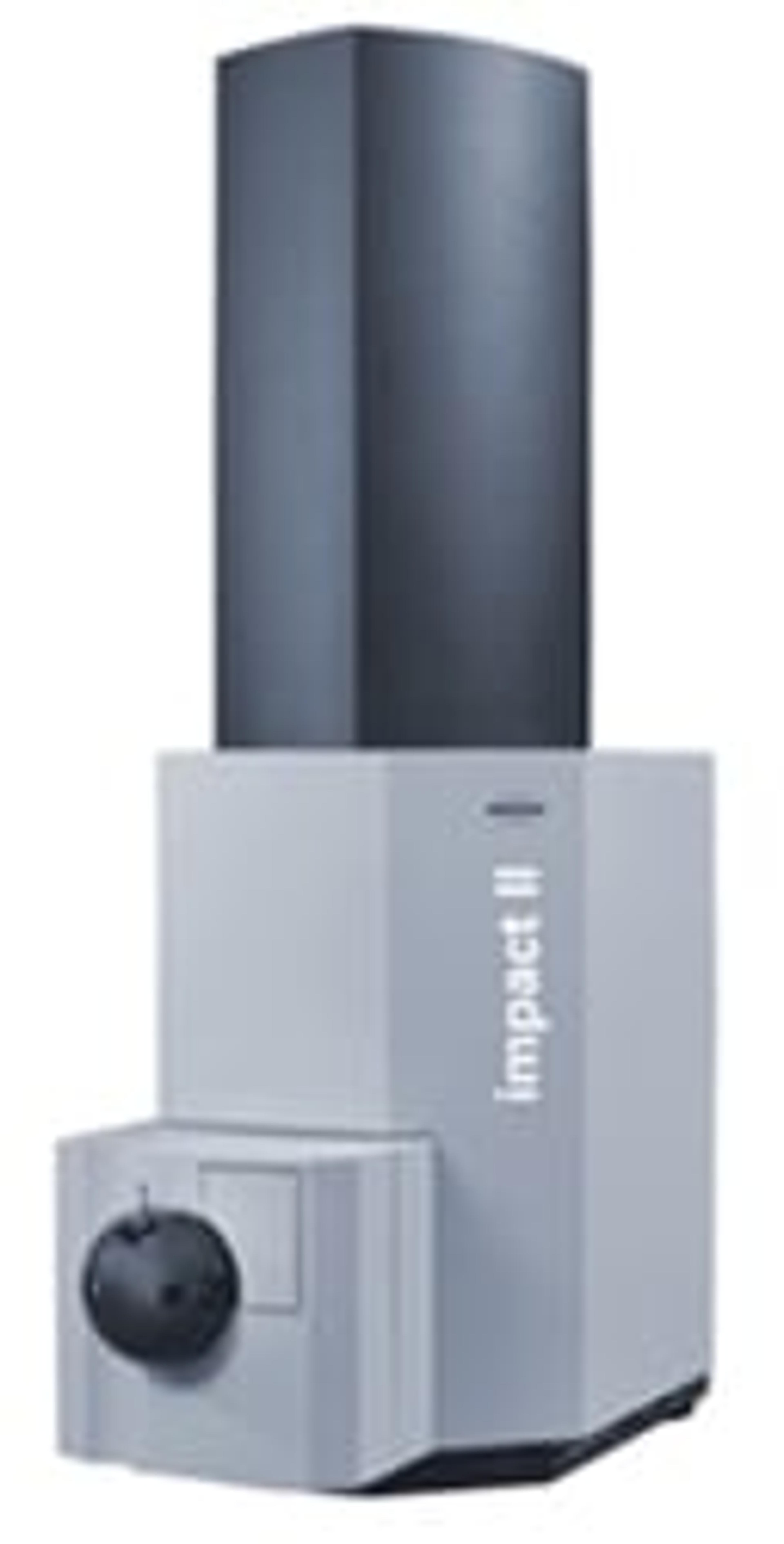
Impact II
Bruker DaltonicsRobustness to sample variation, low picogram sensitivity, and simplicity in delivering highly precise and reproducible MS and MS/MS data without the need for tuning or optimization.
Links
Tags
AutosamplersAutosamplers are automated sample loaders used with a number of separation and analytical techniques. HPLC autosamplers use automated partial or full-loop injection systems and place samples in vials or microplates for analysis. Autosamplers can also be used for elemental analysis. Features to consider include repeatability, syringe capacity, footprint and temperature controls. Sample PreparationSample preparation can improve the quality and speed of separation techniques. Products to assist sample preparation include filtration equipment, evaporators, membranes and sieves.Mass SpectrometryMass spectrometry (MS) is a powerful analytical technique used to identify and quantify molecules based on the mass-to-charge ratio of gas-phase ions. It provides detailed information about the structure, composition, and properties of compounds and is widely used across fields such as environmental monitoring, materials science, drug discovery and development, food and beverage testing, and wider chemical research. Key MS techniques include tandem mass spectrometry (MS/MS), liquid chromatography–mass spectrometry (LS-MS) and inductively coupled plasma (ICP-MS). Choosing from these wide range of techniques and technologies can be a daunting task, so keep up to date with scientific applications, performance expectations, and customer reviews here all in one place. Visit our product directory to receive quotes direct from the manufacturer.
Environmental Monitoring and TestingEnvironmental monitoring and testing uses handheld portable analyzers, kits, spectrometers or chromatography systems for air, water, soil, food and other sample testing. Useful features of analyzers such as BOD and COD include portability, easy calibration, automation and sensitivity. Environmental test kits for pH, water, moisture, etc, should be accurate, sensitive, reliable, fast and easy to use.Particle CharacterizationParticle characterization instruments are used to determine particle size distribution, shape, surface area, zeta potential, density and porosity of particles and materials. Multiple tecchniques are available for determining particle size, shape and count including dynamic light scattering (DLS), laser diffraction, electrozone (Coulter technique), imaging particle analysis and single particle optical sensing. Determine the density of your material with a gas pycnometer or examine its surface area and porosity with gas adsorption analyzers and mercury porosimeters. Find the best particle characterization instruments in our peer-reviewed product directory: compare products, check customer reviews and receive pricing direct from manufacturers.GC-MS GC-MS (gas chromatography-mass spectrometry) instruments and equipment are used to separate, quantify and identify mixtures of small and volatile compounds, such as polycyclic aromatics, fatty acids and alcohols. Often used in drug detection, forensic investigation and environmental analysis for pesticides and contaminants, GC-MS is a powerful addition to your lab’s analytical capabilities. GC-MS/MS instruments equipped with a qTOF or triple quadrupole analyzers can give greater sensitivity and resolution to your analysis. Find the best GC-MS instruments and equipment in our peer-reviewed product directory: compare products, check customer reviews and receive pricing direct from manufacturers.Quantitative AnalysesQuantitative analyses involve measuring the amount or concentration of a substance in a sample using analytical techniques. These analyses are essential in fields like chemistry, biology, and environmental science. Explore quantitative analysis tools in our peer-reviewed product directory; compare products, check reviews, and get pricing directly from manufacturers.DioxinsDioxins are a group of persistent environmental pollutants (POPs) that comprise of chlorinated organic chemicals. These airborne particles can deposit on plants or in water, and animals can accumulate these highly toxic molecules in their fat.Persistent Organic Pollutants