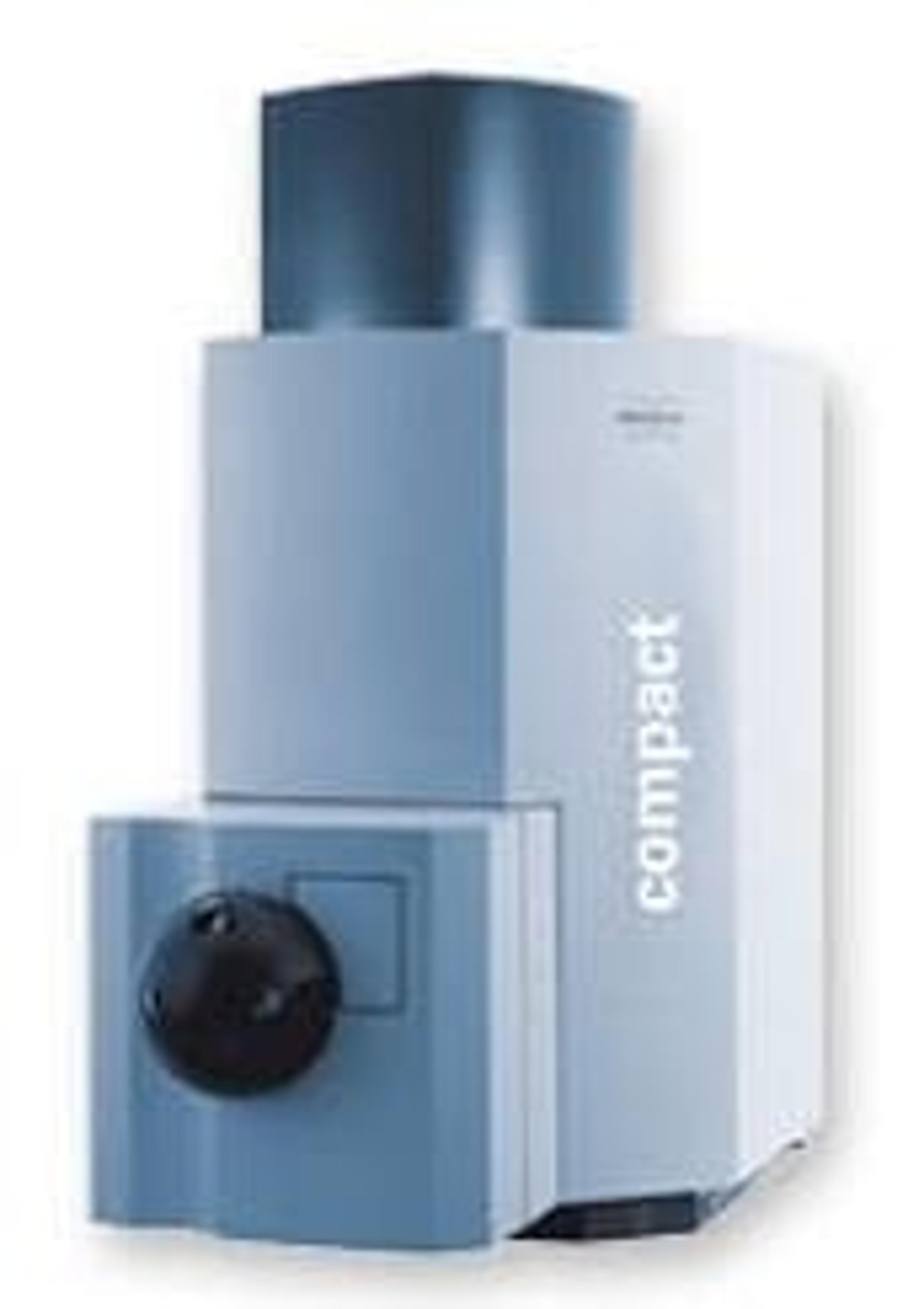
Screen, Identify, Confirm and Quantify Hundreds of Compounds in a Single Experiment with Bruker’s New TASQ 1.0 and Pacer 2.0 Software Packages

12 Mar 2015

Product news

At Pittcon 2015 Bruker has launched its new TASQ 1.0 and Pacer 2.0 software products. These powerful software packages allow users to easily screen, identify, confirm and quantify hundreds of compounds in a single experiment. The result is significantly increased throughput and confidence for routine applications in the food, environmental and forensic market areas.

The Bruker TASQ™ software (Target Analysis for Screening and Quantitation)is specifically designed to exploit high resolution, accurate-mass data generated by Bruker QTOF mass spectrometers to confidently screen for trace residues in complex matrices. The menu driven, quick start wizard guides users through screening and quantitative workflows while the interactive multi-pane viewer allows simultaneous viewing of all the qualitative and quantitative data. TASQ also efficiently exploits diagnostic ion confirmation criteria, enabled by Bruker’s ability to collect MS and MS/MS fragment data continuously on its QTOF platforms, to eliminate false positive findings.

Bruker’s PACER™ 2.0 software provides extremely fast, accurate quantitative results for high throughput targeted analyses in the routine lab by building on the powerful Bruker GC and LC Triple Quad MS instruments. PACER addresses the real crunch in quantitative data review – peak integration – by using its powerful “Exception Based Review” feature set. Almost all existing data and quality review systems are focused on the final calculated values (e.g. is a calculated concentration deviating from a pre-determined limit). But this can be too late in the review process, so PACER looks for problem data (“exceptions”) starting with the chromatographic peak itself, and then all the way through the workflow – a comprehensive, peak-to-paper review. This newest version of Pacer introduces a new, modern interface designed for simplicity and clarity, presenting information and options at the time you need them.

Joe Analceto, VP Applied Markets Business, “Bruker Daltonics is committed to delivering innovative, best in class software that enable our customers to easily harness the exceptional performance of our market leading hardware portfolio. TASQ and Pacer are workflow centric tools designed to save time by using computing power to drive high throughput analyses. They are great examples of how our philosophy of “Innovation With Integrity” applies to all that we do.”

Links

Tags

Gas ChromatographyGas chromatography (GC) is an analytical technique used to separate and quantitate mixtures of small and volatile compounds. Gas chromatographs or GC systems include components such as GC columns, detectors, pumps and autosamplers. Choose from packed or capillary GC columns, flame ionization (FID), photoionization (PID) electron capture detectors and selective or non-selective detectors. Find the best gas chromatographs in our peer-reviewed product directory: compare products, check customer reviews and receive pricing direct from manufacturers.LC-MSLC-MS (liquid chromatography-mass spectrometry) systems and equipment are used for separation and quantitative analysis of complex mixtures, combining liquid chromatography and mass spectrometry. Quantify proteins, contaminants, pesticides or screen for drug metabolites with a high level of sensitivity. LC-MS systems and equipment include reverse phase, normal phase and specialized columns integrated with various MS detectors such as time-of-flight (TOF), quadrupole, orbitrap or ion trap mass analyzers. LC-MS/MS instruments equipped with a qTOF or triple quadrupole analyzer give greater sensitivity and resolving power to your analysis. Find the best LC-MS equipment in our peer-reviewed product directory: compare products, check customer reviews and receive pricing direct from manufacturers.Mass SpectrometryMass spectrometry (MS) is a powerful analytical technique used to identify and quantify molecules based on the mass-to-charge ratio of gas-phase ions. It provides detailed information about the structure, composition, and properties of compounds and is widely used across fields such as environmental monitoring, materials science, drug discovery and development, food and beverage testing, and wider chemical research. Key MS techniques include tandem mass spectrometry (MS/MS), liquid chromatography–mass spectrometry (LS-MS) and inductively coupled plasma (ICP-MS). Choosing from these wide range of techniques and technologies can be a daunting task, so keep up to date with scientific applications, performance expectations, and customer reviews here all in one place. Visit our product directory to receive quotes direct from the manufacturer. Data AnalysisData analysis hardware and software is available to make data processing straight-forward yet powerful. Data software can be used for math and stats, technical graphing and image analysis. In addition, software is available for specific data analysis of electrophoresis, densitometry, ELISA and DNA sequencing.GC-MS GC-MS (gas chromatography-mass spectrometry) instruments and equipment are used to separate, quantify and identify mixtures of small and volatile compounds, such as polycyclic aromatics, fatty acids and alcohols. Often used in drug detection, forensic investigation and environmental analysis for pesticides and contaminants, GC-MS is a powerful addition to your lab’s analytical capabilities. GC-MS/MS instruments equipped with a qTOF or triple quadrupole analyzers can give greater sensitivity and resolution to your analysis. Find the best GC-MS instruments and equipment in our peer-reviewed product directory: compare products, check customer reviews and receive pricing direct from manufacturers.Software PlatformsSoftware platforms are useful for various stages of laboratory experiments from data collection to data storage and processing. For instance lab software is available for system control, data management, data analysis and qualification / validation.Compound IdentificationData AnalysisThe analysis of data is the process of transforming, modeling and evaluating data to discover useful information from experimental results. PittconPittcon is one of the largest conferences and exhibitions dedicated to laboratory science. It brings together professionals and innovators in analytical chemistry, physics, and biology, offering a platform to explore the latest scientific tools and technologies. From cutting-edge laboratory instruments to emerging research trends, Pittcon is a must-attend event for professionals in research and development.
Screen, Identify, Confirm and Quantify Hundreds of Compounds in a Single Experiment with Bruker’s New TASQ 1.0 and Pacer 2.0 Software Packages