Update on Water Analysis Methods

Discover the latest innovations for water analysis

2 Jun 2016
Alex Waite
Editorial Assistant

Editorial article

Image: DrinkingWaterAnalysis-sciencephoto/Shutterstock

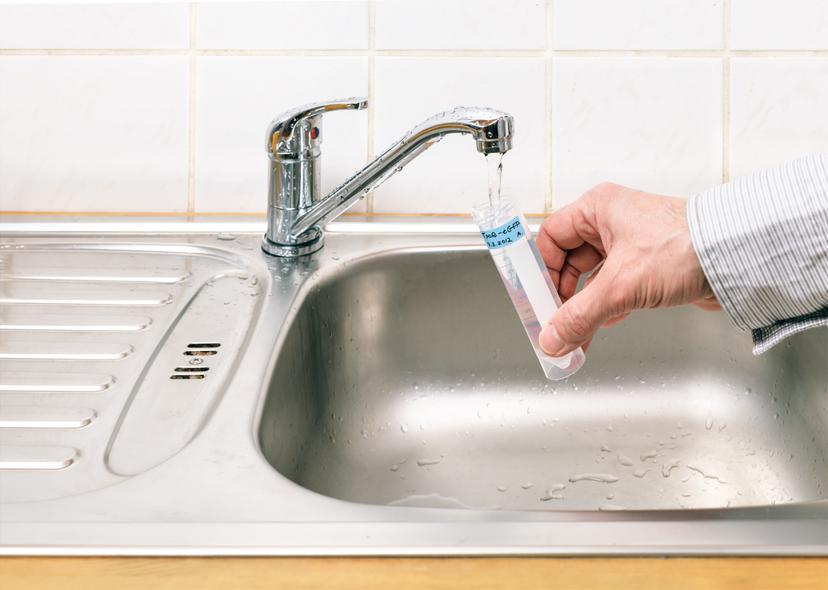
Water can carry dangerous contaminants such as pollutants in waste water which affect the environment, or pathogens in drinking water that can cause illness. It is essential they are detected accurately to ensure regulated standards are met.

Water purity can also have an influence on experimental results, causing growth in the industry of water purifying technology. In this article, learn about the latest developments in water analysis, the technology being used and how it is being applied. Plus, visit our Water Analysis special feature for more exclusive content.

1. Discovery of Emerging Disinfection By-Products in Water Using Gas Chromatography Coupled with Orbitrap-Based Mass Spectrometry

Water is commonly treated by adding chemical disinfectants, such as free chlorine, chloramines, chlorine dioxide, and ozone. However, although very effective in removing disease-causing microorganisms, these disinfectants can react with naturally occurring materials in the water and can form disinfection by-products (DBPs) which can be harmful to human health. This study looks at detection of these by products using the Thermo Scientific™ Q Exactive™ GC hybrid quadrupole Orbitrap mass spectrometer. Download the application note >>

2. Cutting-Edge Water and Contaminants Analysis for Quality Control of Beer

Murphy & Son provides brewing ingredients and processing aids for industrial and home brewers. In this article Paul Taylor, Laboratory Manager at Murphy & Son, spoke to SelectScience about the methods and technology being used to improve brewing techniques. Read more >>

3. Analysis of Pharmaceuticals and Personal Care Products in Water

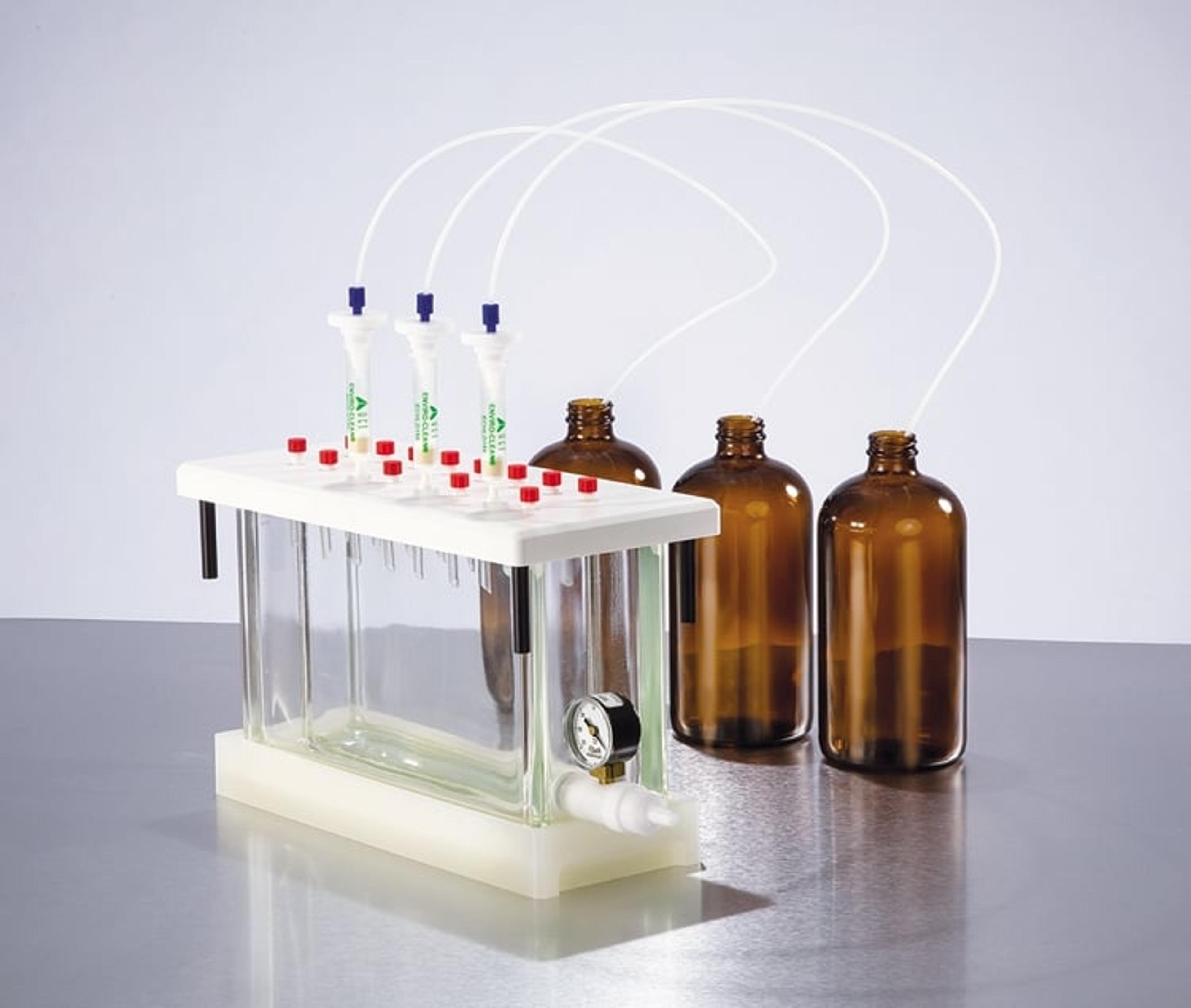
EPA Method 1694 was published in December 2007 as a screening method for the analysis of 73 pharmaceuticals and personal care products (PPCPs) in environmental samples, including wastewater, surface water and drinking water. This application note outlines a SPE procedure using UCT’s Enviro-Clean® HL DVB polymeric sorbent for the determination of 64 PPCPs in water according to EPA Method 1694. Download the application note >>

4. Milli-Q® Integral Water Purification System

Learn about the Milli-Q® Integral, an advanced all-in-one water purification system delivering both pure and ultrapure water. This provides laboratories with a single solution that can connect to any potable water source. Watch the video >>

5. Free Webinar Series: Analysis of Emerging Contaminants

This webinar series looks at the chromatographic analysis of emerging environmental contaminants, with discussion from Dr Cristina Postigo, Post-Doctoral Fellow at the Institute for Environmental Assessment and Water Research (IDAEA-CSIC) and Dr Krista Wigginton, Assistant Professor at the Department of Civil and Environmental Engineering, University of Michigan. Read more >>

6. Choosing the Optimal High Purity Water Source in Accordance with ICP-MS Application Needs and Laboratory Environment

Contaminations present in reagents affect analyses by interfering with measured elements and contaminating the instrument, which leads to decrease of its performance. Ultrapure water is the most frequent reagent in ICP-MS laboratories. In this poster, learn how to choose the best high purity water solution for your ICP-MS application. Download the application note >>

7. Meeting Environmental Legislation Requirements for Waste Water Using Atomic Absorption Spectrometry

In this video, Simon Nelms, Thermo Fisher Scientific, discusses how atomic absorption spectrometry can be used in meeting the requirements for legislation such as the EU Water Framework Directive. Watch the video >>

8. The Robust Technology Enabling Sensitive Routine Analysis of Sewage and Waste Water

ALS Environmental Ltd Principal Scientist John Quick spoke to SelectScience about what he looks for in an instrument and the technology he uses on a daily basis. The environmental ALS labs provide analytical testing for trace and ultra-trace levels of organics, metals, microbiology and more, in matrices such as soil, water and biota. Read more >>

Visit our Water Analysis Special Feature, or watch exclusive coverage from the Analyzing Contaminants in UK Water symposium.

Do you use any of the products mentioned in this article? Is there a product you couldn’t live without? Share your experiences with our worldwide community and write a review today.

Thermo Scientific™ Q Exactive™ GC Orbitrap™ GC-MS/MS System

Thermo Fisher Scientific

The Thermo Scientific™ Q Exactive™ GC system is the first-ever combination of high resolution gas chromatography with high-resolution/accurate-mass (HR/AM) Orbitrap detection for the most comprehensive sample characterization. This easy-to-use system provides the most comprehensive characterization of samples in a single analysis for the highest confidence in compound discovery, identification, and quantitation. Building upon the flexible modularity of the Thermo Scientific™ TRACE™ 1300 Series GC, including user-exchangeable injectors and detectors, the Q Exactive GC system has the quantitative power of a GC triple quadrupole MS combined with the high precision, full scan high-resolution/accurate-mass capability that only Orbitrap technology can offer.   Key Features: Advanced quadrupole technology (AQT) for high transmission of selected masses Resolving power up to 120,000 at m/z 200 Part-per-trillion-level sensitivity Thermo Scientific™ Extractabrite™ ion source for robust, rugged electron impact (EI) and chemical ionization (CI) performance Curved linear C-trap for precise ion injection HCD collision cell for higher energy collisional dissociation provides MS/MS ion characterization Intelligent identification software elucidates the nature of each injected sample. Applications: Untargeted and targeted metabolomics Food and beverage Industrial analyses Environmental Pharmaceutical Clinical and toxicology
(9)

Links

Tags

AutosamplersAutosamplers are automated sample loaders used with a number of separation and analytical techniques. HPLC autosamplers use automated partial or full-loop injection systems and place samples in vials or microplates for analysis. Autosamplers can also be used for elemental analysis. Features to consider include repeatability, syringe capacity, footprint and temperature controls.  Gas ChromatographyGas chromatography (GC) is an analytical technique used to separate and quantitate mixtures of small and volatile compounds. Gas chromatographs or GC systems include components such as GC columns, detectors, pumps and autosamplers. Choose from packed or capillary GC columns, flame ionization (FID), photoionization (PID) electron capture detectors and selective or non-selective detectors. Find the best gas chromatographs in our peer-reviewed product directory: compare products, check customer reviews and receive pricing direct from manufacturers.Sample PreparationSample preparation can improve the quality and speed of separation techniques. Products to assist sample preparation include filtration equipment, evaporators, membranes and sieves.Mass SpectrometryMass spectrometry (MS) is a powerful analytical technique used to identify and quantify molecules based on the mass-to-charge ratio of gas-phase ions. It provides detailed information about the structure, composition, and properties of compounds and is widely used across fields such as environmental monitoring, materials science, drug discovery and development, food and beverage testing, and wider chemical research. Key MS techniques include tandem mass spectrometry (MS/MS), liquid chromatography–mass spectrometry (LS-MS) and inductively coupled plasma (ICP-MS). Choosing from these wide range of techniques and technologies can be a daunting task, so keep up to date with scientific applications, performance expectations, and customer reviews here all in one place. Visit our product directory to receive quotes direct from the manufacturer. FiltrationFiltration and microfiltration are used to separate solids, particulates or large molecules from fluids (liquid or gases) in order to purify the filtrate. Explore a range of filter formats, including filter paper, plates and membranes for your separation needs. While larger particulates may be separated by gravity filtration, smaller particulates may require additional force for timely separation. Microfiltration equipment includes vacuum filters, as well as positive pressure, crossflow and centrifugal filtration devices. Find the best filtration products in our peer-reviewed product directory: compare products, check customer reviews and receive pricing direct from manufacturers.Washing EquipmentWashing equipment is more convenient than ever before with automated systems, integrated and multi-application systems available. For instance microplate washers can be programmable, combined with reagents dispensers and used for applications such as ELISA, multiplex assays and PCR clean up.MicrobiologyMicrobiology is the study of microorganisms including protists, prokaryotes, fungi, and, often, viruses. Microorganisms are a useful research tool as genetic vectors and, in immunology, for antibiotic susceptibility testing, cellular biology and genetics. Microorganisms commonly grow readily in incubators with microbial culture media; this can contain chromogenic supplements to differentiate between cell lines. Estimate your culture’s density of microorganisms with colony counters, or screen and select colonies for desirable clones with automated colony pickers. Additionally, equipment is available to monitor environments for the presence of microbes and identify with microbial identification instruments. Find the best microbiology products in our peer-reviewed product directory: compare products, check customer reviews and receive pricing direct from manufacturers.Sample ManagementSample management systems include sample storage devices such as freezers and plate storers, sample environment enclosures and sample organization, retrieval and sorter systems. Useful system features include high-throughput, automation, robotic arms, automated liquid handling and associated database systems. Accessories in sample management include barcode scanners, heat sealers and tubes.Environmental Monitoring and TestingEnvironmental monitoring and testing uses handheld portable analyzers, kits, spectrometers or chromatography systems for air, water, soil, food and other sample testing. Useful features of analyzers such as BOD and COD include portability, easy calibration, automation and sensitivity.  Environmental test kits for pH, water, moisture, etc, should be accurate, sensitive, reliable, fast and easy to use.Automated Liquid HandlingAutomated liquid handling equipment is used to mix, dilute and dispense allotted volumes of liquid into microplates and other vessels automatically. The robotic, liquid handling arms can dispense from single channel to 3456 multichannel as well as operate nanoliter dispensing, enabling high throughput of samples. Find the best automated liquid handlers in our peer-reviewed product directory: compare products, check customer reviews and receive pricing direct from manufacturers.Food and Beverage AnalyzersFood and Beverage Analyzers are commonly used to provide information about the chemical composition, structure and physical properties of food materials.Food and Beverage ProcessingFood and Beverage Processing involves the preparation of food products for further analysis. Typical instrumentation includes blanchers, color sorters, cookers, grinders, and refrigeration. These are used to replicate the processes commonly used in the commercial preparation of food and beverages.Particle CharacterizationParticle characterization instruments are used to determine particle size distribution, shape, surface area, zeta potential, density and porosity of particles and materials. Multiple tecchniques are available for determining particle size, shape and count including dynamic light scattering (DLS), laser diffraction, electrozone (Coulter technique), imaging particle analysis and single particle optical sensing. Determine the density of your material with a gas pycnometer or examine its surface area and porosity with gas adsorption analyzers and mercury porosimeters. Find the best particle characterization instruments in our peer-reviewed product directory: compare products, check customer reviews and receive pricing direct from manufacturers.GC-MS GC-MS (gas chromatography-mass spectrometry) instruments and equipment are used to separate, quantify and identify mixtures of small and volatile compounds, such as polycyclic aromatics, fatty acids and alcohols. Often used in drug detection, forensic investigation and environmental analysis for pesticides and contaminants, GC-MS is a powerful addition to your lab’s analytical capabilities. GC-MS/MS instruments equipped with a qTOF or triple quadrupole analyzers can give greater sensitivity and resolution to your analysis. Find the best GC-MS instruments and equipment in our peer-reviewed product directory: compare products, check customer reviews and receive pricing direct from manufacturers.Water PurificationThere are a number of water purification methods available to remove contamination from laboratory water. These systems include demineralization, reverse osmosis, filtration and ultrafiltration. A combination of methods is sometimes necessary to achieve purified water suitable for use in experiments.