Unified Chromatography: The Swiss Knife of Analytics

29 Mar 2015

Kathryn Rix
Administrator / Office Personnel

Product news

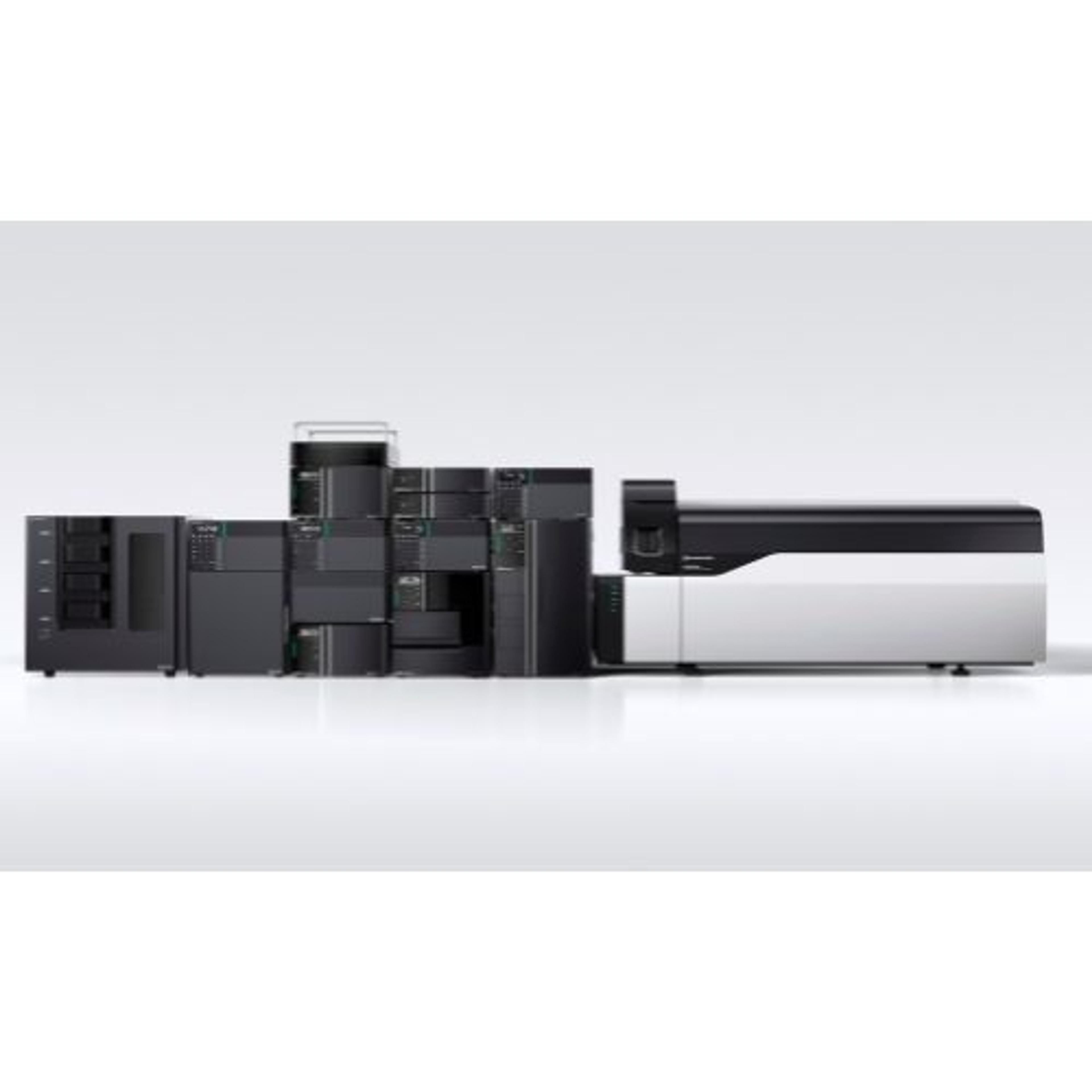
Shimadzu, one of the world leaders in analytical instrumentation, has released the new Nexera UC SFE/SFC/MS platform combining quick and easy on-line sample extraction with state-of-the-art chromatographic separation and high sensitivity detection. For the first time ever, it showcases complete automation of SFE sample pre-treatment and analysis by liquid or supercritical fluid chromatography.

The Nexera UC system is designed to fulfil the measurement requirements of a wide range of applications including: monitoring of pesticides in food products; investigation of biomarkers; additives in polymers; drug discovery in pharmaceuticals and biopharmaceuticals, environmental controls and cleaning validation, to name just a few.

Increasing speed and efficiency while reducing the risk of human error in the analytical workflow

The Nexera UC online SFE-SFC approach eliminates the need for tedious, manual sample pretreatment. All samples are extracted under light-shielding, anaerobic conditions, enabling highly reproducible analysis even of unstable compounds that are easily oxidized or degraded using a conventional liquid extraction method. Notably, analysis of pesticides in food products with the state-of-the-art Nexera UC system and sample preparation in the SFE unit takes just a fraction of the time required when using the traditional QuEChERS method. Furthermore, the fully automated Nexera UC system offers much higher recovery rates of target analytes while significantly reducing the risk of human error during sample pretreatment.

Nexera UC system highlights

1. World’s first-ever unified and fully automated system combining supercritical fluid extraction (SFE) with supercritical fluid chromatography (SFC)

2. Industry-leading sample throughput for supercritical fluid extraction, enabling up to 48 samples to be continuously and automatically processed

3. Achieves the highest levels of sensitivity due to split-less injection of the entire volume of eluent into the mass spectrometer

Technological background

The innovative Nexera UC system offers a supplementary chromatographic technique to conventional LC and GC analysis that enables separation of an even wider range of non- to very polar analytes. Automated extraction and chromatography is achieved using a mobile phase of supercritical carbon dioxide which exhibits the solubility of a liquid with the diffusivity of a gas. Solvent strength can be increased by adding a polar co-solvent. SFE and SFC are therefore faster, more efficient, cheaper and more environmentally friendly than other methods using large amounts of toxic organic solvents.

The Nexera UC system was developed in collaboration between Shimadzu Corporation, Osaka University, Kobe University and Miyazaki Agricultural Research Institute, which is funded by the Japan Science and Technology Agency (JST).
Tags

UHPLC and HPLCHigh performance liquid chromatography (HPLC) and ultra high performance liquid chromatography (UHPLC), also known as UPLC, are analytical techniques used to separate, identify and quantitate components of complex mixtures including biological samples such as proteins and lipids as well as chemical mixtures of pesticides, drugs and oils. Both techniques are liquid chromatographic methods but differ by operating pressures (HPLC < 6000 psi < UHPLC ). Components of HPLC and UHPLC systems include columns, detectors, pumps, autosamplers and column heaters. Explore a range of UHPLC and HPLC columns for your specific sample needs including reverse phase, normal phase, ion exchange, HILIC, ion exclusion and size exclusion columns. For more specialized HPLC, explore FPLC, countercurrent LC and simulated moving bed systems. Find the best UHPLC and HPLC equipment in our peer reviewed product directory: compare products, check customer reviews and receive pricing direct from manufacturers.Supercritical Fluid ChromatographySupercritical Fluid Chromatography (SFC) is used for the rapid separation and analysis of complex mixtures. SFC systems require injectors, pumps, columns, ovens and detectors. The SFC retention method uses a supercritical fluid, usually CO2. There are a number of different SFC detector types including UV / VIs, ECD, mass spectrometry and fluorescence.BiomarkersBiomarkers are biological markers which can be measured and evaluated to indicate a biological state. The use of biomarkers in research and diagnosis can indicate a normal or disease state or drug response of cells / tissues. Biomarkers include genetic markers, cell surface markers such as antigens, antibodies or receptors and secreted molecules such as cytokines. An assay system is required for identification of biomarkers. :Food TestingFood testing refers to a variety experiments including PCR, mass spectrometry, processing, QuEChERS, analyzing and Kjeldahl.PolymersPolymers are large molecules made up of many repeat units. Natural polymers such as DNA and proteins are essential to life, whereas synthetic polymers such as polystyrene and polyethylene are used widely due to their functionality. Typical techniques for analysis include GPC, SEC, DSC, FT-IR and NMR.Biomarker DiscoveryClinical biomarkers refer to substances related to known medical conditions that can be accurately measured <i>in vitro</i>. Biomarkers can be used to diagnose presence of a disease and indicate disease severity. The discovery of new biomarkers is incredibly valuable in the field of diagnostics.Environmental AnalysisEnvironmental analysis describes a variety of tests that determine the effect of chemicals, processes and particulates such as persistent organic pollutants (POPs) have on the environment.PharmaceuticalsPharmaceuticals are medicinal drugs used in healthcare to diagnose, prevent, cure and treat illnesses. Pharmaceuticals that are excreted after use appear in wastewater and can have detrimental effects on the environment.
Unified Chromatography: The Swiss Knife of Analytics