The Latest Technologies and Methods for Environmental Research

Discover tips, tricks and time-saving solutions for your workflows

24 Nov 2015

Lois Manton-O'Byrne, PhD
Executive Editor

Editorial article

Discover tips, tricks and time-saving solutions for your workflows

Learn more about the latest products and methods for environmental research and analysis.

1. Article: Legacy Flame Retardants, Emerging Flame Retardants and Dioxins: Risk Assessment

Some classes of brominated flame retardant (BFR) are well established as legacy contaminants, with more evidence of their negative impacts on the environment and health constantly reported. Discover work done to estimate potencies for a range of dioxins and furans, and learn the importance of holistic risk assessments. More information.

2. Article: Tips and Tricks for LC-MS

LC-MS enables sensitive analysis of complex samples and can detect very similar compounds. Optimization of your LC-MS system and workflow is critical to ensure minimal instrument downtime and troubleshooting. Learn how you can optimize your own workflow in this article. Read article.

3. Products: Food Safety Analysis and Testing Solutions Offer Exceptional Sensitivity and Performance

Discover new products and workflow solutions for food safety analysis and testing of environmental contaminants and residues from Thermo Fisher Scientific. The company presented a range of innovations at the Seventh Annual International Symposium on Recent Advances in Food Analysis (RAFA) in Prague. Learn more.

4. Application Note: DNA Extraction from French Soils: Evaluation of Precellys®24-dual 7ml Vial

The Genosol platform is a biological resource center unique in France and Europe, devoted to the conservation and analysis of the genetic resources of soil microbial communities. The ambition of the GenoSol platform is to centralize the microbial genetic resources of soils and make them available to the scientific community together with the most up-to-date technologies for their characterization. This application note demonstrates the use of the Precellys®24-Dual, from Bertin Technologies, in the characterization of these soil samples. Download method.

5. Video: Introduction to QuEChERS Sample Preparation

The QuEChERS sample preparation technique is predominately used for extraction of pesticides and other contaminants from food samples; the method has revolutionized sample preparation and is now the industry gold standard. Watch this video to learn more about the QuEChERS process, troubleshooting tips and considerations to make. Watch video.

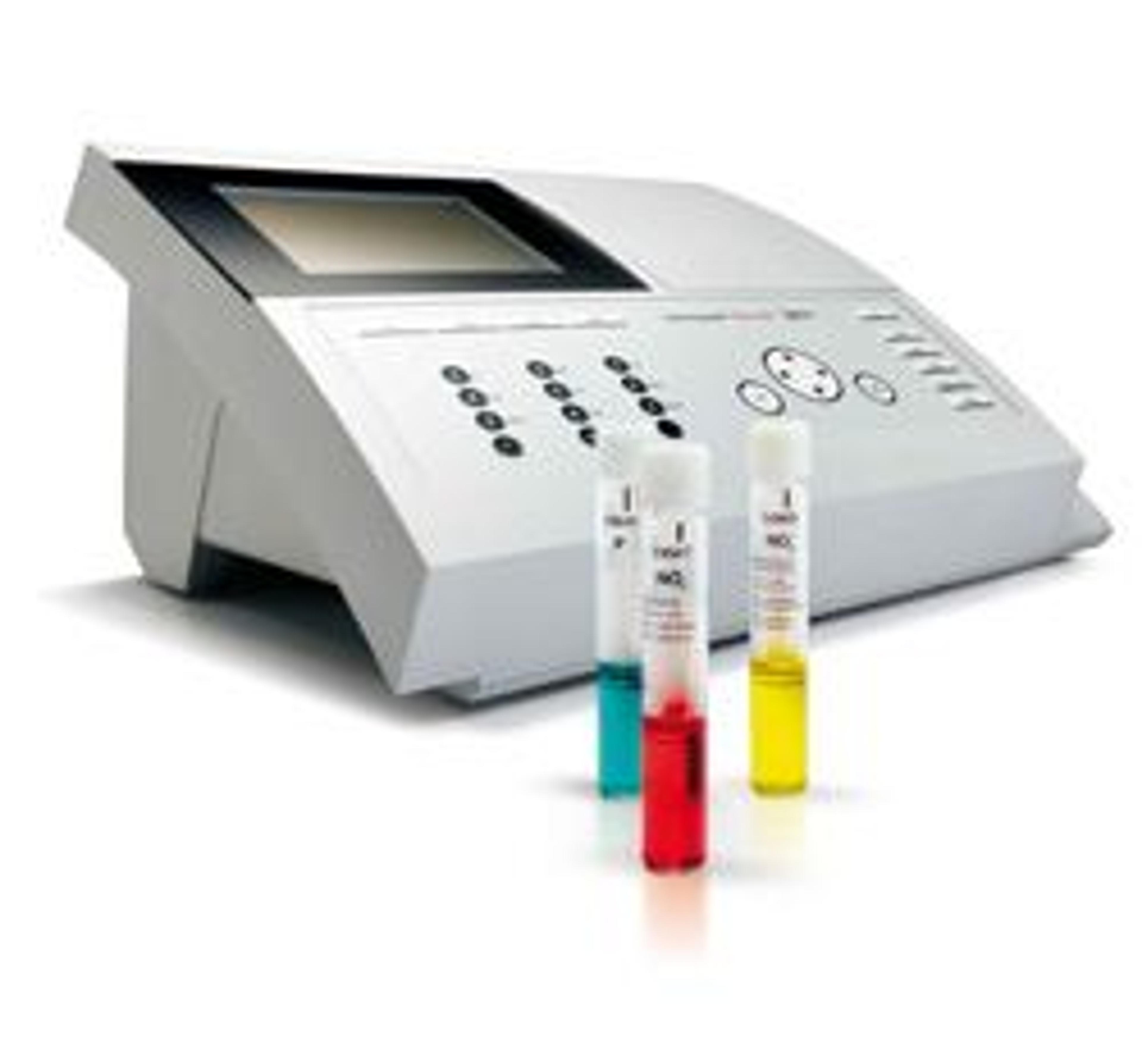
6. Products: Merck Introduces Spectroquant® Prove Family of System Spectrophotometers for Simplified, Durable and Secure Water Analysis

Merck, a leading science and technology company, has introduced Spectroquant® Prove, a new class of spectrophotometers for simplified, durable and secure analysis of waste water, drinking water, beverages and process water. Spectroquant® Prove is available in three models to meet a broad range of requirements and offers the largest choice of water test kits and methods including complete documentation. Learn more.

7. Application Note: High Throughput Large Scale Genotyping in Soybean Utilizing Novel Microfluidic Reagent Dispensing Technology

Recent advances in DNA marker/QTL (gene) discovery and marker detection technology have great impacts on crop improvement through marker-assisted selection. To discover and deploy the DNA markers in plant breeding programs, establishing low cost, high throughput, large scale and reliable and flexible marker genotyping platform is one of key factors. Implementing high-throughput workflows for SNP genotyping platforms such as TaqMan and KASP assays requires accurate dispensing of assay master mixes and reagents. This poster demonstrates the use of Formulatrix’s Mantis liquid handler within the marker/QTL discovery and molecular breeding processes in a soybean program. Download method.

Have you used any of the products above? Share your experiences with our community of worldwide scientists by writing a review today.
Links

Tags

UHPLC and HPLCHigh performance liquid chromatography (HPLC) and ultra high performance liquid chromatography (UHPLC), also known as UPLC, are analytical techniques used to separate, identify and quantitate components of complex mixtures including biological samples such as proteins and lipids as well as chemical mixtures of pesticides, drugs and oils. Both techniques are liquid chromatographic methods but differ by operating pressures (HPLC < 6000 psi < UHPLC ). Components of HPLC and UHPLC systems include columns, detectors, pumps, autosamplers and column heaters. Explore a range of UHPLC and HPLC columns for your specific sample needs including reverse phase, normal phase, ion exchange, HILIC, ion exclusion and size exclusion columns. For more specialized HPLC, explore FPLC, countercurrent LC and simulated moving bed systems. Find the best UHPLC and HPLC equipment in our peer reviewed product directory: compare products, check customer reviews and receive pricing direct from manufacturers.Sample PreparationSample preparation can improve the quality and speed of separation techniques. Products to assist sample preparation include filtration equipment, evaporators, membranes and sieves.Atomic Absorption / Emission SpectroscopyAtomic absorption spectroscopy (AAS) and atomic emission spectroscopy (AES) — also called optical emission spectroscopy (OES) — are used to detect the elemental constituents in samples. Both techniques involve the atomization of a sample. Atomic absorption spectrometers may use a flame or furnace to create an atomic vapor of the sample before irradiation with spectral light. Optical emission spectrometers may use a flame, inductively coupled plasma (ICP), microwave plasma (MP) or spark arcs to atomize and excite the sample. At higher excitation energies, electrons can be emitted instead of photons, which can be useful for samples that can’t be atomized and for surface analysis. Explore electron spectroscopy equipment such as Auger spectrometers and photoelectron spectrometers for surface elemental analysis of samples. Find the best atomic absorption, photoelectron and optical emission spectrometers in our peer-reviewed product directory: compare products, check customer reviews and receive pricing direct from manufacturers.LC-MSLC-MS (liquid chromatography-mass spectrometry) systems and equipment are used for separation and quantitative analysis of complex mixtures, combining liquid chromatography and mass spectrometry. Quantify proteins, contaminants, pesticides or screen for drug metabolites with a high level of sensitivity. LC-MS systems and equipment include reverse phase, normal phase and specialized columns integrated with various MS detectors such as time-of-flight (TOF), quadrupole, orbitrap or ion trap mass analyzers. LC-MS/MS instruments equipped with a qTOF or triple quadrupole analyzer give greater sensitivity and resolving power to your analysis. Find the best LC-MS equipment in our peer-reviewed product directory: compare products, check customer reviews and receive pricing direct from manufacturers.Environmental Monitoring and TestingEnvironmental monitoring and testing uses handheld portable analyzers, kits, spectrometers or chromatography systems for air, water, soil, food and other sample testing. Useful features of analyzers such as BOD and COD include portability, easy calibration, automation and sensitivity.  Environmental test kits for pH, water, moisture, etc, should be accurate, sensitive, reliable, fast and easy to use.Next Generation SequencingNext-generation sequencing (NGS), also known as whole-genome sequencing, high-throughput sequencing and massive parallel sequencing, produces and analyses thousands to millions of nucleotide sequences at once. Sequencing systems operate via varying technologies depending on the manufacturer, including sequencing by synthesis, ligation, pyrosequencing, ion semiconductor and single-molecule real-time sequencing. For NGS, library preparation is paramount to successful sequencing. In this section, explore a range of library preparation kits, from targeted, amplicon-based or hybridization-based kits including epigenomic, transcriptomic and genomic workflows to fragmentation kits. Find the best next-generation sequencing products in our peer-reviewed product directory: compare products, check customer reviews and receive pricing direct from manufacturers.Food and Beverage AnalyzersFood and Beverage Analyzers are commonly used to provide information about the chemical composition, structure and physical properties of food materials.Food and Beverage ProcessingFood and Beverage Processing involves the preparation of food products for further analysis. Typical instrumentation includes blanchers, color sorters, cookers, grinders, and refrigeration. These are used to replicate the processes commonly used in the commercial preparation of food and beverages.Particle CharacterizationParticle characterization instruments are used to determine particle size distribution, shape, surface area, zeta potential, density and porosity of particles and materials. Multiple tecchniques are available for determining particle size, shape and count including dynamic light scattering (DLS), laser diffraction, electrozone (Coulter technique), imaging particle analysis and single particle optical sensing. Determine the density of your material with a gas pycnometer or examine its surface area and porosity with gas adsorption analyzers and mercury porosimeters. Find the best particle characterization instruments in our peer-reviewed product directory: compare products, check customer reviews and receive pricing direct from manufacturers.Water PurificationThere are a number of water purification methods available to remove contamination from laboratory water. These systems include demineralization, reverse osmosis, filtration and ultrafiltration. A combination of methods is sometimes necessary to achieve purified water suitable for use in experiments.Waste WaterPesticidesPesticides are used to protect crops from diseases, pests and unwanted plants. They are classed as persistent organic pollutants (POPs) and can be harmful to humans. The Environmental Protection Agency (EPA) currently regulates the use of pesticides in the USA. Soil TestingSoil testing helps determine the nutrient content, pH level, and other factors affecting soil health. This information is critical for agriculture, environmental science, and land management. Explore soil testing solutions in our peer-reviewed product directory; compare products, check reviews, and get pricing directly from manufacturers.QuEChERSHigh ThroughputHigh throughput experiments allow the simultaneous processing of several samples. This parallelization reduces the cost per experiment and increases reproducibility and output volume of data.