
Optimize your coffee: How to improve flavor and quality with precision
Find out how laser diffraction particle analyzers are reducing production time and improving quality assurance processes in coffee manufacturing
31 Aug 2020
Editorial article

In this exclusive interview, we speak with Keri Formosa, the Senior Product Developer for Club Coffee, about the integral role Malvern Panalytical plays in supporting Club Coffee’s quality assurance processes, and especially in the development of an optimum super-fine grind for its new espresso. Formosa also highlights the Mastersizer 3000 as both a reliable tool for precise, routine analysis, and as a key driver of Club Coffee’s innovation projects, including the push for single-serve, compostable packaging.
Tell us a bit about the work you’re doing at Club Coffee
My role as senior product developer allows me to have input on the innovation goals of the company, while still being involved in the hands-on work on the plant floor and in the running of trials. Our Innovation group (which includes product development, engineering, continuous improvement, and packaging development) work together to launch new products using innovative packaging formats to satisfy the needs of our customers.
One of the fundamentals at Club Coffee has been the development of compostable packaging solutions for the single-serve coffee industry. Our PurPod single-serve 100% certified compostable pods show how we are responding to demands with the right solutions for our customers and for the environment. This benchmark innovation has presented its hurdles, as working with compostable packaging has proven to be more challenging than the non-compostable alternatives. In response to this, our Innovation team has been working to perfect the single-serve compostable format, and we think this delivers a better cup of coffee.
How do you use the Mastersizer 3000 in your work?
We use the Malvern Mastersizer 3000 (MS3000) as both a quality assurance tool and as a tool for investigative work for innovation projects. We have three MS3000 units between our two manufacturing sites, and they are operating on a 24/7 schedule. The MS3000 ensures that the grind size targets set by the product development team are met for each and every package of coffee that leaves our facilities. The grind size of our coffee is integral in giving the final cup of coffee the mouthfeel and flavor that the customer expects. Each brew type and size has a different recommended grind size for that coffee in order to optimize the flavor impact. We at Club Coffee maintain a very tight range of acceptability and that is only possible through the use of a precision tool such as the MS3000.
What benefits have you experienced by using this system?

The previous tool for measuring the particle grind size of coffee was sieves. By upgrading to the MS3000, we are able to measure the grind result in less than a minute, while the sieve test took between 10-12 minutes per test. Also, we are now able to test materials with extra fine grind, which clogged the sieve system and gave inaccurate results. By being able to measure this extra fine grind, we have been able to expand our business into espresso-based products with a super-fine coffee grind. The detailed results that are produced by the MS3000 allow us to look at the shape of the curve, to quantify not only the distribution of small and large particles in a sample but to give us insight into the performance of our grinding equipment. Through this type of testing, we have worked with our grinder manufacturer to produce the optimal shape of the curve that results in the best cup of espresso coffee.
Would you recommend Malvern Panalytical to someone else in the industry?
I would absolutely recommend anyone looking to measure particle size or doing any particle investigation to use Malvern products. They provide tools that are easy to operate for manufacturing needs but can also give the highly detailed results that we require in our Innovation team.
The support we receive from Malvern Panalytical has been for routine calibration, cleaning services, and some emergency troubleshooting advice. With three units on-site, we depend on these for daily operation and, when one is not working optimally, we know we can contact either the 24-hour Malvern Support help desk or our local representatives and engineers.
Fortunately, we have not had many encounters with the support team at Malvern. However, when we need to schedule maintenance or when we have an emergency problem, the team at Malvern has always been a responsive and supportive resource, that often shares its insights to allow you to understand the equipment in further detail. They provide informative training sessions to highlight their new software and hardware options and we recently reached out to our local account manager to review options for new innovations. He not only gave us options, he also suggested that we send samples of our test material to their applications lab to determine which tool would best suit our needs.
In addition, we recently moved to internal verification of the unit using a low-cost reference standard. This allows us to verify the unit more frequently, whilst cutting down on our annual operating costs and reducing the number of onsite visits during the year.
What do you see for the future of Club Coffee?
As long as people continue to drink coffee, I’ll keep sharing our delicious products and the amazing finds of some unique coffees that inspire me. Club Coffee continues to drive innovation in the commercial specialty coffee industry and is working to revolutionize the coffee packaging industry by expanding our compostable offerings.
Learn more from the experts:
- NIRS reveals hidden information about plant-water relationships >>
- X-ray diffraction for aluminum product quality control >>
Do you use Malvern Panalytical products in your lab? Write a review today for your chance to win a $400 Amazon gift card>>
Related products
Request Quote for All Products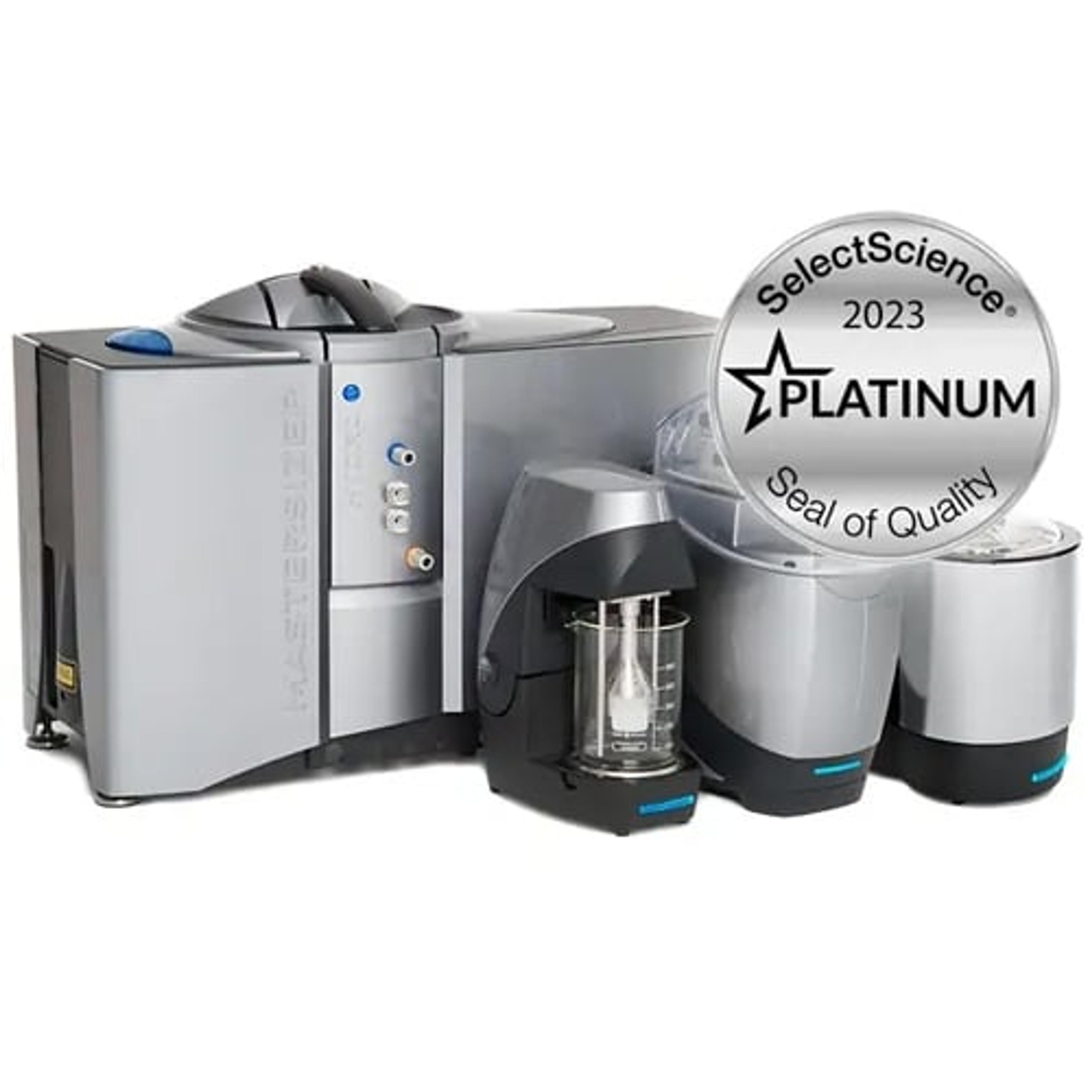
Mastersizer 3000
Malvern PanalyticalWorld’s most widely used particle size analyzers, the smartest way to measure particle size. There is a newer version of this product avilable, the Mastersizer 3000+ Ultra.