MilliporeSigma Introduces Spectroquant® Prove for Simplified, Durable and Secure Water Analysis

11 Jan 2016

Lois Manton-O'Byrne, PhD
Executive Editor

Product news

  • Applications for waste water, drinking water, beverages and process water
  • Largest choice of water test kits with Live ID for accurate and fully traceable results
  • Three models for routine applications, sensitive measurements and complex analyses

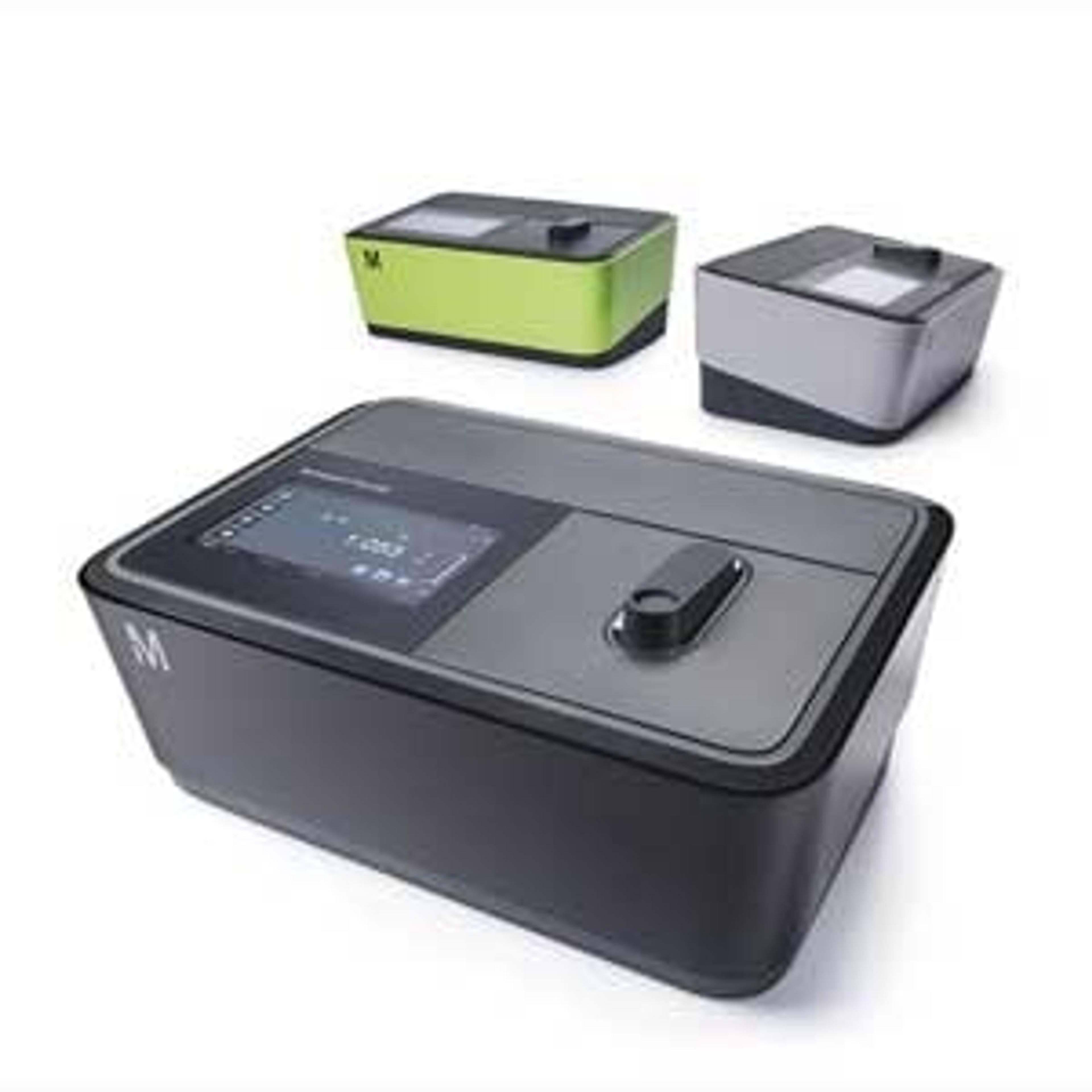
MilliporeSigma, the U.S. life science business of Merck KGaA of Darmstadt, Germany, has introduced Spectroquant® Prove, a new class of spectrophotometers for simplified, durable and secure analysis of waste water, drinking water, beverages and process water. Spectroquant Prove is available in three models to meet a broad range of requirements and offers the largest choice of water test kits and methods including complete documentation.

“Our new Spectroquant Prove systems help scientists solve tough problems by uniting the three most important requirements across all water applications: simplicity, security and durability,” said Udit Batra, President and CEO, MilliporeSigma. “With these systems we are helping to accelerate access to health care for people around the world.”

Users have the flexibility to select a water analysis tool that fits their individual needs and applications with the following three available models:

  • Spectroquant Prove 100 performs Vis measurements and offers high quality and exceptional value for routine applications with Spectroquant® cell test kits.
  • Spectroquant Prove 300 allows UV/Vis analyses. Its long-lasting xenon lamp makes it ideal for more intensive use. Pre-programmed free applications, like bromate and brewery tests, make it the perfect choice for drinking water and beverage testing.
  • Spectroquant Prove 600 offers all the benefits of the Prove 300 system, delivers excellent resolution and sensitivity and is designed for complex analyses with high-end UV/Vis optics. The system offers a 1.8nm bandwidth and cuvettes up to 100mm. Together with the most sensitive silicate and chloride test kits, the lowest measuring ranges in process water are reached.

Spectroquant Prove’s simple design requires only a minimal amount of space and its surfaces are durable against many chemicals used in the lab. Spectroquant Prove also allows for easy data transfers with maximum flexibility and minimal effort.

The Spectroquant Prove family of instruments and test kits increases the efficiency and reliability of water analysis through a variety of key features, including:

Live ID, a new, data-rich identification system on all cell and reagent tests for transferring “live” data like expiry and lot number together with automatic, complementary calibration updates.

Cell Test Ports offers direct insertion of round cell tests without opening any lids.

AutoSelector for Reagent Tests automatically detects the analysis method and provides all Live ID data.

Automatic cell size recognition for rectangular cells calculates results accordingly.

Smart Screen for simple, seamless menu navigation.

AQA prime for exceptionally secure and easy analytical quality assurance.

Long-life lamp, new reference beam technology minimizes the effort and costs of replacing lamps.

Removable cell compartment, the cell holder can be removed and cleaned if something is spilled.
Links

Tags

Atomic Absorption / Emission SpectroscopyAtomic absorption spectroscopy (AAS) and atomic emission spectroscopy (AES) — also called optical emission spectroscopy (OES) — are used to detect the elemental constituents in samples. Both techniques involve the atomization of a sample. Atomic absorption spectrometers may use a flame or furnace to create an atomic vapor of the sample before irradiation with spectral light. Optical emission spectrometers may use a flame, inductively coupled plasma (ICP), microwave plasma (MP) or spark arcs to atomize and excite the sample. At higher excitation energies, electrons can be emitted instead of photons, which can be useful for samples that can’t be atomized and for surface analysis. Explore electron spectroscopy equipment such as Auger spectrometers and photoelectron spectrometers for surface elemental analysis of samples. Find the best atomic absorption, photoelectron and optical emission spectrometers in our peer-reviewed product directory: compare products, check customer reviews and receive pricing direct from manufacturers.Environmental Monitoring and TestingEnvironmental monitoring and testing uses handheld portable analyzers, kits, spectrometers or chromatography systems for air, water, soil, food and other sample testing. Useful features of analyzers such as BOD and COD include portability, easy calibration, automation and sensitivity.  Environmental test kits for pH, water, moisture, etc, should be accurate, sensitive, reliable, fast and easy to use.Food and Beverage AnalyzersFood and Beverage Analyzers are commonly used to provide information about the chemical composition, structure and physical properties of food materials.Food and Beverage ProcessingFood and Beverage Processing involves the preparation of food products for further analysis. Typical instrumentation includes blanchers, color sorters, cookers, grinders, and refrigeration. These are used to replicate the processes commonly used in the commercial preparation of food and beverages.Particle CharacterizationParticle characterization instruments are used to determine particle size distribution, shape, surface area, zeta potential, density and porosity of particles and materials. Multiple tecchniques are available for determining particle size, shape and count including dynamic light scattering (DLS), laser diffraction, electrozone (Coulter technique), imaging particle analysis and single particle optical sensing. Determine the density of your material with a gas pycnometer or examine its surface area and porosity with gas adsorption analyzers and mercury porosimeters. Find the best particle characterization instruments in our peer-reviewed product directory: compare products, check customer reviews and receive pricing direct from manufacturers.Water PurificationThere are a number of water purification methods available to remove contamination from laboratory water. These systems include demineralization, reverse osmosis, filtration and ultrafiltration. A combination of methods is sometimes necessary to achieve purified water suitable for use in experiments.Waste WaterWater AnalysisAnalytical methods used to test the purity of drinking water include determining the level of contaminants abides to the level set by the Environmental Protection Agency (EPA).Beverage AnalysisBeverage analysis involves testing and evaluating the composition, quality, and safety of drinks, from alcoholic beverages to soft drinks. Techniques like chromatography and spectroscopy are commonly used to analyze flavors, nutrients, contaminants, and additives. Browse our peer-reviewed product directory to find the best beverage analysis tools, compare products, check reviews, and get pricing directly from manufacturers.SpectrophotometrySpectrophotometry is a technique used to measure the absorption or transmission of light through a sample. It is commonly used in chemical analysis, environmental monitoring, and quality control. Explore spectrophotometry tools in our peer-reviewed product directory; compare products, check reviews, and get pricing directly from manufacturers.Drinking Water AnalysisAnalytical methods used to test the purity of drinking water include determining the level of contaminants abides to the level set by the Environmental Protection Agency (EPA).