Meet the scientists determined to relieve the pain points of cannabis testing

As the possibility of federal legalization looms in the U.S., hear how Restek is approaching cannabis for 2020 and working with its customers to advance the field of cannabis testing as a whole

27 Feb 2020

Cameron Smith-Craig
Cameron Smith-Craig
Pharma and Applied Sciences Editor

Editorial article

 ALT TEXT
Ashlee Gerardi, Business Development Manager at Restek

As cannabis legalization becomes more widespread, in this SelectScience interview we speak with Ashlee Gerardi, Business Development Manager at Restek, about her history in cannabis science, her conversations with scientists at the sharp end of research and how Restek’s approach to analytical testing has evolved in tandem with the cannabis industry boom.

For the past three years, Gerardi has been working with individuals in the cannabis and hemp industry to better understand their needs for quality analysis (QA) testing. These investigations have covered the entire workflow, from sample preparation to data output. Currently, Gerardi is working with scientists to find out and tackle their pain points when it comes to analytical testing, whether that’s around the testing process itself or by helping to educate people on the market, good laboratory practice or working with the cannabis team at Restek to develop exciting new solutions.

Tell us a bit more about your role

AG: Each day I’m challenged with solving problems and gathering the voice of the customers and voice of the market to make sure we address the needs accurately and effectively. I’m very lucky to work with a great group of individuals at Restek who accompany me to tradeshows and conferences to present our testing workflows and solutions. With this market being so dynamic, it’s important to stay abreast of state and federal regulations. Therefore, I’m active in various organizations like the American Council of Independent Laboratories (ACIL), the Association of Official Agricultural Chemists (AOAC), and the American Society for Testing and Materials (ASTM). Within my role, it’s also key to build relationships and monitor trends globally. This insight provides our team with a larger view of the global market for cannabis and hemp. For example, if we just look at the US, more than half the states have legalized cannabis in some form. State testing regulations vary from state to state, making it challenging to standardize methodologies. Our team is constantly developing workflows that address not only some state regulations, but we strive to make our workflows simple so they can be modified to meet the needs of others.

What are the key challenges for cannabis scientists and how is Restek working to overcome these and to help push the field forward?

AG: There are many challenges cannabis scientists are faced with on a daily basis. Staying compliant with changing regulations, high personnel turnover, diversity in samples, instrumentation upkeep and finding time and resources for method development are just the tip of the iceberg. Some of our key cannabis scientists at Restek like Colton Myers, Nathaly Reyes, and Justin Steimling are developing workflows that increase sample throughput, minimize sample preparation, and can be implemented on common samples that labs are likely to encounter. Finding solutions and providing insight into our experience from working with these complex and dirty samples through webinars, Restek’s Cannabis Advantage and blog posts are just a few things that we’re doing to help push the field forward.

Video: Justin Steimling, LC applications manager, shares his top tips for sample extraction
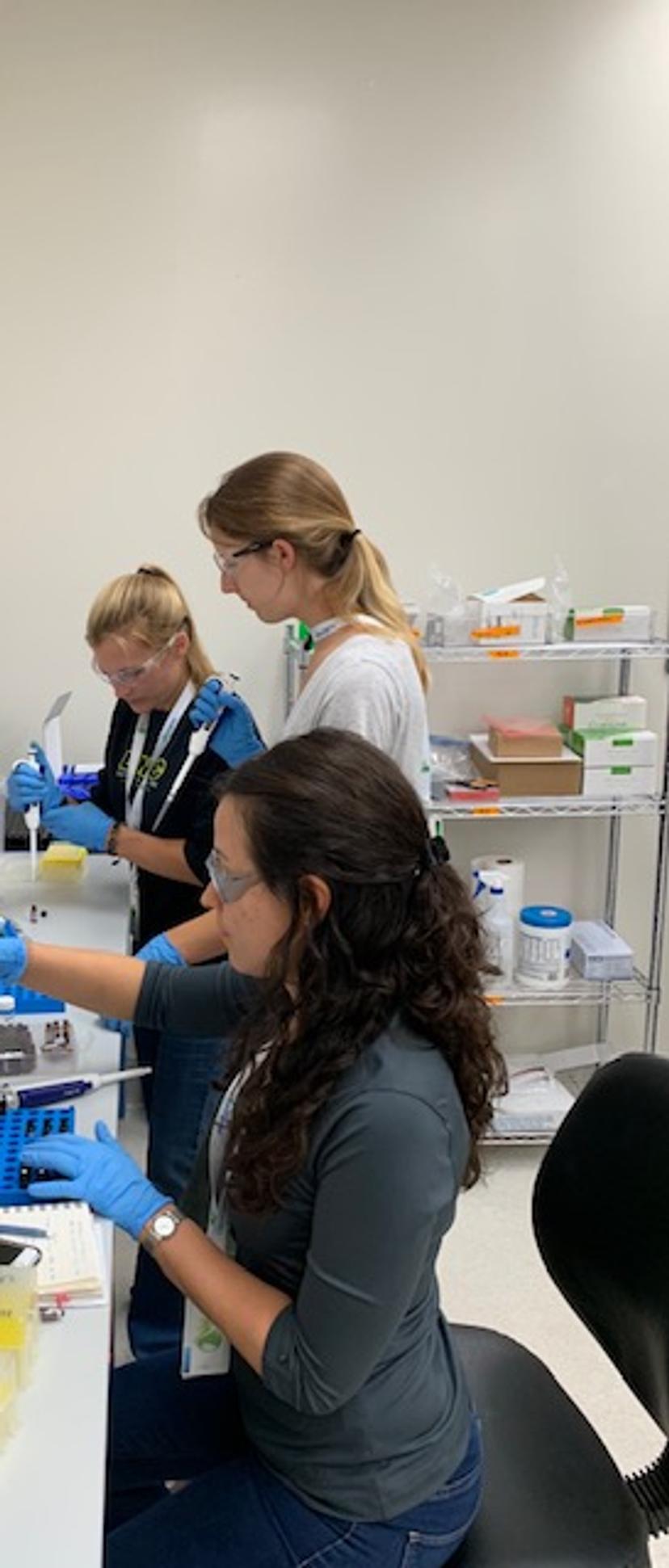
Restek employees working in cannabis lab
Ashlee Gerardi & Nathaly Reyes of Restek developing workflows in one of their cannabis laboratories

Are there any new technologies that you are particularly excited about?

AG: We’re constantly expanding our workflows and consumables for this market. Reference standards (CRMs) play a vital role in accurate and reliable testing. We’ve recently released additional cannabinoid and pesticide standards and we’ll continue to expand our standards portfolio throughout the year. One growing pain point labs asked us to help solve was a potency method that still used ACN, but reduced their cost per test. To address this, Justin Steimling developed an isocratic method that reduced the solvent consumption for the separation of 19 cannabinoids. The beautiful thing about this method is labs can still modify it to cut down on their solvent usage if they’re screening for fewer cannabinoids, helping labs lower their cost per sample and decrease solvent waste.

How do you support your customers in such a fast-evolving industry?

AG: One of the ways we support our customers in this rapidly growing industry is by developing workflows on a variety of samples. The large breadth of sample types can be overwhelming and hard for labs to manage. So, while a new potency method for the flower is great, addressing the modifications that have to be made for a beverage or edible still cuts into a lab’s method development time and resources. We try to tackle as many sample types as we can. For example, we have experience and literature for potency testing on flower, chocolate, hard candies, concentrate, CBD oil, and a handful of other matrices.

What’s the main advice you can offer for those wanting to improve their analysis?

AG: Continuing your education, diversifying your skill set and gaining as much experience as you can is critical for this market. Also, having resources you can lean on to help you find answers quickly is key. At Restek, we work directly with customers to help solve and troubleshoot their problems. When you call our customer service number, you’ll speak directly to one of our customer service team members. In addition, our cannabis scientists are also available to assist with questions or troubleshooting.

How do you expect the cannabis testing industry will look in 3, 5, 10 years’ time?

AG: I still feel short term, the market is going to be very dynamic. There are still states that have not legalized cannabis in some form, nor a federal standardized testing governance specifically for cannabis. I feel the hemp market will drive federal regulations for testing and other aspects of the market and set the foundation for the eventual federal legalization of cannabis. This will help the creation and adoption of standardized methods that are greatly needed in this market.

Do you use Restek's technology in your lab? Write a review today for your chance to win a $400 Amazon gift card>>

Cannabidiolic Acid (CBDA) Standard

Restek Corp.

Diluted and DEA-exempt—no need to purchase costly neat materials or make your own standards. Pair with Restek's THC standards to analyze both neutrals and acids in cannabis products by LC. A must for accurate quantification in medical cannabis potency testing and strain ID.

(1)

Raptor™ Biphenyl LC Column

Restek Corp.

With Raptor™ LC columns, Restek chemists became the first to combine the speed of superficially porous particles (also known as SPP or “core-shell” particles) with the resolution of highly selective USLC® technology. This new breed of chromatographic column allows you to more easily achieve peak separation and faster analysis times without expensive UHPLC instrumentation.

(19)

MOSH/MOAH Standard

Restek Corp.

Developed specifically for using LC coupled with GC-FID to accurately determine hydrocarbons found in mineral oils, which can migrate from packaging into food. • 9-component mix contains non-interfering internal standards as well as both mineral oil saturated hydrocarbon (MOSH) and mineral oil aromatic hydrocarbon (MOAH) markers to correctly cut fractions. • Certified reference material (CRM) manufactured and QC-tested in Restek’s ISO-accredited labs satisfies your ISO requirements. • Restek is your complete supplier for world-class MOSH/MOAH analysis: reference standards, Allure® silica LC columns, Rxi®-5Sil MS GC columns, accessories, and more!

(1)

Links

Tags

Gas ChromatographyGas chromatography (GC) is an analytical technique used to separate and quantitate mixtures of small and volatile compounds. Gas chromatographs or GC systems include components such as GC columns, detectors, pumps and autosamplers. Choose from packed or capillary GC columns, flame ionization (FID), photoionization (PID) electron capture detectors and selective or non-selective detectors. Find the best gas chromatographs in our peer-reviewed product directory: compare products, check customer reviews and receive pricing direct from manufacturers.UHPLC and HPLCHigh performance liquid chromatography (HPLC) and ultra high performance liquid chromatography (UHPLC), also known as UPLC, are analytical techniques used to separate, identify and quantitate components of complex mixtures including biological samples such as proteins and lipids as well as chemical mixtures of pesticides, drugs and oils. Both techniques are liquid chromatographic methods but differ by operating pressures (HPLC < 6000 psi < UHPLC ). Components of HPLC and UHPLC systems include columns, detectors, pumps, autosamplers and column heaters. Explore a range of UHPLC and HPLC columns for your specific sample needs including reverse phase, normal phase, ion exchange, HILIC, ion exclusion and size exclusion columns. For more specialized HPLC, explore FPLC, countercurrent LC and simulated moving bed systems. Find the best UHPLC and HPLC equipment in our peer reviewed product directory: compare products, check customer reviews and receive pricing direct from manufacturers.Sample PreparationSample preparation can improve the quality and speed of separation techniques. Products to assist sample preparation include filtration equipment, evaporators, membranes and sieves.Infrared / IR SpectroscopyInfrared (IR) spectroscopy measures the interaction of infrared light with a sample, including transmission, reflectance & absorbance, facilitating the identification of analytes. Equipment used for quantitative analysis includes Fourier-transform infrared (FTIR) spectrometers, infrared cameras, FTIR gas analyzers, as well as attenuated total reflectance (ATR) accessories and pellet or film presses. Find the best IR spectroscopy products in our peer-reviewed product directory: compare products, check customer reviews and receive pricing direct from manufacturers.LC-MSLC-MS (liquid chromatography-mass spectrometry) systems and equipment are used for separation and quantitative analysis of complex mixtures, combining liquid chromatography and mass spectrometry. Quantify proteins, contaminants, pesticides or screen for drug metabolites with a high level of sensitivity. LC-MS systems and equipment include reverse phase, normal phase and specialized columns integrated with various MS detectors such as time-of-flight (TOF), quadrupole, orbitrap or ion trap mass analyzers. LC-MS/MS instruments equipped with a qTOF or triple quadrupole analyzer give greater sensitivity and resolving power to your analysis. Find the best LC-MS equipment in our peer-reviewed product directory: compare products, check customer reviews and receive pricing direct from manufacturers.Mass SpectrometryMass spectrometry (MS) is a powerful analytical technique used to identify and quantify molecules based on the mass-to-charge ratio of gas-phase ions. It provides detailed information about the structure, composition, and properties of compounds and is widely used across fields such as environmental monitoring, materials science, drug discovery and development, food and beverage testing, and wider chemical research. Key MS techniques include tandem mass spectrometry (MS/MS), liquid chromatography–mass spectrometry (LS-MS) and inductively coupled plasma (ICP-MS). Choosing from these wide range of techniques and technologies can be a daunting task, so keep up to date with scientific applications, performance expectations, and customer reviews here all in one place. Visit our product directory to receive quotes direct from the manufacturer. Near Infrared SpectroscopyNear-infrared (NIR) spectroscopy measures the interaction of near-infrared light with a sample, including transmission, reflectance and absorbance, facilitating the identification of analytes. Measurements can be conducted using a Fourier-transform near infrared (FT-NIR) spectrometer, while there are also UV-Vis- NIR spectrophotometers that measure a broader spectrum of wavelengths. Find the best NIR spectroscopy products in our peer-reviewed product directory: compare products, check customer reviews and receive pricing direct from manufacturers.Preparative ChromatographyPreparative chromatography equipment is used for purification purposes, separating and collecting compounds eluted from a mixture which can then be subsequently used for further purposes. This can be done in large quantities or small. Preparative chromatography systems are usually low to medium pressure liquid chromatographs that are semi-automated. Explore a range of preparative columns and fraction collectors. Find the best preparative chromatography equipment in our peer-reviewed product directory: compare products, check customer reviews and receive pricing direct from manufacturers.Solid-Phase ExtractionSolid-phase extraction (SPE) is used for clean-up, extraction and concentration of semi-volatile or non-volatile analytes from complex mixtures including blood, urine and food samples. Multiple formats are available for conducting SPE, including prepacked SPE cartridges, disks and microplates, as well as SPE sorbent powders for manual packing. SPE systems can be used to automate the process and extract multiple samples at once. Solid-phase microextraction (SPME) and supported liquid extraction (SLE) products are also available in the same formats. Find the best SPE, SLE and SPME equipment in our peer-reviewed product directory: compare products, check customer reviews and receive pricing direct from manufacturers.GC-MS GC-MS (gas chromatography-mass spectrometry) instruments and equipment are used to separate, quantify and identify mixtures of small and volatile compounds, such as polycyclic aromatics, fatty acids and alcohols. Often used in drug detection, forensic investigation and environmental analysis for pesticides and contaminants, GC-MS is a powerful addition to your lab’s analytical capabilities. GC-MS/MS instruments equipped with a qTOF or triple quadrupole analyzers can give greater sensitivity and resolution to your analysis. Find the best GC-MS instruments and equipment in our peer-reviewed product directory: compare products, check customer reviews and receive pricing direct from manufacturers.Quality ControlQuality control is needed in all production processes. Quality control is a monitoring procedure or set of procedures that are put in place to ensure that a manufactured product adheres to a defined set of quality criteria. Chromatography Method DevelopmentChromatography method development is the process of designing and optimizing chromatographic techniques to separate and analyze complex mixtures. This includes selecting appropriate stationary and mobile phases, determining flow rates, and optimizing detection methods. Successful method development is essential for high-quality results in fields like pharmaceuticals, food safety, and environmental analysis. Explore chromatography method development tools in our peer-reviewed product directory; compare products, check reviews, and get pricing directly from manufacturers.ChromatographyChromatography is a powerful technique used to separate and analyze components of mixtures based on their chemical properties. It is widely used in fields like biochemistry, pharmaceuticals, and environmental analysis. By exploiting differences in the interaction of substances with a stationary phase and a mobile phase, chromatography enables precise purification and quantification of compounds. Whether you're working with complex biological samples or industrial chemicals, chromatography is essential for obtaining high-quality results. Browse our peer-reviewed product directory to find the best chromatography systems, compare products, read customer reviews, and get pricing directly from manufacturers.Food TestingFood testing refers to a variety experiments including PCR, mass spectrometry, processing, QuEChERS, analyzing and Kjeldahl.Food QualityFood quality refers to the attributes of food that influence its safety, nutrition, and taste. Monitoring and ensuring food quality are essential in production to meet health regulations and consumer expectations. Techniques like spectroscopy, chromatography, and microbial testing are used to assess food properties and detect contaminants. Browse our peer-reviewed product directory to find food quality testing solutions; compare products, check reviews, and get pricing directly from manufacturers.