Highlights from the European Pesticide Residue Workshop 2016

Don’t miss our exclusive video presentations and interviews filmed at the EPRW 2016

4 Jan 2017
Weylan Kiam-Laine
Microbiologist

Editorial article

Image credit: Lucarelli Temistocle/Shutterstock

The EPRW is the leading European meeting for the presentation of the latest concepts and developments in the field of pesticide residue analysis of food and drink. It provides a platform for the exchange of information and experience in the field, and brings together people from each of the relevant sectors. Learn about the important issues discussed at the workshop and discover the technology that is revolutionizing the field of pesticide analysis.
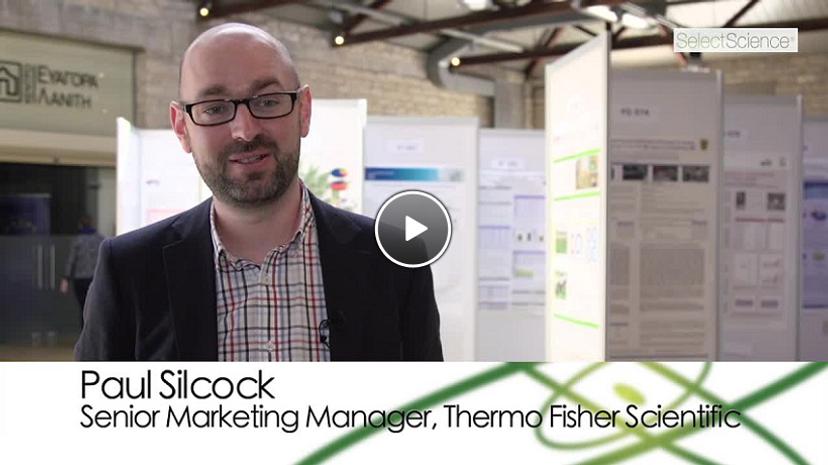
1. Discover How High Resolution GC Orbitrap Technology Enables Analysis of Low Level Pesticides in Complex Matrices

Watch Paul Silcock, Senior Marketing Manager at Thermo Fisher Scientific, discuss how GC Orbitrap technology enables detection of low level pesticides in complex matrices, through both qualitative and quantitative analysis, with untargeted acquisition and high selectivity. Watch the video here >>

2. Selective Pesticide Screening using Simultaneous Full Scan MS and MS/MS Workflows
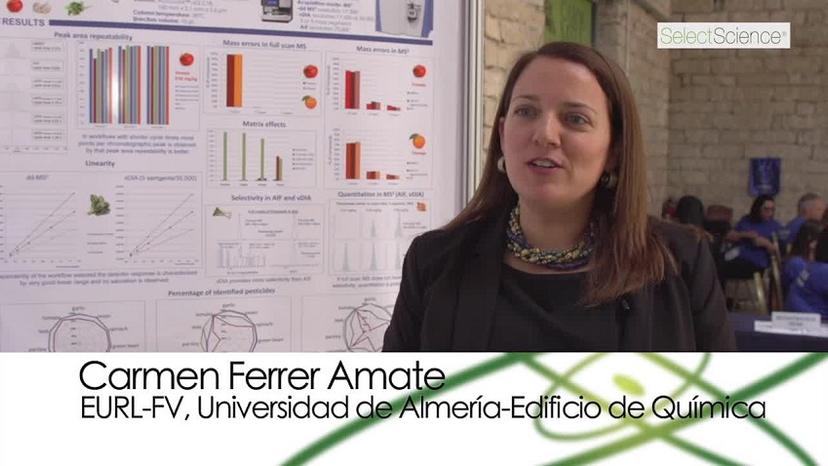
From a poster presentation at EPRW, find out how Carmen Ferrer Amate, EURL-FV, Universidad de Almería-Edificio de Química, uses High Resolution Accurate Mass (HRAM) MS to screen difficult matrices, such as fruit and vegetable samples for muti residue pesticides analysis. Operated with full scan acquisition, together with flexible fragmentation workflows, this technology can be used to optimize detection rates and minimize false detection rates. Read the full article here >> 

3. Ensuring Selectivity and Robustness in Pesticide Residue Analysis

In an interview with SelectScience®, Maciej Bromirski, Thermo Fisher Scientific, discussed the rise in uptake of Orbitrap technology for the use of pesticide residue analysis. Learn how he is overcoming the challenges of pesticide residue analysis, in a range of matrices, and find out about the unique Orbitrap technology for pesticides analysis. Read the full article here >>

4. The Importance of Sensitivity in Screening Food Samples for Pesticides
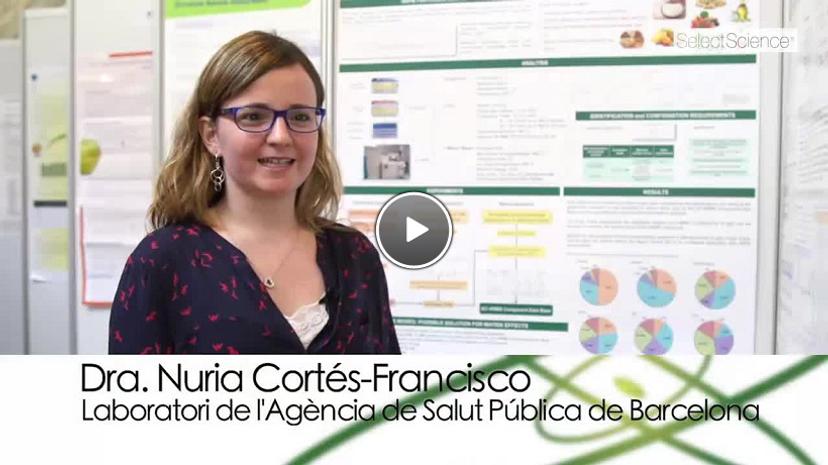
Watch this video to hear Dra. Nuria Cortés-Francisco, Laboratori de l'Agència de Salut Pública de Barcelona, explain the technology her accredited lab uses to analyze for more than 35,000 samples a year. Using a combination of LC and GC, coupled with triple quad mass spectrometers, her lab analyzes over 240 pesticides every day, in a range of different food commodities. Watch the video here >>

5. Protecting Consumers by Ensuring Safer Food

In this video, hear Susanne Ekroth, Chemist, Livsmedelsverket (National Food Agency, Sweden), explain how the agency facilitates the detection of food contaminants at low levels, through the development of new analytical methods. By using Orbitrap technology, the team aims to provide safer food for the consumer. Watch the video here >>

6. Robust Analysis of Polar Ionic Pesticides using Ion-Exchange Chromatography Coupled to Mass Spectrometry

In a presentation recorded at EPRW, Richard Fussell, Thermo Fisher Scientific, described how IC-MS could be used for effective analysis of polar ionic pesticides. Using IC-MS, he was able to overcome the difficulties encountered when employing conventional chromatographic methods. Read the full article here >>

7. A Novel Approach to Determining Unknown Pesticides in Fruit and Vegetables
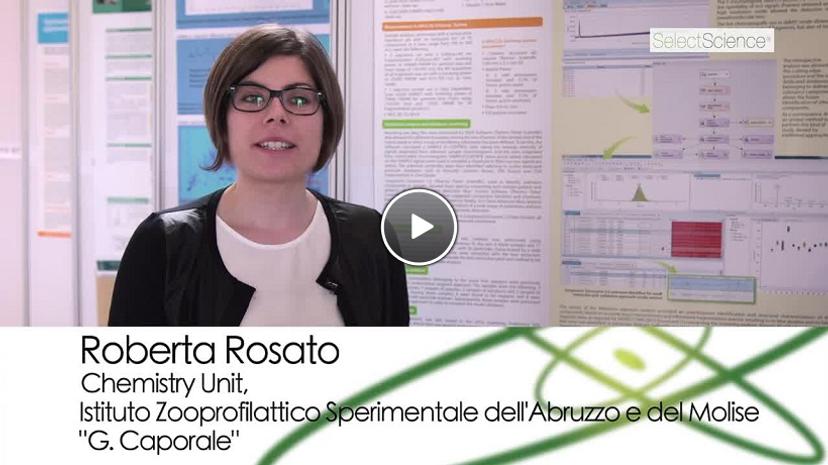
Hear Roberta Rosato, Chemistry Unit, Istituto Zooprofilattico Sperimentale dell'Abruzzo e del Molise "G. Caporale", explain a novel approach to determining unknown pesticides, using an LC-Orbitrap system, and find out how the public health laboratory is using this technology to screen food samples. Watch the video here >>

Want to help your scientific community? Write a product review today.

Find more interviews and presentations from EPRW here.

Thermo Scientific™ Q Exactive™ GC Orbitrap™ GC-MS/MS System

Thermo Fisher Scientific

The Thermo Scientific™ Q Exactive™ GC system is the first-ever combination of high resolution gas chromatography with high-resolution/accurate-mass (HR/AM) Orbitrap detection for the most comprehensive sample characterization. This easy-to-use system provides the most comprehensive characterization of samples in a single analysis for the highest confidence in compound discovery, identification, and quantitation. Building upon the flexible modularity of the Thermo Scientific™ TRACE™ 1300 Series GC, including user-exchangeable injectors and detectors, the Q Exactive GC system has the quantitative power of a GC triple quadrupole MS combined with the high precision, full scan high-resolution/accurate-mass capability that only Orbitrap technology can offer.   Key Features: Advanced quadrupole technology (AQT) for high transmission of selected masses Resolving power up to 120,000 at m/z 200 Part-per-trillion-level sensitivity Thermo Scientific™ Extractabrite™ ion source for robust, rugged electron impact (EI) and chemical ionization (CI) performance Curved linear C-trap for precise ion injection HCD collision cell for higher energy collisional dissociation provides MS/MS ion characterization Intelligent identification software elucidates the nature of each injected sample. Applications: Untargeted and targeted metabolomics Food and beverage Industrial analyses Environmental Pharmaceutical Clinical and toxicology

(9)

Links

Tags

UHPLC and HPLCHigh performance liquid chromatography (HPLC) and ultra high performance liquid chromatography (UHPLC), also known as UPLC, are analytical techniques used to separate, identify and quantitate components of complex mixtures including biological samples such as proteins and lipids as well as chemical mixtures of pesticides, drugs and oils. Both techniques are liquid chromatographic methods but differ by operating pressures (HPLC < 6000 psi < UHPLC ). Components of HPLC and UHPLC systems include columns, detectors, pumps, autosamplers and column heaters. Explore a range of UHPLC and HPLC columns for your specific sample needs including reverse phase, normal phase, ion exchange, HILIC, ion exclusion and size exclusion columns. For more specialized HPLC, explore FPLC, countercurrent LC and simulated moving bed systems. Find the best UHPLC and HPLC equipment in our peer reviewed product directory: compare products, check customer reviews and receive pricing direct from manufacturers.LC-MSLC-MS (liquid chromatography-mass spectrometry) systems and equipment are used for separation and quantitative analysis of complex mixtures, combining liquid chromatography and mass spectrometry. Quantify proteins, contaminants, pesticides or screen for drug metabolites with a high level of sensitivity. LC-MS systems and equipment include reverse phase, normal phase and specialized columns integrated with various MS detectors such as time-of-flight (TOF), quadrupole, orbitrap or ion trap mass analyzers. LC-MS/MS instruments equipped with a qTOF or triple quadrupole analyzer give greater sensitivity and resolving power to your analysis. Find the best LC-MS equipment in our peer-reviewed product directory: compare products, check customer reviews and receive pricing direct from manufacturers.Mass SpectrometryMass spectrometry (MS) is a powerful analytical technique used to identify and quantify molecules based on the mass-to-charge ratio of gas-phase ions. It provides detailed information about the structure, composition, and properties of compounds and is widely used across fields such as environmental monitoring, materials science, drug discovery and development, food and beverage testing, and wider chemical research. Key MS techniques include tandem mass spectrometry (MS/MS), liquid chromatography–mass spectrometry (LS-MS) and inductively coupled plasma (ICP-MS). Choosing from these wide range of techniques and technologies can be a daunting task, so keep up to date with scientific applications, performance expectations, and customer reviews here all in one place. Visit our product directory to receive quotes direct from the manufacturer. Food and Beverage ProcessingFood and Beverage Processing involves the preparation of food products for further analysis. Typical instrumentation includes blanchers, color sorters, cookers, grinders, and refrigeration. These are used to replicate the processes commonly used in the commercial preparation of food and beverages.GC-MS GC-MS (gas chromatography-mass spectrometry) instruments and equipment are used to separate, quantify and identify mixtures of small and volatile compounds, such as polycyclic aromatics, fatty acids and alcohols. Often used in drug detection, forensic investigation and environmental analysis for pesticides and contaminants, GC-MS is a powerful addition to your lab’s analytical capabilities. GC-MS/MS instruments equipped with a qTOF or triple quadrupole analyzers can give greater sensitivity and resolution to your analysis. Find the best GC-MS instruments and equipment in our peer-reviewed product directory: compare products, check customer reviews and receive pricing direct from manufacturers.Quantitative AnalysesQuantitative analyses involve measuring the amount or concentration of a substance in a sample using analytical techniques. These analyses are essential in fields like chemistry, biology, and environmental science. Explore quantitative analysis tools in our peer-reviewed product directory; compare products, check reviews, and get pricing directly from manufacturers.PesticidesPesticides are used to protect crops from diseases, pests and unwanted plants. They are classed as persistent organic pollutants (POPs) and can be harmful to humans. The Environmental Protection Agency (EPA) currently regulates the use of pesticides in the USA. Food SafetyFood safety describes the prevention of food-borne illnesses. Contamination with a variety of pathogens can be prevented with adequate temperature control, hygiene and labeling. Food samples can be tested using GC/MS, HPLC, SPE, and qPCR to ensure their adherence to regulations.Food TestingFood testing refers to a variety experiments including PCR, mass spectrometry, processing, QuEChERS, analyzing and Kjeldahl.Food ContaminationFood contamination refers to the presence of harmful substances or pathogens in food, posing risks to human health. Contaminants can be biological, chemical, or physical, and their detection is crucial for ensuring food safety. Advanced testing methods like PCR, chromatography, and spectroscopy are used to identify contaminants in food products. Browse our peer-reviewed product directory to find the best solutions for food contamination detection, compare products, check reviews, and get pricing directly from manufacturers.Chemical Residues in FoodScreeningUsing robotics, data processing and control software, liquid handling devices and sensitive detectors, screening allows a researcher to quickly conduct millions of chemical, genetic or pharmacological tests.EPRW