Eppendorf Expands Single-Use Vessel Portfolio for Microbial Fermentation

Eppendorf expands its portfolio of rigid-wall single-use vessels for fermentation

30 May 2016
Alex Waite
Editorial Assistant

Product news

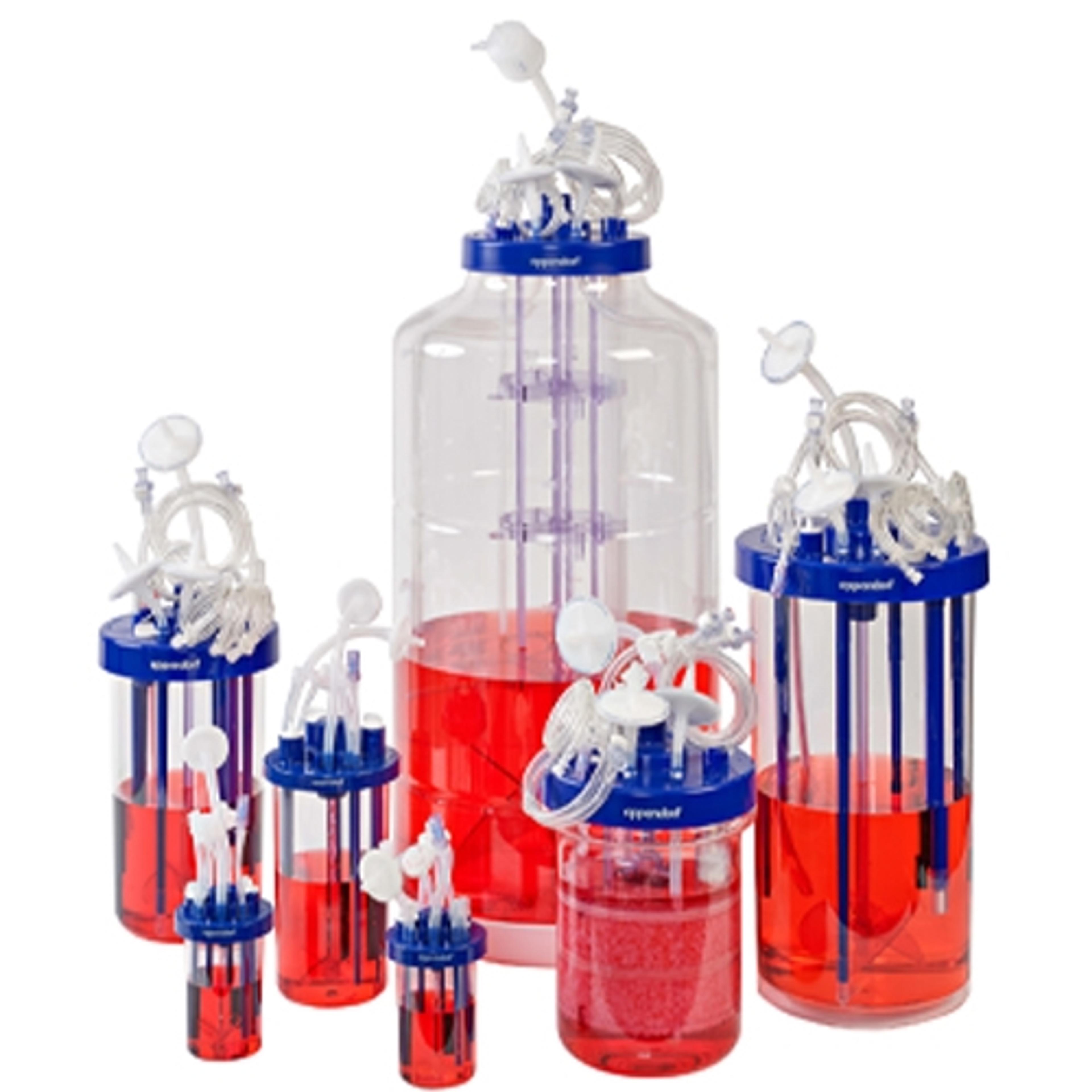
The newly launched Eppendorf BioBLU® 3f was developed specifically for microbial bioprocessing in working volumes of 1.25 to 3.75L, extending the full range of operation for single-use fermentation from 60 mL to 3.75L.

Eppendorf BioBLU f Single-Use Vessels specifically address the demands of high cell density fermentation of bacteria, yeasts, and fungi. Robust magnetic overhead drives featuring Rushton-type impellers support agitation rates up to 1200 rpm and provide high performance mass transfer. Eppendorf exclusive integrated cooling baffles enable efficient heat removal for exothermic processes. The rigid-wall industrial stirred-tank design ensures scalability and simplifies technology transfer. The monolayer polymer material mitigates risk and uncertainty with regard to leachables and extractables.

“Product features are nice, but results are better”, explains Ma Sha, PhD, Director of Technical Applications at Eppendorf, Inc. in Enfield, USA. “The BioBLU 3f achieved over 300 mmol O2/L/h OTR and outstanding 200 OD600 in E. coli fermentation. Our recent studies prove the excellent comparability of results obtained using the Eppendorf glass and BioBLU f Single-Use Vessels, respectively.”

BioBLU 3f single-use bioreactors are designed as drop-in replacements for existing autoclavable fermentation vessels. They can be operated with the Eppendorf bioprocess control stations BioFlo® 115, BioFlo 310 and BioFlo 320.

The new BioBLU 3f Single-Use Vessel will be presented amongst others at this year’s SIMB Annual Meeting in New Orleans, USA from July 24 – 28. Interested visitors can learn more about the Eppendorf single-use bioreactor solutions for microbial applications at the Eppendorf booth and on www.eppendorf.com/BioBLUf.

BioBLU® 0.3 Single-Use Vessels

Eppendorf

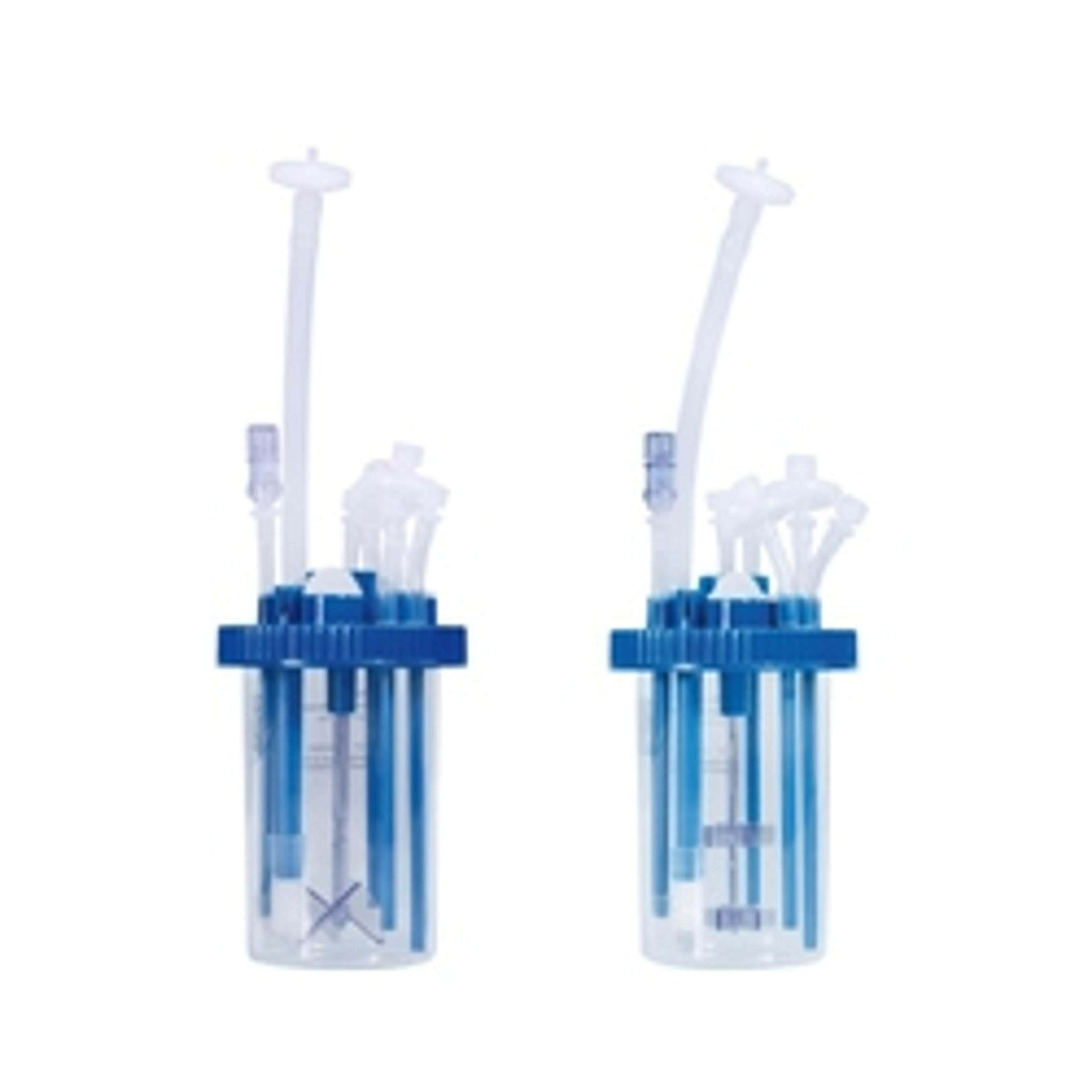
As the smallest vessel of the Eppendorf single-use bioreactor family the BioBLU 0.3 is ideally suited for use as a scale-down model. Designed for use with the DASbox Mini Bioreactor System it is able to accelerate process development in biopharmaceutical and biotechnological applications using cell cultures and microorganisms.All critical process parameters can be precisely controlled and users benefit from easy handling, minimized set-up time and the elimination of cleaning and sterilization steps. The unique liquid-free exhaust gas condenser reduces negative effects caused by change of medium osmolarity and efficiently prevents blocking of the exhaust gas filter.BioBLU® 0.3 Single-Use Vessels Features: Fully instrumented single-use mini bioreactors for accelerated process development in cell culture and microbial applications. Excellent scalability and reproducibility. Small working volumes starting at 65 mL save on cell material, media and supplements. Used with the DASbox mini bioreactor system for parallel set-up of 4, 8, 12 or more bioreactors. Liquid-free exhaust condenser with easy handling by automatic click in activation and click out deactivation mode. Magnet-coupled overhead drive reduces the risk of contamination, up- or downflow. Headplate with 2x PG 13.5 ports, 4x integrated long dip tubes, 2x integrated short dip tubes, one thermowell, DO sensor port with permeable membrane. Operating with industry standard probes for precise measurement and control of temperature, pH, DO. Vessels are delivered pre-sterilized by ß-irradiation to dose exceeding 15 kGy (DIN EN ISO 11137-2:2007). All wetted materials are USP Class VI certified. Applications: Process development in cell culture and microbiology Design of Experiments (DoE) Media optimization Clone & cell line screening, strain characterization

(0)

Links

Tags

Cell / Tissue CultureCell culture or tissue culture is used to study the biology of cells or tissues and to isolate cellular products in an environment which can be manipulated and well defined. Accurately control your culture environment with bioreactors or culture incubators, bind your cells to a surface or together with an extracellular matrix. Distinguish cell types with differential media or proliferate cells with certain characteristics using selective media. Enrich your media with supplements such as growth factors, sera and vitamins. Find the best cell and tissue culture products, kits and equipment in our peer-reviewed product directory: compare products, check customer reviews and receive pricing direct from manufacturers.IncubatorsLaboratory incubators are used to provide a stable environment to cultivate and store samples in, giving you optimal control of temperature, humidity, oxygen and CO<sub>2</sub> levels. Incubators are necessary equipment for cell culture and microbial research. Control temperature with heated or refrigerated incubators, or the levels of CO<sub>2</sub> and oxygen with CO<sub>2</sub> incubators. Using environmental chambers, create a humid climate for testing samples. Find the best incubators in our peer-reviewed product directory: compare products, check customer reviews and receive pricing direct from manufacturers.Labware and Lab SuppliesLabware and lab supplies include various forms of glassware, plasticware, reagents and personal protective equipment (PPE) and are used across all scientific laboratories, enabling daily tasks to be performed. Explore a range of flasks and beakers, petri dishes, carboys and storage bottles. Labware such as condensers, desiccators and burettes are also available for more specific tasks. Find the best labware and lab supplies in our peer-reviewed product directory: compare products, check customer reviews and receive pricing direct from manufacturers.MicrobiologyMicrobiology is the study of microorganisms including protists, prokaryotes, fungi, and, often, viruses. Microorganisms are a useful research tool as genetic vectors and, in immunology, for antibiotic susceptibility testing, cellular biology and genetics. Microorganisms commonly grow readily in incubators with microbial culture media; this can contain chromogenic supplements to differentiate between cell lines. Estimate your culture’s density of microorganisms with colony counters, or screen and select colonies for desirable clones with automated colony pickers. Additionally, equipment is available to monitor environments for the presence of microbes and identify with microbial identification instruments. Find the best microbiology products in our peer-reviewed product directory: compare products, check customer reviews and receive pricing direct from manufacturers.Biopharmaceutical AdvancesBiopharmaceutical advances follow the development of pharmaceuticals derived from biotechnology, also known as biotechnology medicines. Biopharmaceuticals may be produced from cell lines, plants, or microbial cells. Important considerations of biopharmaceutical use include application, cost, production process and purification.Food and Beverage ProcessingFood and Beverage Processing involves the preparation of food products for further analysis. Typical instrumentation includes blanchers, color sorters, cookers, grinders, and refrigeration. These are used to replicate the processes commonly used in the commercial preparation of food and beverages.Bioprocessing / FermentationBioprocessing is the use of biological materials to perform commercial, scientific or medical research processes. Biological materials used include cells, enzymes and organisms. Usually bioprocessing requires a batch or continuous bioreactor such as a fermentor or cell culture system. The advantages of using a reactor include high productivity, easy configuration, adjustable values and automation.YeastEscherichia coliFermentationBacteriaBacteria are microorganisms that play critical roles in the environment, human health, and biotechnology. Understanding bacterial genetics, growth, and metabolism is essential for developing antibiotics, vaccines, and improving industrial processes. Browse our peer-reviewed product directory to find the best bacterial research tools, compare products, check reviews, and get pricing directly from manufacturers.PolymersPolymers are large molecules made up of many repeat units. Natural polymers such as DNA and proteins are essential to life, whereas synthetic polymers such as polystyrene and polyethylene are used widely due to their functionality. Typical techniques for analysis include GPC, SEC, DSC, FT-IR and NMR.