
Determining the Authenticity of Enological Tannins at the IASMA Fondazione Edmund Mach Facility
Exclusive interview with Mario Malacarne regarding a new method for establishing the origin of tannins
1 Nov 2016
Editorial article

Dr Mario Malacarne, Fondazione Edmund Mach Centre
The IASMA Fondazione Edmund Mach, Italy carries out scientific research, education, training, testing and other services in the fields of agriculture, agri-food and the environment. The facility covers approximately 14 hectares and consists of classrooms, greenhouses, laboratories, vineyards and greenery.
Detecting the origin of biological tannins has become increasingly important in food and wine-making industries. Mario Malacarne, from the Edmund Mach Centre, has developed an improved method for determining tannin authenticity. SelectScience spoke to Mario to find out more about his work.
The Edmund Mach Foundation
SS: Mario, can you tell us more about where you work and your role there?
MM: The Edmund Mach foundation is a large organization with more than 600 workers. I work in the technology centre, in the chemical laboratory, where we process more than 20,000 samples a year.
We carry out a variety of different work in the lab, including analysis for official certification, testing for export products, quality control testing and the detection of contaminants such as mycotoxins, heavy metals and pesticides.
Our work involves finding answers to questions from our customers through our applied research. We recently published a paper on establishing the authenticity of tannins related to quality control in the production chain. This is an issue of increasing importance as regulations are now demanding that it is not enough to control the final product, we need to control the products and adjuvants used during production.
Although we do make our own wine on the premises, my work involves the analysis of wine sent to us from around Italy as well as from other countries.
The importance of tannin origins
SS: What are tannins and why is the analysis of them so important?
MM: Tannins are natural plant extracts that are widely used in the food industry. Different tannins have different costs and commercial values. They also display different chemical and technological characteristics and are used as processing aids or to provide flavouring. These characteristics make it extremely important for a wine producer to know the origin of the tannin that is being used in their products; using the wrong tannin could damage the end product. A producer might also be sold a very expensive tannin, but may have actually been given an inferior product. Without an analytical method to distinguish the biological origin of tannins, this food fraud could go undetected.
SS: How do you analyze tannin authenticity in the laboratory?
MM: There is an official method for determining the authenticity of tannins, however the method is very expensive, time consuming and is unable to distinguish new types of tannins. We have developed a new method for the analysis of tannins using not gas chromatography, but ion chromatography. Our statistical approach uses two different instruments to analyze the sugar profile as well as the simple phenol profile. This allows us to determine the biological origin of the tannin.
SS: What equipment do you use for this analysis?
MM: We use ion chromatography for the sugar profile analysis, using the ICS 5000 (Dionex-Thermo Scientific), equipped with an autosampler, a quaternary gradient pump, a column oven and a PAD detector with a gold working electrode and a palladium counter electrode. We are able to use this instrument to carry out the same analysis as the official methods, but with no derivatization.
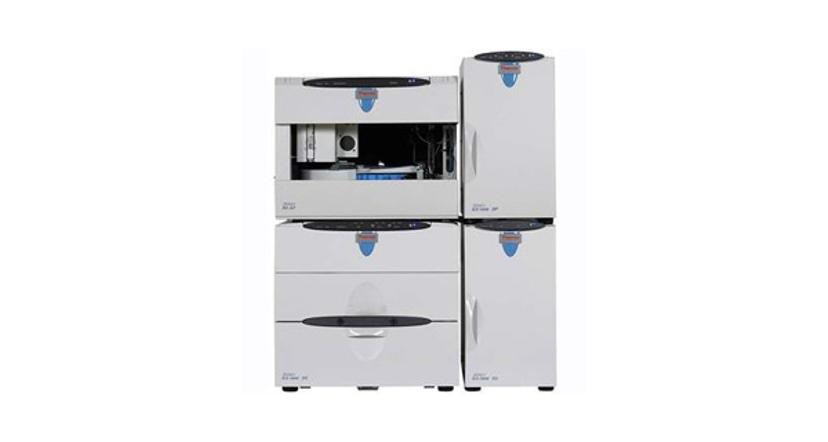
The Thermo Scientific™ Dionex ICS-5000+ Reagent-Free HPIC System
The sample preparation is very easy with this method. If the tannin is in powder form then we make a solution up with ethanol and water, this is very quick to do. The method is also less expensive than gas chromatography analysis.
As well as a sugar profile analysis, we also carry out a simple phenol profile analysis using liquid chromatography. For this we use a liquid chromatograph, UHPLC Ultimate 3000 RS (Thermo Scientific), equipped with an autosampler, two ternary gradient pumps, a column oven and an electochemical detector Coularray Esa 5600 A.
The instruments that we use are highly effective. As well as the tannin analysis, we also perform many routine analytical tests using them. They are very busy instruments!
SS: Finally Mario, what do you think the future holds for wine and tannin analysis?
MM: Wine analysis is becoming increasingly important, as more and more regulations and control parameters are stipulated every year. For food analysis in general, in the future it will not be enough to control the final product, we must control the entire production process, and our method of tannin analysis goes in this direction.
This means that analytical laboratories like ours will have more and more work to do, and we all need to be ready for that.