Bruker Introduces New High-Value Analytical Solutions and High Performance Scientific Instruments for Applied and Industrial Markets at analytica 2016
9 May 2016Industry news
At analytica 2016, Bruker will be showcasing new products and analytical solutions for improved performance and customer experience in pharmaceutical, industrial and applied markets.
Designed to increase sensitivity, improve specificity and maximize productivity, the new Bruker products introduced at analytica 2016 include:
Applied and Pharmaceutical Markets
The new SENTERRA™ II is an easy-to-use, confocal, multi-laser Raman imaging microscope with various acquisition modes to optimize speed or spatial resolution. The Raman engine of the SENTERRA II was redesigned to further improve spectral resolution and performance. The SENTERRA II provides Raman imaging and wavelength calibration with SURE_CAL technology. Components like motorized lasers, gratings, filters and apertures allow fully automated parameter setting. Automated test routines for operational and performance qualification (OQ/PQ) are standard. The SENTERRA II is fully compliant with GLP, GMP and 21CFRp11 regulations.
The new S4 TStar™ total reflection X-ray fluorescence (TXRF) spectrometer enables ultra-trace elemental analysis in a range of applications, including pharma, food and environmental testing. The S4 TStar features up to 3 different excitation modes and a high performance, large area XFlash® silicon drift detector (SDD) to ensure extremely low limits of detection for all elements from sodium to uranium. Compared to ICP or AAS, the TXRF requirements for sample preparation are very modest, which makes the S4 TStar a flexible tool for the analysis of a great variety of sample types, including solutions, suspensions, solids, wafers, cell cultures, smears, and thin sections. Equipped with an automatic sample changer for 90 samples, and utilizing internal QA samples to automatically stabilize system parameters, the S4 TStar is designed for 24/7 multi-user operation. It complements Bruker’s routine single-excitation source S2 Picofox™ TXRF system.
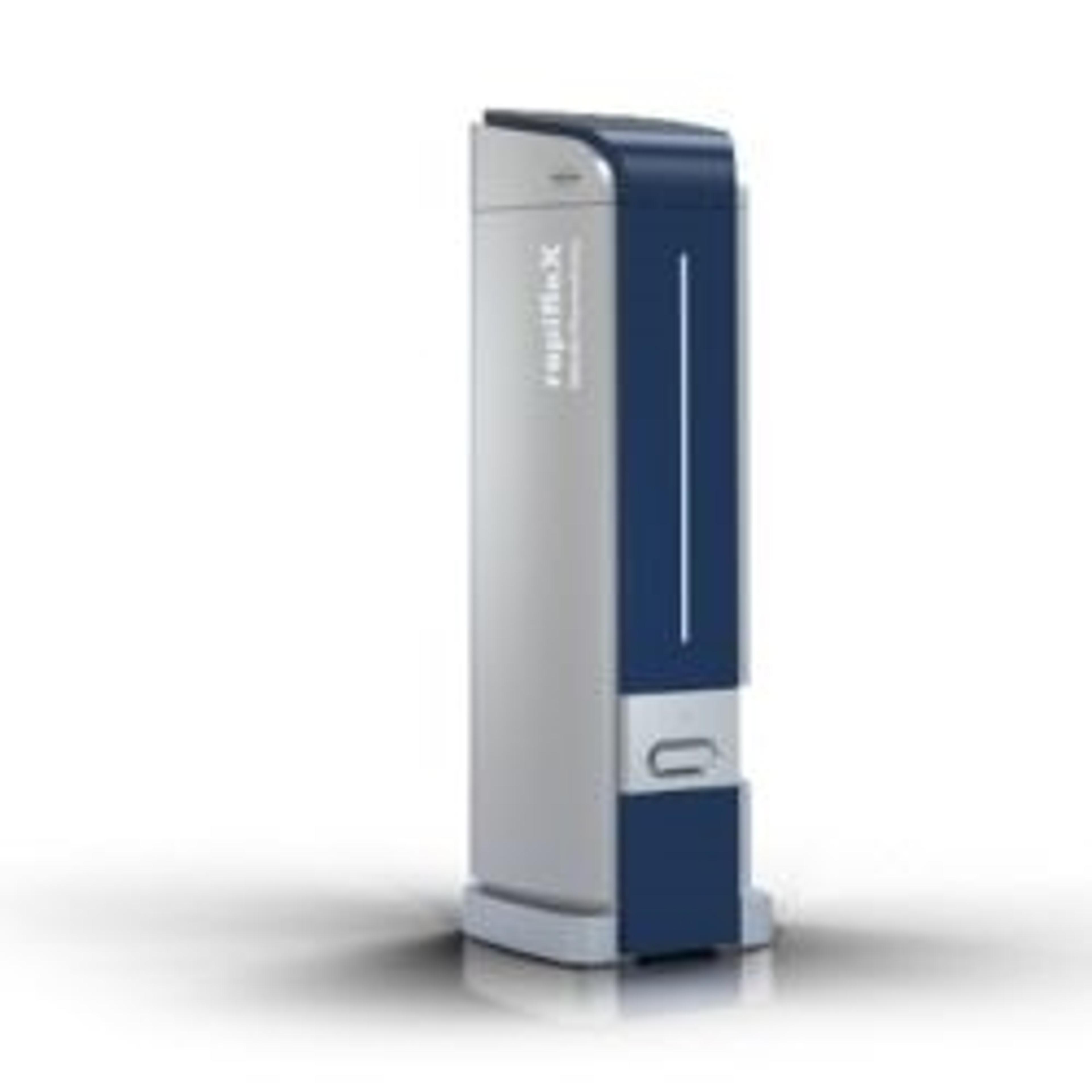
The new MALDI PharmaPulse rapifleX solution is the latest addition to Bruker’s portfolio of innovative products designed to assist pharmaceutical, biotech and CRO customers to accelerate drug discovery. Based on the new 10 kHz laser rapiflex™ MALDI-TOF system, and incorporating an integrated automation solution, this is the first mass-spectrometry based, label-free uHTS (ultra-high throughput screening) solution, using standard 1,536 microtitre plates, or even 6,144 plates. The MALDI PharmaPulse rapifleX solution analyses a 1,536 MTP in < 8 minutes , and due to its extreme robustness it is suitable for primary screens of millions of compounds, with significantly lower cost per sample. Its label-free detection of substrates and products accelerates assay development, reduces complexity of screening, and potentially minimizes artifacts from interferences with the labels used in traditional uHTS technologies.
Food and Environmental
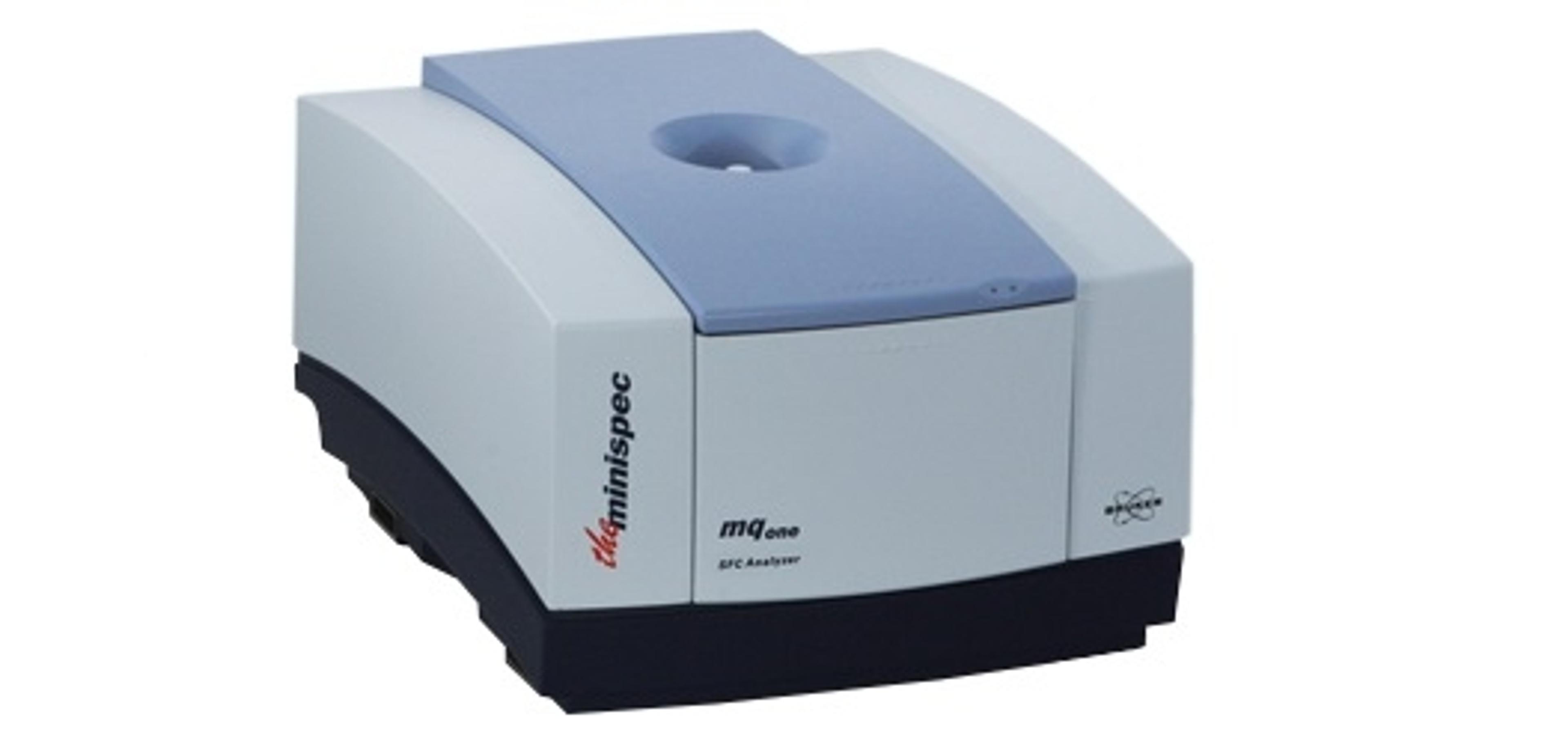
Based on a collaboration with Unilever, Bruker is introducing the new ‘minispec G-Var’ method for fast determination of droplet size distribution in food emulsions. Using Bruker’s Time Domain (TD-) NMR minispec® technology it allows accurate analysis of the droplet size distribution in margarine, low-fat spreads, butter and mayonnaise, as well as in salad dressing and soft cheeses. Moreover, it has the ability to assess individual droplet sizes rather than cluster sizes. In comparison to the former ‘minispec D-Var’ method, the new ‘minispec G-Var’ is up to 4-times faster, provides a lower limit of quantifiable droplet phase, can measure smaller droplet sizes and delivers the highest precision at the lowest total cost of ownership per measurement.
PesticideScreener and ToxScreener 2.1: These powerful solutions based on Bruker’s innovative QTOF instruments allow users to easily screen, identify, confirm and quantify hundreds of compounds in a single experiment. With a larger screening database and new software, these solutions produce significantly increased throughput and confidence for routine applications in the food, environmental and forensic markets. The new BrukerTASQ™ 1.1 software (Target Analysis for Screening and Quantitation) is designed to exploit high resolution, accurate-mass data generated by Bruker QTOF mass spectrometers to confidently screen for trace residues in complex matrices.
Nanoanalysis, Microscopy & Advanced Materials Research
The new ESPRIT QUBE software provides extensive and powerful tools for 3D visualization and post-processing of data acquired with electron backscatter diffraction systems (EBSD) and/or energy-dispersive X-ray spectrometers (EDS) on electron microscopes. Whether 3D data sets are acquired automatically in dedicated FIB/SEM instruments or by using conventional metallography techniques and standard SEM, ESPRIT QUBE’s enables true 3D data representation and analysis. This helps materials scientists, from novice to expert, in gaining an even more profound understanding of microstructure parameters, such as dislocation density and grain boundary planes, as well as grain, inclusion and porosity metrics. A multitude of options for data filtering, sub-setting, simulation and visualization provide advanced 3D insights into the deformation mechanisms of materials, and enable crystal plasticity studies. ESPRIT QUBE complements QUANTAX EBSD and EDS for an even more efficient investigation and interpretation of simultaneously acquired EBSD/EDS data.
The new SPECTRA.ELEMENTSTM software suite for the S2 PUMATM benchtop EDXRF spectrometer enables users to fully exploit its analytical performance for elemental analysis. With the standardless solution SMART-QUANT FPTM, the application range of the S2 PUMA is expanded into material science R&D applications. It enables users to quantify element concentrations in different liquid and solid samples, such as metals, ceramics, and oils. SMART-QUANT FP is a vital tool for industrial users when analyzing non-routine samples. Bruker also releases the new, ready-to-analyze solutions GEO-QUANT MTM for geology, mining and minerals, and CEMENT-QUANTTM for the building materials industry. These solutions are compliant with international standards, such as ASTM C114 for cement. The combination of the high analytical precision of the S2 PUMA with turn-key calibration packages provides improved cost efficiency through tighter process control.
The new Contour CMM Dimensional Analysis System is the world’s first non-contact metrology system to perform simultaneous nanoscale height, surface texture, waviness and form measurements, as well as 3D coordinate measurements for geometric dimensioning and tolerancing, all on one instrument. Its Vision Dimensions™software offers proprietary features for small-part characterization, including automation for part programs, hundreds of preset analyses, and customized reports. Contour CMM performs rapid, non-contact precision measurements for more stringent metrology in R&D and manufacturing of small structures in precision-machined components across industries from medical and optics to automotive and aerospace.
The new FastScan Pro Industrial AFM delivers performance previously achievable only by AFM experts in laboratories with the repeatability and reproducibility expected in a production environment. The system integrates Bruker’s proven lowest noise and fast scanning technology to provide the highest throughput without reducing data quality. The FastScan Pro utilizes a comprehensive software automation that features intuitive recipe-writing capabilities to reduce complex routines to push-button operations. With its open access platform, large- or multiple-sample holders, and numerous ease-of-use features, FastScan Pro offers the power of high-performance AFM to meet production requirements.
Frank Laukien, Ph.D., the President and CEO of Bruker Corporation, commented: “At analytica 2016, Bruker continues its commitment to meeting the needs of our global customer base in the applied, pharmaceutical and industrial markets for robust, high-value analytical solutions and scientific instruments.”