11 Methods to Ensure Food Safety

Discover the latest news, videos and downloads from the SelectScience® library

17 Apr 2016
Alex Waite
Editorial Assistant

Editorial article


Discover more about top techniques and the equipment used to authenticate and protect your food. Plus, learn about the standards put in place to provide top quality products.

1. Beer Analysis Applications Notebook: Solutions for the Complete Brewing Process

Discover solutions from Thermo Fisher Scientific to reduce analysis time, improve product stability, test bitterness, measure isohumulones, polyphenols, test for authenticity and contaminants and much more. Download the application notebook>>

2. Glyphosate and Glufosinate-ammonium Now Available as TraceCERT® Grade

Discover Sigma-Aldrich’s range of more than 200 of TraceCERT® organic neat traceable certified reference materials for food safety and authentication testing. Read more>>

3. Fighting Food Fraud with Authentication Using Non-Targeted Screening

Watch this video to hear Professor Jana Hajšlová, Head of Food Analysis and Nutrition at the University of Chemistry and Technology, Prague, discuss her work on food authentication and safety testing. Prof. Hajšlová's research focuses on food contaminants, such as fluorinated compounds leaching from different packaging materials, and MCPD esters. Discover how the Thermo Scientific Q Exactive Focus MS is used for non-targeted screening in the fight against food fraud. Watch the video>>

4. Sensitive Analysis of the Lactose Content of Lactose-Free Labelled Products Using HPAEC-PAD

Lactose-free products are monitored carefully for potential lactose content. Learn how the KNAUER AZURA® Analytical HPLC system easily reaches required limits of detection (LOD) in this application note. Download the application note>>

5. Precise and Repeatable Pipetting of Problem Liquids

Consistent and reproducible results are crucial for ensuring that the safety of our food is protected through routine testing. Without precise and exact sample handling, which can be more complex than it seems, accurate analysis is impossible. Excel at even your most difficult pipetting tasks with tips and tricks from Eppendorf. Download the infographic>>

6. GC-MS for Trace Contaminant Screening in Complex Samples
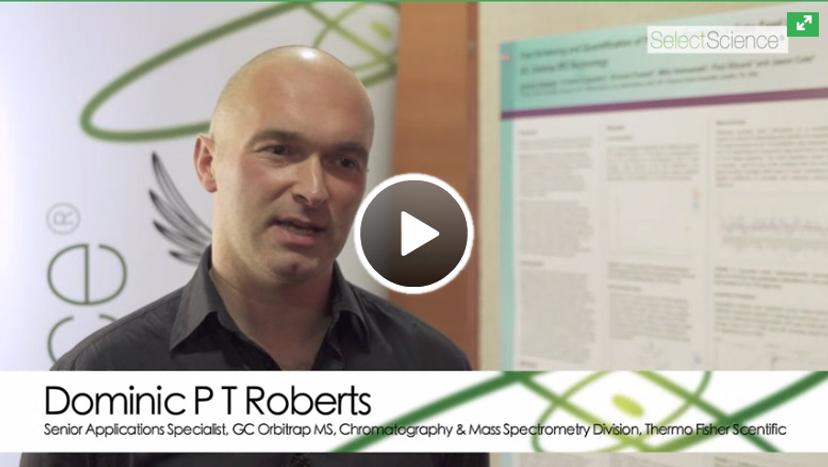
Dominic Roberts, a Senior Applications Specialist for GC Orbitrap MS at Thermo Fisher Scientific, discusses the food and environmental applications of the new GC Orbitrap technology. Discover how to investigate contaminants, screen pesticides at low levels and identify authenticity using this new GC-MS technology. Watch the video>>

7. Podcast: Advances in Pesticide Residue Testing at RIKILT

Learn about the technology being used at the RIKILT Institute of Food Safety in this interview with Dr Hans Mol. Hear how the use of mass spectrometry is enabling the determination of contaminants and pesticide residues in the field of food and feed safety. Listen to the podcast>>

8. Analysis of Food and Agricultural Samples Using PlasmaQuant® MS

Learn how the measurement of key elements in food and agricultural reference materials can be achieved using the Analytik Jena PlasmaQuant® MS, from trace to major levels, within a single analysis. Download the application note>>

9. Screening of Botanical Dietary Supplements Using NMR and Mass Spectrometry
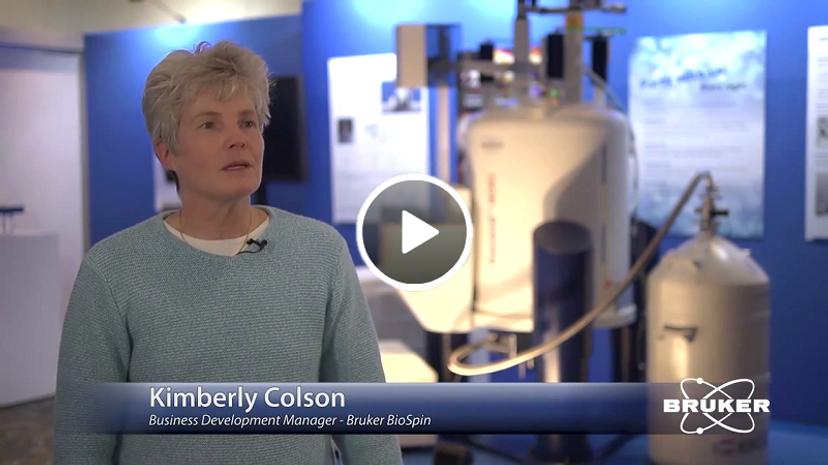
Discover how NMR and Mass spectrometry are used to screen botanical and dietary supplements. Kimberly Colson’s group at Bruker BioSpin is focused on the botanical and herbal products industry, where she aims to bring improvements that help assess quality control. Watch the video>>

10. Determination of Patulin in Apple Juice Using SPE and UHPLC-MS/MS Analysis

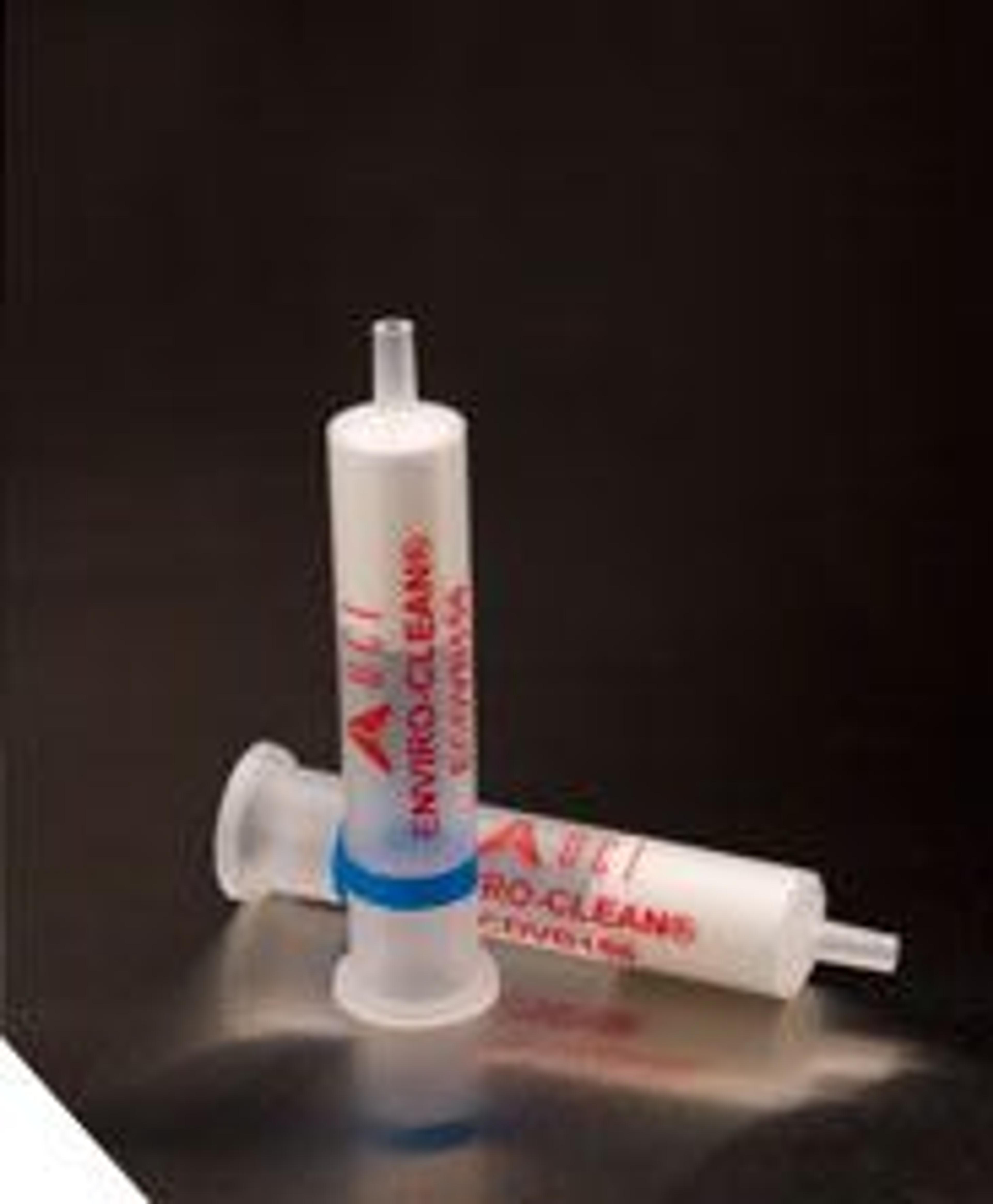
Patulin is a mycotoxin with potential as a measure of produce quality. It is also a possible carcinogen. Discover a simple SPE method using the UCT Enviro-Clean for low-level patulin detection in apple juice. Download the application note>>

11. High Throughput Pesticide Analysis in Challenging Food Matrices

Dr Katharina von Bargen, Application Specialist at Thermo Fisher Scientific, explains recent innovations in the field of analysis in challenging food matrices. Learn how the QuEChERS based sample preparation followed by mass spectrometry analysis enabled the detection of over 300 pesticides in a single sample. Using the TSQ Endura™ Triple Stage Quadrupole Mass Spectrometer allowed for accurate and robust high throughput analysis, with very low LOD and LOQ. Watch the video>>

Do you use any of the products in this article? Is there a product you couldn't do without? Share your experiences and write a review today for your chance to win an iPad Air® or Amazon voucher worth$400.

Discover more technology and methods on our Food Safety Special Feature.

Image: Broccoli testing - Copyright BlueSkyImage/Shutterstock

Links

Tags

UHPLC and HPLCHigh performance liquid chromatography (HPLC) and ultra high performance liquid chromatography (UHPLC), also known as UPLC, are analytical techniques used to separate, identify and quantitate components of complex mixtures including biological samples such as proteins and lipids as well as chemical mixtures of pesticides, drugs and oils. Both techniques are liquid chromatographic methods but differ by operating pressures (HPLC < 6000 psi < UHPLC ). Components of HPLC and UHPLC systems include columns, detectors, pumps, autosamplers and column heaters. Explore a range of UHPLC and HPLC columns for your specific sample needs including reverse phase, normal phase, ion exchange, HILIC, ion exclusion and size exclusion columns. For more specialized HPLC, explore FPLC, countercurrent LC and simulated moving bed systems. Find the best UHPLC and HPLC equipment in our peer reviewed product directory: compare products, check customer reviews and receive pricing direct from manufacturers.Mass SpectrometryMass spectrometry (MS) is a powerful analytical technique used to identify and quantify molecules based on the mass-to-charge ratio of gas-phase ions. It provides detailed information about the structure, composition, and properties of compounds and is widely used across fields such as environmental monitoring, materials science, drug discovery and development, food and beverage testing, and wider chemical research. Key MS techniques include tandem mass spectrometry (MS/MS), liquid chromatography–mass spectrometry (LS-MS) and inductively coupled plasma (ICP-MS). Choosing from these wide range of techniques and technologies can be a daunting task, so keep up to date with scientific applications, performance expectations, and customer reviews here all in one place. Visit our product directory to receive quotes direct from the manufacturer. Pipettes and DispensersPipettes and dispensers are essential lab equipment used to dispense measured volumes of liquid accurately. Explore a range of manual and electronic pipettes, including single and multichannel, serological and volumetric pipettes, as well as a range of pipette tips. Bottle-top dispensers are also available for simple and fast solvent dispensing. Find the best pipettes & dispensers in our peer-reviewed product directory: compare products, check customer reviews and receive pricing direct from manufacturers.Labware and Lab SuppliesLabware and lab supplies include various forms of glassware, plasticware, reagents and personal protective equipment (PPE) and are used across all scientific laboratories, enabling daily tasks to be performed. Explore a range of flasks and beakers, petri dishes, carboys and storage bottles. Labware such as condensers, desiccators and burettes are also available for more specific tasks. Find the best labware and lab supplies in our peer-reviewed product directory: compare products, check customer reviews and receive pricing direct from manufacturers.MicrobiologyMicrobiology is the study of microorganisms including protists, prokaryotes, fungi, and, often, viruses. Microorganisms are a useful research tool as genetic vectors and, in immunology, for antibiotic susceptibility testing, cellular biology and genetics. Microorganisms commonly grow readily in incubators with microbial culture media; this can contain chromogenic supplements to differentiate between cell lines. Estimate your culture’s density of microorganisms with colony counters, or screen and select colonies for desirable clones with automated colony pickers. Additionally, equipment is available to monitor environments for the presence of microbes and identify with microbial identification instruments. Find the best microbiology products in our peer-reviewed product directory: compare products, check customer reviews and receive pricing direct from manufacturers.Sample ManagementSample management systems include sample storage devices such as freezers and plate storers, sample environment enclosures and sample organization, retrieval and sorter systems. Useful system features include high-throughput, automation, robotic arms, automated liquid handling and associated database systems. Accessories in sample management include barcode scanners, heat sealers and tubes.Robotic InstrumentsRobotic instruments can be used for high-throughput automation of many lab processes. Such processes use instruments for assays like cell based assays and ELISA, for sample preparation like shakers, centrifuges and incubators, and for analysis such as sequencing and western blot analyzers. Useful features of robotic instruments include speed, reproducibility, barcode readers, software and automation.Robotic WorkstationsRobotic workstations are automated platforms enabling the user to perform high-throughput, multi-application processes, from sample preparation tasks such as PCR set-up, DNA purification and NGS library preparation, to integrated sample prep and analysis workstations. Automation makes processes consistent, fast, precise and fully walk-away. Find the best robotic workstations in our peer-reviewed product directory: compare products, check customer reviews and receive pricing direct from manufacturers.Automation Supplies / AccessoriesAutomated accessories and consumables make lab processes fast, efficient and reliable. Useful automation accessories include microplate sealers, label printers and reagent reservoirs.Automated Liquid HandlingAutomated liquid handling equipment is used to mix, dilute and dispense allotted volumes of liquid into microplates and other vessels automatically. The robotic, liquid handling arms can dispense from single channel to 3456 multichannel as well as operate nanoliter dispensing, enabling high throughput of samples. Find the best automated liquid handlers in our peer-reviewed product directory: compare products, check customer reviews and receive pricing direct from manufacturers.Food and Beverage AnalyzersFood and Beverage Analyzers are commonly used to provide information about the chemical composition, structure and physical properties of food materials.Food and Beverage ProcessingFood and Beverage Processing involves the preparation of food products for further analysis. Typical instrumentation includes blanchers, color sorters, cookers, grinders, and refrigeration. These are used to replicate the processes commonly used in the commercial preparation of food and beverages.Particle CharacterizationParticle characterization instruments are used to determine particle size distribution, shape, surface area, zeta potential, density and porosity of particles and materials. Multiple tecchniques are available for determining particle size, shape and count including dynamic light scattering (DLS), laser diffraction, electrozone (Coulter technique), imaging particle analysis and single particle optical sensing. Determine the density of your material with a gas pycnometer or examine its surface area and porosity with gas adsorption analyzers and mercury porosimeters. Find the best particle characterization instruments in our peer-reviewed product directory: compare products, check customer reviews and receive pricing direct from manufacturers.GC-MS GC-MS (gas chromatography-mass spectrometry) instruments and equipment are used to separate, quantify and identify mixtures of small and volatile compounds, such as polycyclic aromatics, fatty acids and alcohols. Often used in drug detection, forensic investigation and environmental analysis for pesticides and contaminants, GC-MS is a powerful addition to your lab’s analytical capabilities. GC-MS/MS instruments equipped with a qTOF or triple quadrupole analyzers can give greater sensitivity and resolution to your analysis. Find the best GC-MS instruments and equipment in our peer-reviewed product directory: compare products, check customer reviews and receive pricing direct from manufacturers.QuEChERSThe QuEChERS (Quick, Easy, Cheap, Effective, Rugged, and Safe) method is a streamlined approach that is used to extract multi-residue target compounds from food samples. It is most commonly used by analytical chemists studying pesticide residues in food.