

TechTalk: Advancing energy storage with spectroelectrochemistry
Thursday, February 5 at 18:00 GMT | 19:00 CET | 13:00 EST | 10:00 PST
Developing next‑generation energy storage systems demands a deeper, more precise understanding of electrochemical behavior, including how to optimize electrode composition and ensure chemical homogeneity throughout the electrode structure. Combining electrochemistry with Infrared and Raman spectroscopy offers a powerful approach for achieving these goals. Pairing these techniques with microscopy further enables micrometer-scale insights into chemical composition and distribution.
This 20-minute TechTalk will explore how these capabilities come together with four key instruments that make this integrated approach possible: INVENIO, RAMANtouch, HYPERION II and VERTEX NEO R.
Join Dr. Sergey Shilov, Senior Application Scientist, Bruker Optics, as he shares his 40+ years of FTIR and Raman knowledge to inspire and accelerate your research in batteries, fuel cells, and advanced energy materials.
Key learning objectives:
- Understand spectroelectrochemical tools and workflows for probing reactions at electrodes and within electrolytes.
- Learn how to optimize instrument setup and integration, including effective communication between potentiostats and spectrometers.
- Understand how to apply fast chemical imaging techniques to visualize electrode surfaces and reaction dynamics.
- Explore real‑world electrochemical case studies such as metal–organic complex oxidation, polymer distribution mapping, electrode degradation analysis, and SEI characterization in lithium metal batteries.
Who should attend?
- Chemists, battery engineers, and scientists who are developing new materials for energy storage.
Certificate of attendance
If you attend the live TechTalk, you will automatically receive a certificate of attendance, including a learning outcomes summary, for continuing education purposes.
If you view the on-demand TechTalk, you can request a certificate of attendance by emailing editor@selectscience.net.
Featured products
Request Quote for All Products
INVENIO
Bruker OpticsINVENIO: FTIR Excellence for Industry, R&D and Science. INVENIO is the definitive spectroscopic solution for routine FTIR analysis as well as research and development. It is all you need and so much more: innovative technologies, intelligent design and its new beam path contribute to an unrivalled user experience. Your advantage: Outstanding signal-to-noise ratio Broad spectral range (FIR, MIR, NIR and VIS/UV) Time-resolved spectroscopy: use Rapid-Scan, Slow-Scan and Step-Scan Touch-PC with dedicated software for enhanced productivity MultiTect™: up to seven automated and software controlled internal detectors Transit™: parallel availability of two experimental setups RockSolid™: reliable, well-proven and precise CenterGlow™ IR source: optimized light flux and durability Bruker FM: MIR and FIR spectra in one go Upgradability: retrofit spectral range extensions or time resolved measurements Multiple beam inputs and outputs Compact footprint optimized for laboratory benches
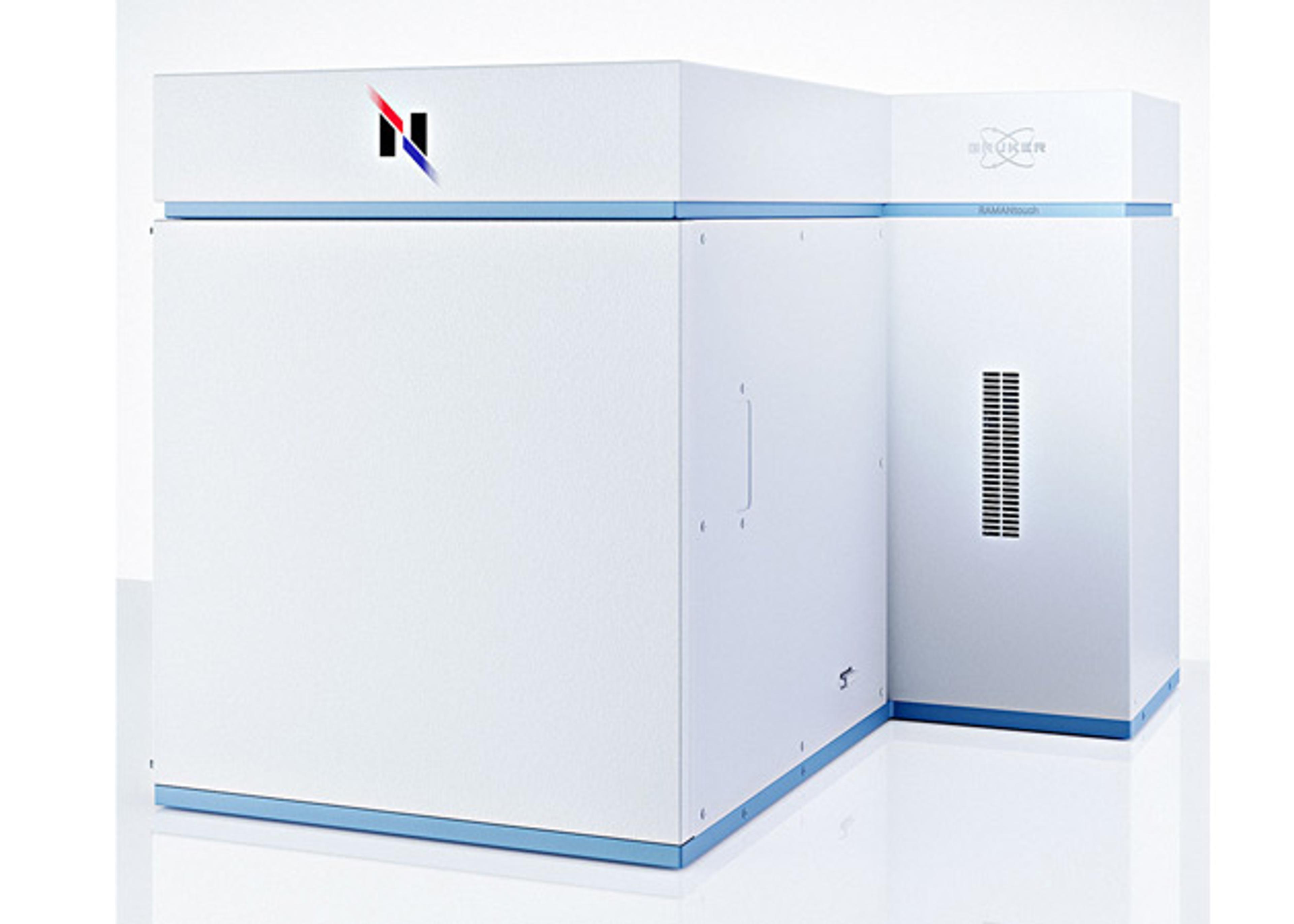
RAMANtouch
Bruker OpticsRAMANtouch rethinks Raman imaging. With patented line-shaped laser illumination and galvanometer-based scanning, it achieves the world’s fastest high-quality Raman imaging—hundreds of thousands of pixels mapped in minutes without compromising spectral or spatial resolution. This speed, combined with confocal optics for true 3D imaging, makes RAMANtouch a game-changer for advanced materials, life sciences, and semiconductor research.
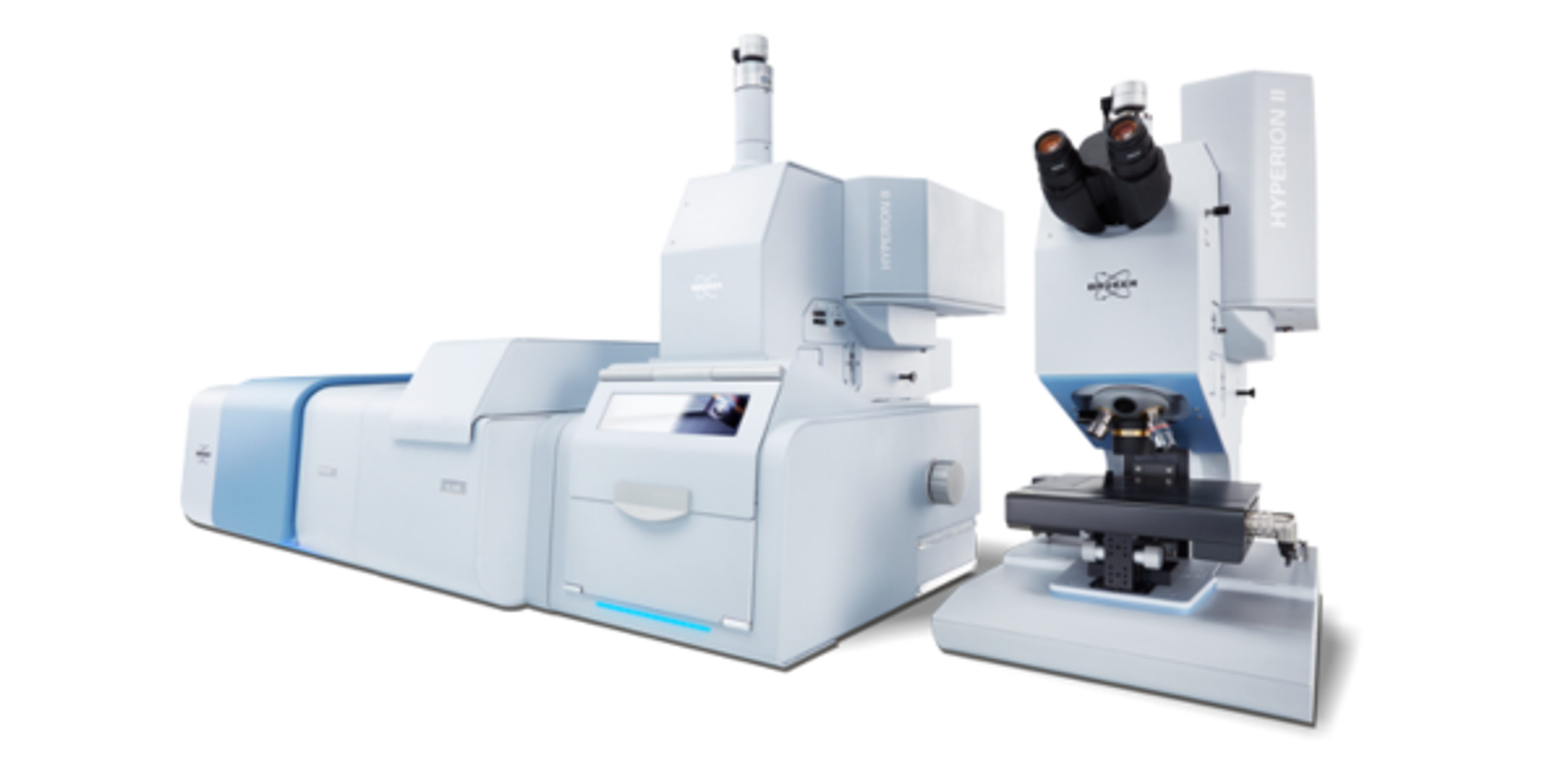
HYPERION II
Bruker OpticsHYPERION II is a high-performance FT-IR and laser imaging microscope, merging traditional FT-IR microscopy with QCL technology in one configurable research platform, offering high spatial resolution, powerful imaging options, and complete control over every measurement parameter.
Speakers
