ResourceSeparations

VOC & SVOC Emissions from Materials with Relevance to Vehicle Interior Air Quality: Regulation, Standard Methods and Analytical Implementation

22 Feb 2017

Emissions of volatile and semi-volatile organic compounds from car interiors can have an adverse effect on vehicle interior air quality (VIAQ), raising concerns for passenger health and safety. This application note describes methods for assessing VIAQ using thermal desorption–gas chromatography–mass spectrometry (TD–GC–MS) for analysis and quantitation of volatile organic and semi-volatile compounds (VOCs and SVOCs).

Sorbent sampling tubes

Markes International Ltd

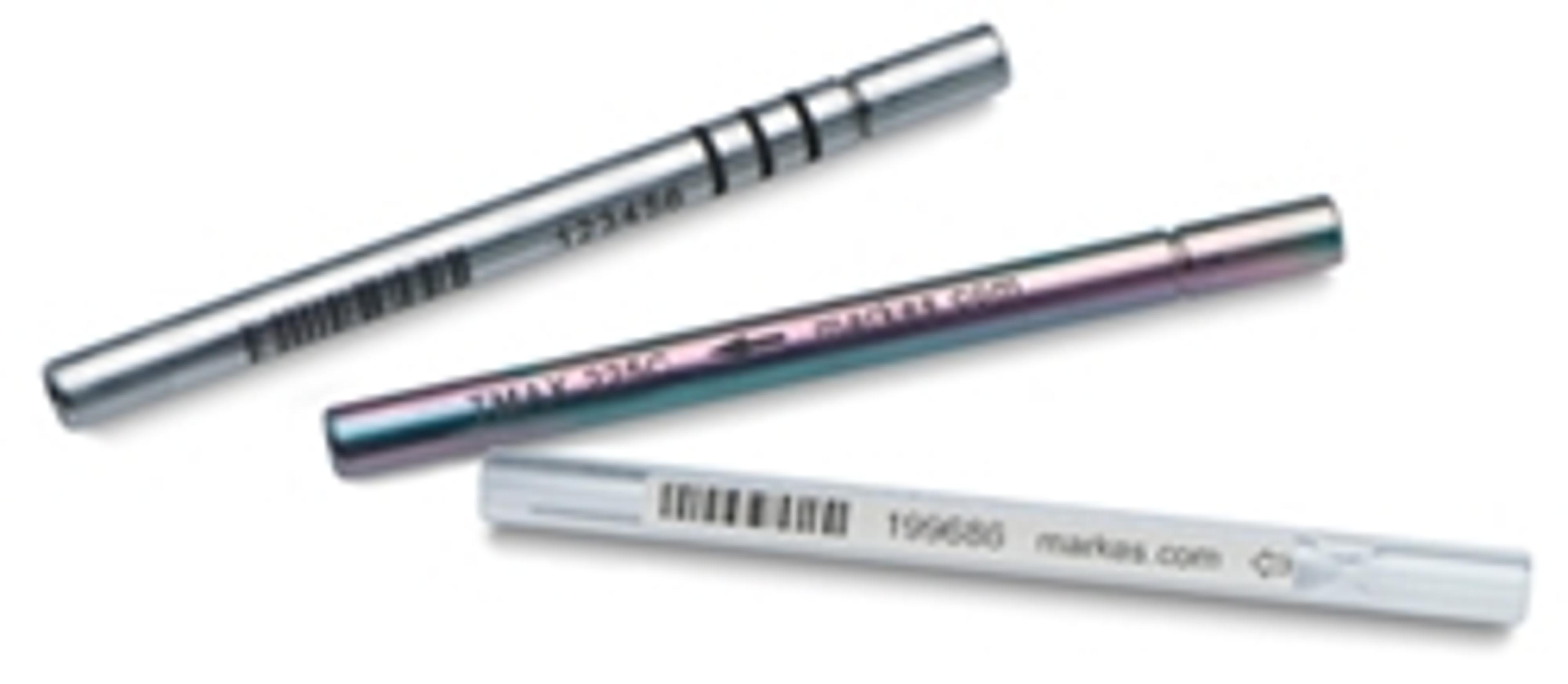
Thermal desorption sorbent sampling tubes for air sampling. Backed up by fast and friendly service, Markes’ tubes provide optimum sampling and analytical performance. Our range includes everything from cost-effective packages of industry-standard tubes to the last word in sorbent tube innovation. Features: Our industry-standard (3½-inch (89 mm) long x ¼-inch (6.4 mm) o.d.) sorbent tubes are available in stainless steel, inert-coated stainless steel and glass. Compatible with thermal desorption instruments manufactured by Markes International, PerkinElmer and Shimadzu. All tubes are permanently labelled with a unique serial number, barcode and sampling flow arrow, so that they are easy to use and track. Further labelling options for tube tracking – includes laser-etching, banding and RFID-tagging (TubeTAG™). Diffusion-locking SafeLok™ options for additional peace of mind. Stringent quality control – our tubes are packed to a tolerance of ±2.5% or better. Application-specific sorbent tubes – optimally packed for applications ranging from air toxics to material emssions testing. Our sorbent tubes can also be ordered conditioned and capped, so that they’re ready for use on arrival. All our sorbent tubes can be supplied: empty for you to pack yourself (or for direct desorption); pre-packed with one sorbent bed for diffusive (passive) monitoring applications; or pre-packed with up to three sorbent beds for pumped (active) monitoring applications. We also supply 4½-inch DAAMS tubes (regular and high-flow, in any of the above materials) – contact us for details.

(0)

Links

Tags

Atomic Absorption / Emission SpectroscopyAtomic absorption spectroscopy (AAS) and atomic emission spectroscopy (AES) — also called optical emission spectroscopy (OES) — are used to detect the elemental constituents in samples. Both techniques involve the atomization of a sample. Atomic absorption spectrometers may use a flame or furnace to create an atomic vapor of the sample before irradiation with spectral light. Optical emission spectrometers may use a flame, inductively coupled plasma (ICP), microwave plasma (MP) or spark arcs to atomize and excite the sample. At higher excitation energies, electrons can be emitted instead of photons, which can be useful for samples that can’t be atomized and for surface analysis. Explore electron spectroscopy equipment such as Auger spectrometers and photoelectron spectrometers for surface elemental analysis of samples. Find the best atomic absorption, photoelectron and optical emission spectrometers in our peer-reviewed product directory: compare products, check customer reviews and receive pricing direct from manufacturers.GC-MS GC-MS (gas chromatography-mass spectrometry) instruments and equipment are used to separate, quantify and identify mixtures of small and volatile compounds, such as polycyclic aromatics, fatty acids and alcohols. Often used in drug detection, forensic investigation and environmental analysis for pesticides and contaminants, GC-MS is a powerful addition to your lab’s analytical capabilities. GC-MS/MS instruments equipped with a qTOF or triple quadrupole analyzers can give greater sensitivity and resolution to your analysis. Find the best GC-MS instruments and equipment in our peer-reviewed product directory: compare products, check customer reviews and receive pricing direct from manufacturers.Air ToxicsVolatile Organic Compounds (VOCs)Volatile organic compounds (VOCs) are chemicals that have a low boiling point. Some VOCs are harmful to human health, whereas others can be used to determine the shelf-life of foods samples. Thermal DesorptionThermal desorption is a technique used to release volatile compounds from solid samples by heating them. It is often used in environmental testing and analysis of complex materials. Explore thermal desorption systems in our peer-reviewed product directory; compare products, check reviews, and get pricing directly from manufacturers.Semi Volatile Organic CompoundsSemi volatiles organic compounds (SVOCs) are a groups of compounds that have a low boiling point and evaporate above room temperature. SVOCs include phenols and polynuclear aromatic hydrocarbons (PAH).Air Quality
VOC & SVOC Emissions from Materials with Relevance to Vehicle Interior Air Quality: Regulation, Standard Methods and Analytical Implementation