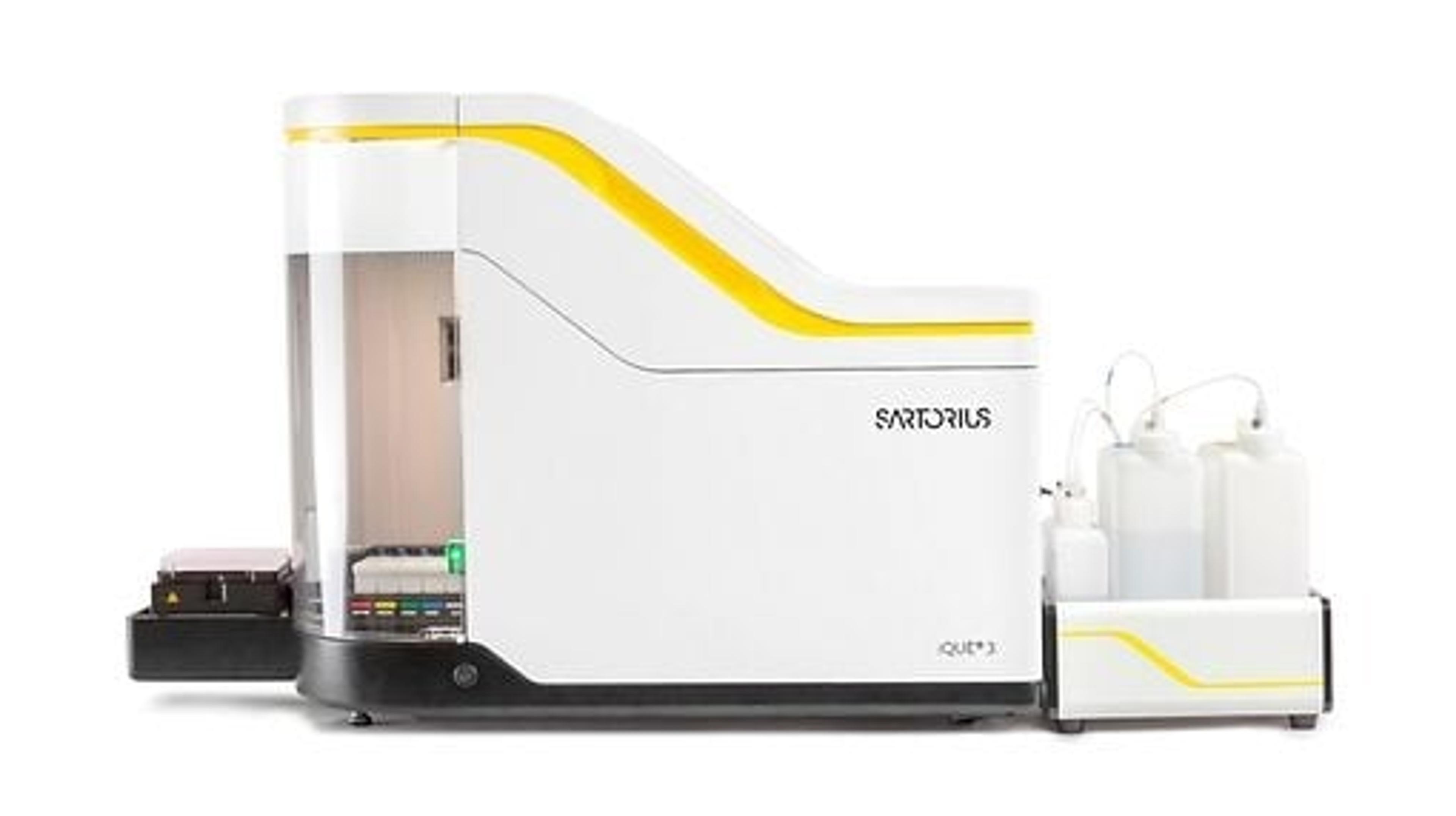
Using flow cytometry to enhance antibody discovery and characterization

Improve antibody discovery workflows with high-throughput flow cytometry

22 Nov 2022

Antibody based biotherapeutics have revolutionized the development of novel treatments, particularly in cancer. Antibody characterization is an essential step in the antibody discovery and screening workflow, contributing to the understanding of the components and functions of an antibody to move toward quality therapeutic development.

Flow cytometry is an incredibly useful technology used in antibody discovery and characterization. Specifically, high-throughput flow cytometry can provide required information in timescales appropriate for efficient antibody evaluation.

This eBook will highlight some key applications for high-throughput flow cytometry in the profiling of antibodies for therapeutic benefit. In particular, the methods shown will demonstrate the function and benefits of the iQue® advanced flow cytometry platform.

Topics covered include utilizing high-throughput flow cytometry for:

  • Accelerating antibody screening and characterization
  • High throughput, multi-parametric analysis
  • Fast and full-scale multipass membrane antibody optimization
  • Visualization and quantification of phagocytosis
  • Evaluating NK cell killing


Links

Tags

AntibodiesAntibodies are used in techniques such as confocal and fluorescence microscopy, flow cytometry, ELISA, ELISPOT, immunohistochemistry, western blotting and immunopreciptation. Select specific antigen reactivity, high specific affinity, low non-specific binding, monoclonal or polyclonal, primary or secondary antibodies and associated conjugates such as an enzyme or dye for visualization.Flow Cytometry / Cell CountingFlow cytometers are used to count, sort and examine multiple characteristics of cells. Other cell analysis equipment includes image cytometers, cell counters, fluorescence-activated cell sorters (FACS), magnetic-activated cell sorters (MACS), and a range of flow cytometry assay kits. Flow cytometers can reveal information on cell viability, cell proliferation, apoptosis and cell cycle progression, as well as identify cell populations and intracellular or cell-surface molecules. Additionally, some flow cytometers, known as FACS, have an additional sorting function after analysis. Cell counters and image cytometers count live and dead cell populations and can also conduct cell proliferation assays. Find the best flow cytometers, cell counters and cell sorters in our peer-reviewed product directory: compare products, check customer reviews and receive pricing direct from manufacturers.Cell-Based AssaysCell-based assays are used to monitor the presence, quantity and activities of a desired cellular analyte including drug molecules or biomarkers. This can reveal information on cell health (apoptosis, cytotoxicity, viability and proliferation assays), cell metabolism, cell migration and cell signaling mechanisms. Find the best cell-based assay products, kits and equipment with our peer reviewed product directory: compare products, check customer reviews and receiving pricing direct from manufacturers.High-Content ScreeningHigh-content screening (HCS), also known as high-content analysis (HCA), is a high-throughput technique used in drug discovery to identify substances that alter the phenotype of cells. HCS uses fluorescent microscopic imaging and automated image analysis to investigate cellular events such as apoptosis, cell viability, GPCR activation, oxide production, neurite outgrowth, and cell signaling. Find the best fluorescent labeling reagents, cellular assays, and high-content imaging systems in our peer-reviewed product directory: compare products, check customer reviews and receive pricing direct from manufacturers.BiomarkersBiomarkers are biological markers which can be measured and evaluated to indicate a biological state. The use of biomarkers in research and diagnosis can indicate a normal or disease state or drug response of cells / tissues. Biomarkers include genetic markers, cell surface markers such as antigens, antibodies or receptors and secreted molecules such as cytokines. An assay system is required for identification of biomarkers. :Biopharmaceutical AdvancesBiopharmaceutical advances follow the development of pharmaceuticals derived from biotechnology, also known as biotechnology medicines. Biopharmaceuticals may be produced from cell lines, plants, or microbial cells. Important considerations of biopharmaceutical use include application, cost, production process and purification.AntibodiesAntibody ProductionAntibody production is essential for a wide range of applications in biochemistry and immunology. Ensuring high-quality monoclonal and polyclonal antibodies are produced is key. Explore antibody production tools in our peer-reviewed product directory; compare products, check reviews, and get pricing directly from manufacturers.
Using flow cytometry to enhance antibody discovery and characterization