
ResourceDrug Discovery & Development
Ultimate guide to small molecule drug development
17 Jan 2022The development of small molecule drugs is a costly and high-risk venture fraught with challenges at every stage of the pipeline.
In this new eBook, we present a range of state-of-the-art physicochemical technologies and techniques designed to streamline formulation development, accelerate approval processes, and ensure the consistent and compliant manufacturing of safe, efficacious drugs.
Download it free today to explore analytical solutions for:
- API and excipient characterization
- Establishing in vitro bioequivalence
- Discriminating between polymorphs
- Elemental impurity analysis
- Troubleshooting and root cause analysis
Related products
Request Quote for All Products
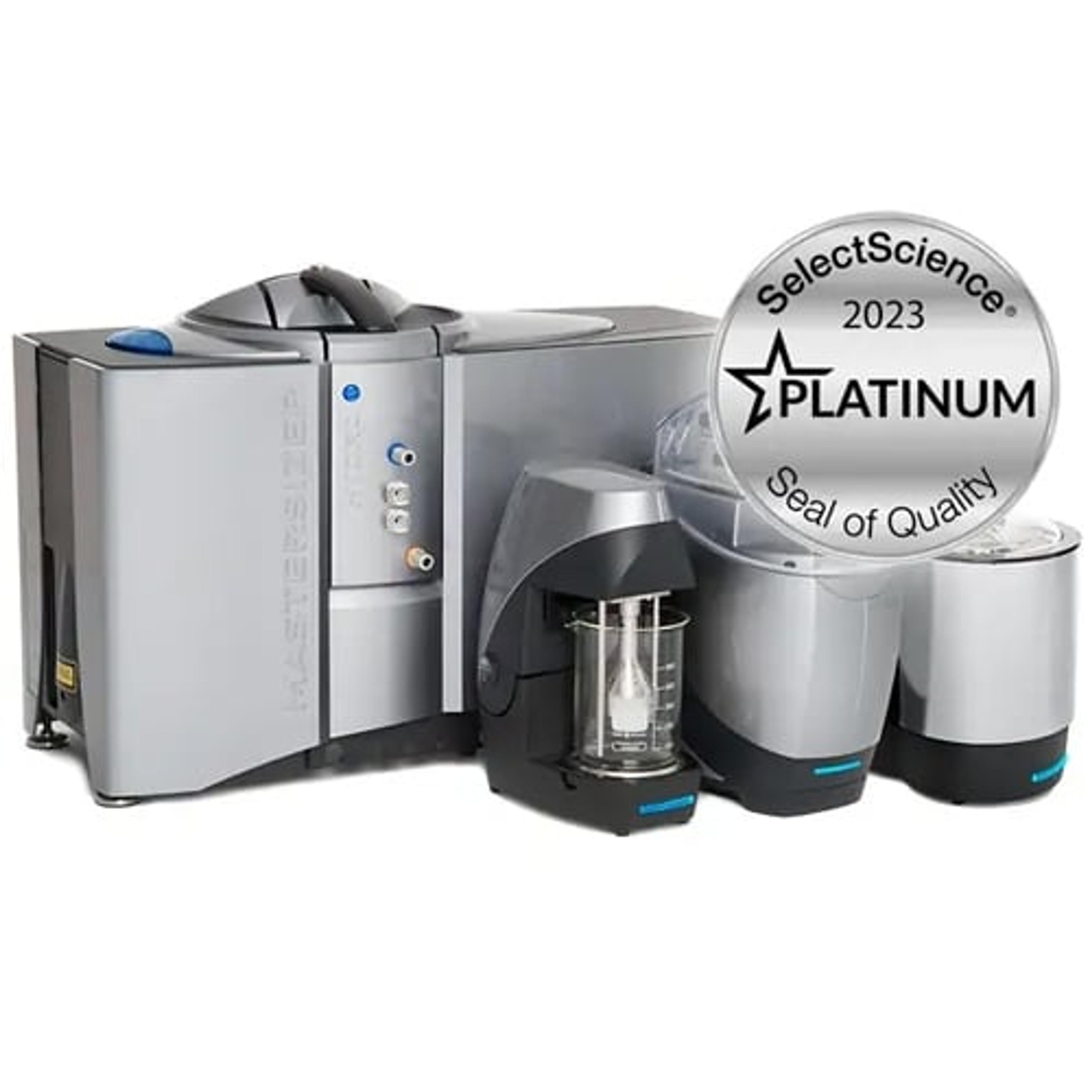
Mastersizer 3000
Malvern PanalyticalWorld’s most widely used particle size analyzers, the smartest way to measure particle size. There is a newer version of this product avilable, the Mastersizer 3000+ Ultra.

Morphologi 4-ID
Malvern PanalyticalRapid, automated, component-specific particle characterization in a single, integrated platform
Links
Tags
Combinatorial ChemistryCombinatorial chemistry, also known as combichem, is a technique used in drug discovery to create libraries of structurally related compounds. A library is generated by synthesis with a chemical reactor system or by computer-based modeling of compound combinations. When undertaking combinatorial chemistry consider reagents, buffers, resins and standards.Data AnalysisData analysis hardware and software is available to make data processing straight-forward yet powerful. Data software can be used for math and stats, technical graphing and image analysis. In addition, software is available for specific data analysis of electrophoresis, densitometry, ELISA and DNA sequencing.Process ChemistryProcess chemistry is an important stage of drug development for scaling-up drug production or chemical synthesis reactions. It is useful for optimizing economical and efficient drug production. Process chemistry uses reactors and pump systems as well as reagents, standards and buffers.Particle CharacterizationParticle characterization instruments are used to determine particle size distribution, shape, surface area, zeta potential, density and porosity of particles and materials. Multiple tecchniques are available for determining particle size, shape and count including dynamic light scattering (DLS), laser diffraction, electrozone (Coulter technique), imaging particle analysis and single particle optical sensing. Determine the density of your material with a gas pycnometer or examine its surface area and porosity with gas adsorption analyzers and mercury porosimeters. Find the best particle characterization instruments in our peer-reviewed product directory: compare products, check customer reviews and receive pricing direct from manufacturers.Drug DeliveryDrug Delivery refers to dosage form, route of administration, formulations, technologies, and systems for transporting a pharmaceutical compound in the body as needed to safely achieve its desired therapeutic effect. Drug delivery is often approached via the biopharmaceutical or small molecule drug's formulation, but it may also involve medical devices or drug-device combination products. Considerations include instrumentation, software and services. Development SoftwareComputational techniques used in both the chemistry and biology aspects of drug development, for data acquisition, data analysis, processing and storage. Software is used for analysis of ADME results, toxicology, clinical trials and regulatory processes. RegulatoryPharmaceutical regulations impact on all areas of drug development, manufacture and control and supply. Services are provided from the early stages of drug development and clinical trials through to dossier submission, approval and marketing. Regulatory also includes submission of analytical studies from the pharmaceutical product and safety. Scale-upScale-Up is generally defined as the process of transferring the results of the discovery phases of the drug discovery process, obtained on a laboratory scale, to the pilot plant and finally to production scale. Scale-Up uses reactors and pump systems as well as reagents, standards and buffers. Often Scale-Up is provided as a service by Contract Manufacturing Organizations (CMOs). Bioprocessing / FermentationBioprocessing is the use of biological materials to perform commercial, scientific or medical research processes. Biological materials used include cells, enzymes and organisms. Usually bioprocessing requires a batch or continuous bioreactor such as a fermentor or cell culture system. The advantages of using a reactor include high productivity, easy configuration, adjustable values and automation.Quality ControlQuality control is needed in all production processes. Quality control is a monitoring procedure or set of procedures that are put in place to ensure that a manufactured product adheres to a defined set of quality criteria. Drug TestingIt is essential to test the efficacy and toxicity of drugs at every stage of their development to ensure that a pharmaceutical product is fit for purpose and safe for use before reaching the stage of mass production and distribution.Drug DiscoveryDrug discovery is the process of identifying potential new medications, involving stages such as target identification, compound screening, and preclinical development. It relies on cutting-edge technologies like high-throughput screening, artificial intelligence, and molecular modeling to accelerate the identification of drug candidates. Drug discovery plays a pivotal role in developing new therapies for diseases ranging from cancer to rare genetic disorders. Browse our peer-reviewed product directory to find the latest drug discovery technologies, compare options, check customer feedback, and get pricing directly from manufacturers.SpectroscopySpectroscopy is a technique that analyzes the interaction of light with matter to study molecular properties, concentrations, and structural information. Widely used in chemical, pharmaceutical, and environmental analysis, spectroscopy offers insights into molecular composition and helps identify unknown compounds. It plays a key role in quality control, research, and diagnostics. Browse our peer-reviewed product directory to compare spectroscopy tools, read reviews, and get prices directly from manufacturers.TherapeuticsTherapeutics are treatments designed to alleviate or cure diseases. These include pharmaceuticals, biologics, and gene therapies, which work by targeting specific disease mechanisms. Advances in personalized medicine and biologics offer new hope for patients with conditions that were previously difficult to treat. Browse our peer-reviewed product directory to find therapeutic solutions for various diseases; compare products, check user reviews, and get pricing directly from manufacturers.Drug DevelopmentDrug development refers to the process of bringing a new drug to market.